
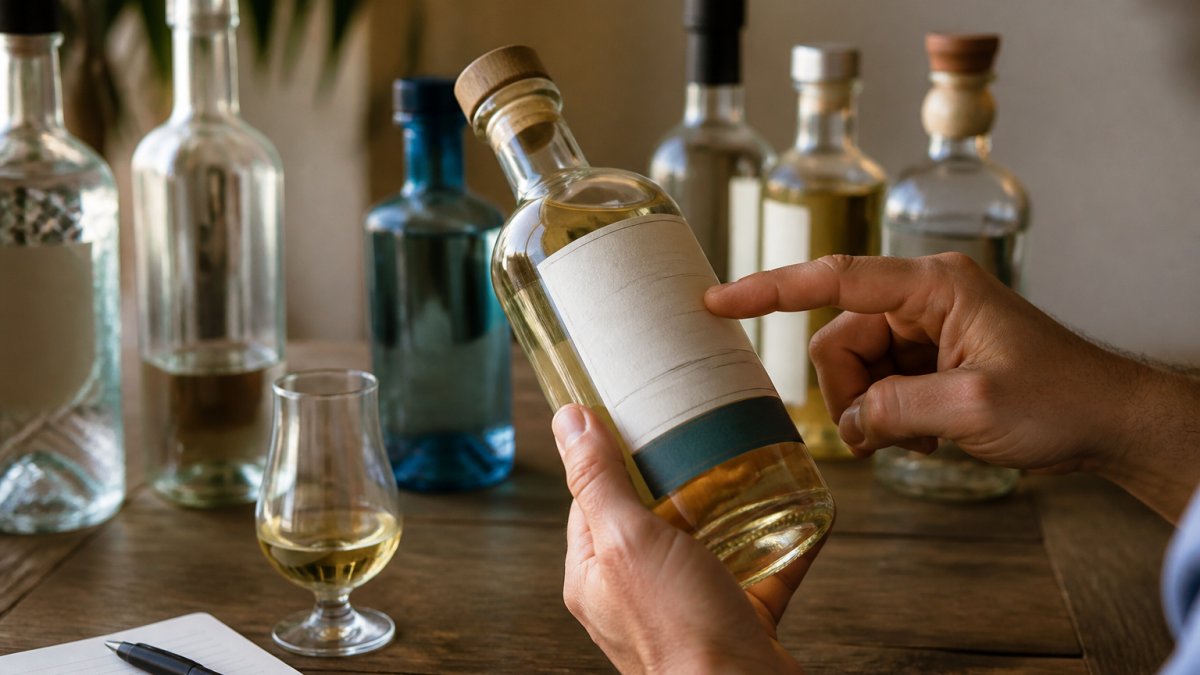
Last Updated: October 27, 2026
Quick Summary
To read tequila labels correctly, start with the NOM number, which identifies the registered distillery that made the bottle. Then confirm the exact words 100% agave and check the aging category word: blanco, reposado, añejo, or extra añejo. Vague terms like reserva are a warning sign.
- NOM stands for Norma Oficial Mexicana, the official Mexican standard governing tequila production.
- Two bottles sharing a NOM number came from the same facility, even under different brand names.
- Añejo requires at least one year in oak, in containers no larger than 600 liters.
- Extra añejo must meet a three-year minimum in oak before it can carry that category word.
- A broken seal or loosely spinning cap can signal a refilled counterfeit bottle, so put it back.
Table of Contents
- Start With the NOM Number on the Label
- The 100% Agave Tequila Meaning and Why It Matters
- Tequila Aging Categories Explained: Blanco to Añejo
- How to Spot Fake Tequila Before You Pay
- Reading Additive and Ingredient Clues on Tequila Labels
- Appearance, Aroma, and Taste: The Final Label Check
- Pick Up a Bottle and Read It Like a Pro
- Frequently Asked Questions
Start With the NOM Number on the Label
Learning how to read tequila labels correctly starts with one small printed code, and it tells you more than any front-label slogan ever will.
Here is what to check, in order:
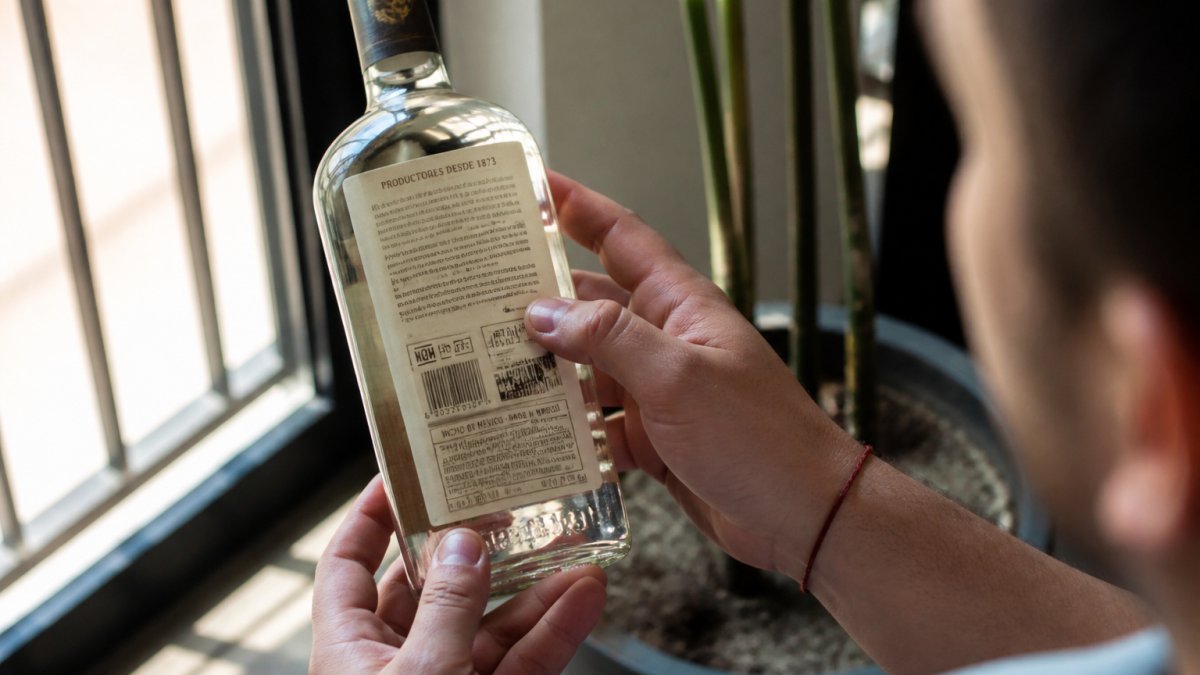
What Does NOM Mean on Tequila?
NOM stands for Norma Oficial Mexicana, the official Mexican standard that governs tequila production. The number printed after it identifies which registered distillery made the bottle. If two bottles share a NOM number, the same facility produced both, even when the brand names differ. That single fact helps you trace a bottle back to a real source.
The 100% Agave Tequila Meaning and Why It Matters
Look for these exact words on the label:
Tequila Aging Categories Explained: Blanco to Añejo
| Category | Minimum Aging Requirement | Typical Color | Best For |
|---|---|---|---|
| Blanco (also called plata or silver) | Unaged, or rested less than two months | Clear | Mixing, bright cooked-agave flavor |
| Reposado | At least two months in oak | Pale gold to light amber | Sipping and cocktails |
| Añejo | At least one year in oak, in containers no larger than 600 liters | Amber | Slow sipping |
| Extra Añejo | At least three years in oak | Deep amber | Special occasions |
Those minimums are the part most guides skip. A bottle labeled añejo must meet the one-year minimum, and an extra añejo must meet the three-year minimum. If the label is vague about aging, or uses a made-up term like “reserva” or “aged” with no category word, treat it as a warning sign rather than a selling point.
How the Category Word Sits on the Label
- The NOM number. The category is tied to the producer that holds the NOM code, so a category claim with no matching producer detail is incomplete.
What the Category Does Not Tell You
A common mistake is reading the category as a quality grade. It is not. A blanco from a careful producer can be better than a tired añejo, and a darker color does not guarantee a longer rest. Color can also come from caramel coloring in some products, so use the category word as the legal anchor and let appearance and taste confirm it.
How to Spot Fake Tequila Before You Pay
Knowing how to spot fake tequila comes down to packaging details a counterfeiter cannot easily copy. The liquid gets all the attention, but the bottle, cap, and seal usually give the game away first. Most guides stop at “check the seal.” This one walks through the verification steps in the order that actually catches problems, and separates three questions that get confused: Is it authentic? Is it good? Is it additive-free?
Step 1: Verify the NOM Number Against the Producer
A common pattern with counterfeits is copied artwork with sloppy registration details. The front label looks right; the back label is where the errors show up.
Step 2: Inspect the Seal, Cap, and Fill Level
Watch out: a bottle that looks perfect on the shelf can still be a refill. Counterfeiters often reuse genuine empty bottles and refill them with cheap spirit. If the seal is broken or the cap spins loosely, put it back.
Step 3: Buy From Sources That Can Be Traced
Authenticity is partly a purchasing decision. Licensed retailers, established liquor stores, and reputable online sellers with clear return policies are lower-risk than unfamiliar market stalls, informal resellers, or deals that undercut the market by a wide margin. Keep your receipt. If a bottle turns out to be suspicious, the receipt is what lets you pursue a refund or a complaint.
Step 4: Separate Authenticity From Quality and Additives
These are three different questions, and conflating them causes confusion:
For a deeper walkthrough of verification steps, see our guide on how to verify authentic tequila.
Reading Additive and Ingredient Clues on Tequila Labels
Clues that a bottle leans on additives:
A 100% agave bottle with a clear NOM number and a named distillery is usually the safer bet. Transparency on the label tends to match transparency in the bottle.
Appearance, Aroma, and Taste: The Final Label Check
Appearance:
Aroma:
Taste:
If the label promised 100% agave and the taste says otherwise, trust your palate over the packaging. For ranked recommendations of premium bottles worth sipping, see our premium tequila for sipping guide.
Pick Up a Bottle and Read It Like a Pro
Our FIN Tequila is crafted from 100% de Agave in Jalisco, Mexico. Buy now to order bottles directly from our site.
Frequently Asked Questions
What information should be on an authentic tequila label?
A genuine bottle carries the NOM number issued by the CRT, the words 100% de Agave or the mixto designation, the aging category (blanco, reposado, añejo, or extra añejo), the producer’s name and address, alcohol content by volume, and net contents. Look for these printed clearly on the back or side label, not on a sticker that looks added after bottling.
Can a tequila label tell you whether additives were used?
Not directly. Regulations allow small amounts of additives such as caramel color or sweeteners in some categories without a separate additive statement, so the label rarely names them. Instead, compare the stated aging category with what you taste: a reposado that reads syrupy sweet or has an artificial vanilla note may carry additives. The label narrows the field, but your nose and palate confirm it.
How can I tell the difference between real tequila and fake tequila?
Start with the NOM number and verify it matches the producer named on the label. Check that the seal is intact, the cap and neck sleeve are undamaged, and the label printing is sharp rather than blurry. Then look at the liquid: real tequila is clear or lightly golden depending on age, with no sediment. If the price is far below typical retail or the bottle came from an unverified seller, treat it as suspect.
What does 100% agave mean on a tequila label?
It means the spirit was made entirely from blue agave sugars, with no added cane or corn sugar to stretch the batch. Bottles labeled simply tequila, without the 100% statement, are mixto and can contain up to 49% other sugars. For sipping, 100% agave is the clearer choice because the agave flavor comes through without the thinner, sweeter finish mixto often shows.
