
Last Updated: October 29, 2026
Quick Summary
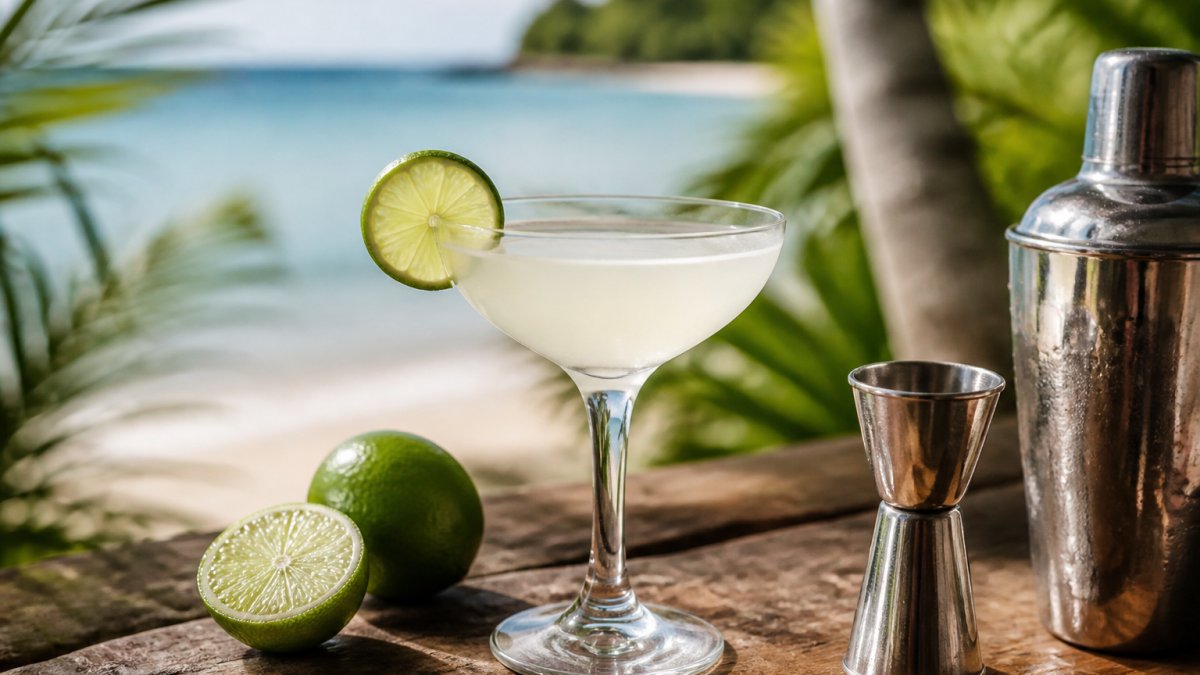
Garnish a classic daiquiri with a thin lime wheel perched on the rim of the glass. Cut a small radial slit in each wheel so it straddles the rim without tearing, keeping the peel facing up to release citrus oil.
- A lime wheel matches the drink’s three ingredients and adds aroma without changing flavor.
- Trim both ends of the lime flat and cut thin, even rounds with a sharp paring knife.
- For a daiquiri on the rocks, a wedge on the rim is acceptable and practical.
- Express a twist peel-side down a few inches above the glass so the oil lands on the surface.
- Never crowd the rim with more than one garnish, since two split the aroma.
Table of Contents
- Why the Garnish Makes a Classic Daiquiri
- The Traditional Daiquiri Garnish and Why It Works
- How to Cut a Lime Wheel Garnish Step by Step
- Making a Lime Twist for Cocktails
- Daiquiri Glassware: Coupe, Martini, or Rocks
- Garnish Placement and Serving Technique
- When to Skip the Garnish Entirely
- Mixing Your Daiquiri with Tiburon White Tip Rum
- Frequently Asked Questions
Why the Garnish Makes a Classic Daiquiri
A lime garnish is the final step that turns a well-mixed classic daiquiri into a complete cocktail. It adds aroma before the first sip, signals freshness, and shows the drink was made with care.
Here is the core idea: the garnish is the first thing a guest smells and the last thing they see. A lime wheel releases citrus oil into the air above the glass. That scent hits before the taste does.
Most home bartenders skip this step. They shake, strain, and serve. The drink is fine. But it never feels finished.
The right garnish fixes that in seconds. Below, we walk through options, from the traditional wheel to the twist to no garnish at all. You will learn how to cut each one, where to place it, and when to leave it off.
The Traditional Daiquiri Garnish and Why It Works
The traditional daiquiri garnish is a thin lime wheel. It is the classic choice because it matches the drink’s main ingredient and adds aroma without changing the flavor.
Why does a lime wheel work so well? Three reasons:
- It looks clean and simple, like the drink itself
- The peel holds citrus oil that perfumes the first sip
- It signals freshness without adding sweetness
A classic daiquiri has only three ingredients: white rum, fresh lime juice, and simple syrup (Daiquiri). The garnish should echo that simplicity. A lime wheel does exactly that.
Lime Wheel vs. Lime Wedge: What the Classic Calls For
A lime wheel is a full round slice. A wedge is a quarter cut. Both come from the same fruit, but they serve different purposes.
The wheel sits flat on the rim or floats on the surface. It looks polished and traditional. The wedge is easier to squeeze and works well on the side of a rocks glass.
For a classic daiquiri served up in a coupe, use a wheel. For a daiquiri on the rocks, a wedge is acceptable and practical. The classic calls for the wheel.
How to Cut a Lime Wheel Garnish Step by Step
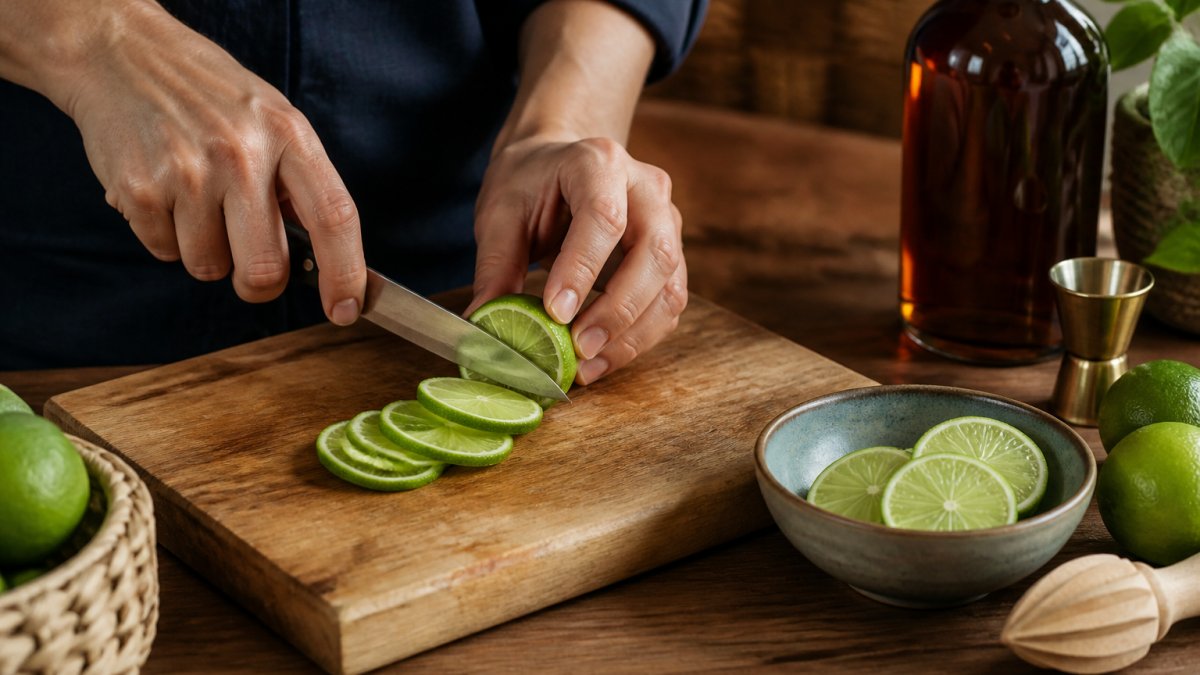
A clean lime wheel is a traditional garnish for a classic daiquiri. The goal is a thin, even round with a bright green peel, no ragged edges, and just enough of a slit to seat it on the rim. Here is the process.
- Wash and dry one fresh lime. Wet peel dulls the knife and smears the cut.
- Trim both ends flat so the fruit sits steady on the board.
- Lay the lime on its side and cut thin rounds.
- Make one small radial slit from the center to the edge of each wheel so it can straddle the rim without tearing.
- Discard the two end pieces, which are almost all pith and taste bitter.
Cut evenly and with a sharp paring knife.
Why a Wheel and Not a Wedge
A lime wheel is a full round slice; a wedge is a quarter cut. Both come from the same fruit, but they do different jobs. The wheel sits flat on the rim or floats on the surface and reads as polished and traditional. The wedge is easier to squeeze and suits a rocks glass. For a classic daiquiri served up in a coupe, the wheel is the convention, it echoes the drink’s three-ingredient simplicity and puts aromatic peel right under the drinker’s nose.
Choosing and Preparing Fresh Limes
Prep steps that make a difference:
- Roll the lime on the counter before cutting to loosen the juice.
- Keep limes at room temperature for easier juicing.
- Cut garnish wheels before you juice the rest of the fruit, so the rounds stay intact.
- Store cut wheels under a damp paper towel if serving later; exposed peel dries and curls within about 30 minutes.
Making a Lime Twist for Cocktails
A lime twist is a strip of peel, not a slice of fruit.
How to cut a lime twist:
- Cut a fresh lime in half
- Use a peeler to press firmly and slice a wide strip of peel
- Keep the strip free of white pith, which tastes bitter
- Trim the edges straight with a knife
- Twist the peel over the glass to release the oil
- Rub the oil around the rim, then drop the twist in or rest it on the edge
Daiquiri Glassware: Coupe, Martini, or Rocks
| Glass | Best For | Garnish Fit |
|---|---|---|
| Coupe | Classic daiquiri served up | Lime wheel on the rim |
| Martini | Chilled, straight-up serve | Twist or thin wheel |
| Rocks | Daiquiri over ice | Wedge on the rim |
If you are building a full home bar, our guide to the best rum for a home bar covers the bottles worth stocking.
Garnish Placement and Serving Technique
Follow these placement rules:
- Perch a wheel on the rim, not floating in the drink. Use the slit to seat it securely on the edge so the peel faces up and the flesh faces the drinker. A floating wheel sinks, softens, and looks tired within a minute.
- Express a twist over the surface, peel-side down. Hold the peel a few inches above the glass and pinch it skin-side toward the drink so the oil lands on the surface. Then rub the oil around the rim and either drop the twist in or rest it on the edge.
- Set a wedge on the rim with the flesh facing out. This keeps the peel away from the drink and lets the guest squeeze it if they want more acidity.
- Never crowd the rim with more than one garnish. Two garnishes fight for space and split the aroma.
What Each Placement Does to the Drink
If you want to build on the base drink, our White Tip infusion recipes show how to add flavor before the garnish stage.
When to Skip the Garnish Entirely
Sometimes no garnish is the right call. A clean, ungarnished daiquiri can look sharp and confident.
Skip the garnish when:
- The drink is served in a setting where speed matters
- A guest has a citrus allergy or preference
- You are testing the balance of the drink itself
- The glass is small and a garnish would crowd it
A garnish-free daiquiri puts all the focus on balance. If the rum, lime, and sweetener are right, the drink stands alone. We think every bartender should taste a daiquiri without garnish at least once. It teaches you whether the mix is truly balanced.
If you want to build on the base drink, our White Tip infusion recipes show how to add flavor before the garnish stage.
Mixing Your Daiquiri with Tiburon White Tip Rum
Our White Tip rum is 92 proof and ideal for mixing.
A classic daiquiri recipe to start with:
- 2 ounces White Tip rum
- 3/4 ounce fresh lime juice
- 3/4 ounce simple syrup
- One lime wheel for garnish
Shake vigorously with ice, strain into a chilled coupe, and add the wheel.
If you want to explore which white rums work best in this drink, read our guide to the best white rum for mixing. When you are ready to mix your own, you can buy White Tip rum directly from us.
Frequently Asked Questions
What is the traditional garnish for a classic daiquiri?
A thin lime wheel is a traditional daiquiri garnish.
Should you garnish a daiquiri with a lime wedge or a lime wheel?
A lime wheel is a traditional choice for a classic daiquiri.
How do you make a lime twist for a daiquiri?
Cut a thin strip of peel from a fresh lime with a channel knife or paring knife, keeping the pith off. Twist the strip over the glass so the oils spray onto the surface, then rub the peel around the rim and drop it in or rest it on the edge. A twist adds aroma without adding volume or diluting the drink. Make it just before serving, because the oils fade quickly once exposed to air.
Does a classic daiquiri need a garnish at all?
A classic daiquiri can be served without a garnish.
The garnish is small, but it is the detail guests remember. A clean lime wheel, placed with care, tells them the drink was made by someone who cares. That is the standard we hold at Tiburon Rum, and it is why our White Tip rum is crafted for cocktails that deserve a proper finish. Get started with Tiburon Rum and give your next daiquiri the garnish it has earned.
