
Last Updated: November 16, 2026
Quick Summary
Craft spirit tasting for beginners follows a simple four-step sequence: look, nose, sip, then finish. Do it the same way every time and your notes will line up. Nose gently in three short passes, since most aroma hides in the second and third passes.
- Hold the glass against a white background and note clarity first, then color.
- A beginner can finish the reusable tasting notes worksheet in under five minutes.
- Rate palate families low, medium, or high instead of hunting a precise descriptor.
- A few drops of water can soften alcohol heat and release aroma, added one drop at a time.
- Pour roughly a half-ounce per spirit and keep water on hand between pours.
Table of Contents
- How to Taste Spirits for Beginners: The Four-Step Sequence
- How to Describe Spirit Aromas Without Guessing
- Craft Spirit Tasting Notes Template You Can Reuse
- Spirit Tasting Notes Examples Across Rum, Tequila, and Whiskey
- What Temperature, Water, and Glassware Do to What You Taste
- A Repeatable Method for Comparing Two Spirits Side by Side
- Tasting Responsibly: Small Pours, Water, and a Ride Home
- Start Your First Tasting Flight with Tiburon Rum
- Frequently Asked Questions
How to Taste Spirits for Beginners: The Four-Step Sequence
Learning craft spirit tasting notes for beginners starts with one truth: tasting is a sequence, not a guess. The method below walks newcomers through four steps in order, each building on the last.
The sequence is look, nose, sip, then finish. Do it the same way every time and your notes will line up.
Step 1: Look at the Spirit Before You Smell It
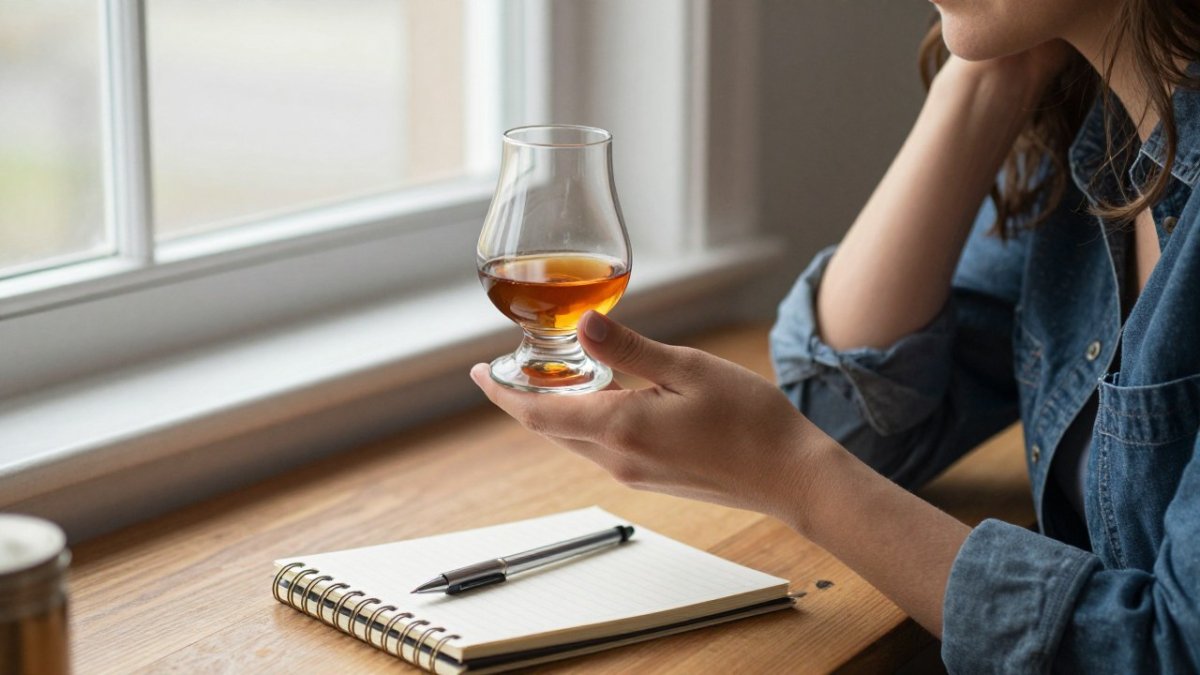
Pour a small amount and hold the glass against a white background. Note the clarity first, then the color. A clear spirit with no haze tells you it was filtered. A deep amber hints at time in oak.
Write what you see in plain words: pale gold, clear, bright, cloudy. Ten seconds, and everything that follows is anchored.
Step 2: Nose the Glass Slowly and in Passes
Bring the glass to your nose and sniff gently, not deeply, strong alcohol dulls your sense of smell fast. Take three short passes, resting between each.
First pass: what jumps out? Second pass: what sits underneath? Third pass: anything new? Most aroma hides in the second and third passes.
Step 3: Sip, Hold, and Assess the Palate
Take a small sip and let it rest on your tongue for a few seconds. Notice mouthfeel and texture as much as flavor. Is it creamy, thin, oily, or round?
Then swallow and note the finish, meaning how long the flavor lingers. A long, warm finish usually points to quality. A short, sharp one tells you something too.
How to Describe Spirit Aromas Without Guessing
You do not need a trained nose to describe aromas well. Compare what you smell to things you already know: start broad, then get specific.
Try this ladder:
- Fruity first, then ask which fruit: banana, citrus, dried fig?
- Sweet first, then ask which sweet: vanilla, caramel, toffee, honey?
- Spicy first, then ask which spice: ginger, nutmeg, licorice?
A common mistake is reaching for exotic descriptors before checking the basics. If it smells like vanilla, write vanilla. Precision beats poetry.
When you are unsure, say so honestly. “Smells like stone fruit, maybe peach” is a real note.
Craft Spirit Tasting Notes Template You Can Reuse
A good template makes craft spirit tasting notes repeatable. Print one page and fill it in for every pour, a beginner can finish it in under five minutes and still get notes worth comparing later.
Spirit Tasting Notes Worksheet
- Spirit name and type: ______
- Age or batch (if listed): ______
- Proof: ______
Keep the sheet short. A long form you never finish is worse than a short one you use every time.
How to Fill In Each Field Without Stalling
The blank lines are where beginners freeze. Here is what each one asks for.
- Appearance: two words are enough. “Clear, pale gold” or “slightly hazy, deep amber.” Clarity tells you about filtering; color hints at oak time or added caramel coloring.
- Nose passes: do not try to name three aromas. First pass, write the single strongest smell; second, what sits underneath; third, anything new once the alcohol blew off.
- Palate: rate each family low / medium / high rather than hunting a precise descriptor. “Medium sweetness, low spice, high fruit” is a complete note.
A Worked Example
Here is a filled-in sheet for a barrel-aged rum, so you can see how sparse a good set of notes can be:
- Spirit name and type: Barrel-aged rum
- Proof: 92
- Appearance: clear, deep amber
That is a complete tasting note, nothing required a trained nose, and every line can be compared against the next pour.
Watch out: filling in every field on the first sip leads to invented descriptors. Fill appearance and nose first, then sip, then finish the palate and finish lines, in that order.
Turning the Sheet Into a Personal Record
One sheet is a note; twenty are a palate. Date each one and keep them in a folder or notes app. After a dozen pours you will see patterns, that you consistently rate high-heat spirits lower, or prefer medium finishes to long ones. That is when tasting notes stop being homework and start telling you what you like.
Spirit Tasting Notes Examples Across Rum, Tequila, and Whiskey
Working through spirit tasting notes examples across categories sharpens your vocabulary fast. Each spirit brings its own typical markers, shaped by ingredients, distillation, and aging.
Here is how the three big categories usually read:
| Spirit | Typical Aromas | Palate Markers | Common Finish |
|---|---|---|---|
| Rum | Vanilla, tropical fruit, caramel | Sweet, round, creamy | Medium, warm |
| Tequila | Herbal, citrus, cooked agave | Bright, peppery, clean | Short to medium |
| Whiskey | Oak, grain, toffee | Spicy, full, textured | Long, oaky |
Our molasses-based rum, aged in bourbon barrels, shows the vanilla and caramel side of that rum row. For production detail, this small batch rum vs mass produced comparison explains what changes in the glass; if tequila is more your lane, these premium sipping tequilas ranked give you a tasting list.
What Temperature, Water, and Glassware Do to What You Taste
Serving conditions change perception more than most beginners expect. Three variables matter: temperature, dilution, and the glass itself.
- Temperature: A slightly cool pour reads tighter and more alcohol-forward. Let it warm in your hand and new aromas open up.
- Water: A few drops of water can soften alcohol heat and release aroma. Add slowly, one drop at a time.
- Glassware: A tulip-shaped glass traps aroma near your nose, while a wide tumbler lets it escape.
Try the same spirit three ways: neat, with a drop of water, and in a different glass. The differences will surprise you and sharpen your notes.
A Repeatable Method for Comparing Two Spirits Side by Side
Comparing two spirits teaches you more than tasting either alone. Taste both, then both again, in the same session, scoring on the same four lines so the comparison is fair.
Follow this order:
- Pour equal small amounts of Spirit A and Spirit B into identical glasses.
- Nose A, then B, then A again.
- Sip A, then B, then A again.
- Note where they differ, not just which you prefer.
- Score each on sweetness, spice, body, and finish using a 1-5 scale.
The back-and-forth is the point. Your palate calibrates by contrast, and the second pass on each spirit is where the real differences show up.
The Four-Line Scorecard
A scorecard keeps you honest. Rate each spirit from 1 to 5 on the same four lines:
| Line | What 1 looks like | What 5 looks like |
|---|---|---|
| Sweetness | Bone dry | Syrupy, dessert-like |
| Spice | No heat or spice | Sharp, peppery, hot |
| Body | Thin, watery | Rich, coating, oily |
| Finish | Gone in a second | Still there a minute later |
Write the numbers down before you decide which you prefer. Beginners often pick a favorite first and bend the scores to match; scoring first separates what you tasted from what you liked.
Separating Preference From Category Character
This is the part most comparisons skip. When you taste a rum against a whiskey, some differences come from the spirit category itself and some come from the specific bottle.
- Within a category: taste two rums of similar age and proof. Any difference is about the producer, the mash or wash, and the barrel, not the category.
- Across categories: taste a rum against a whiskey. Now the differences are mostly category-level: molasses and tropical fruit on one side, grain and oak on the other.
A common pattern is that beginners blame a spirit for being “too hot” when the real variable is proof. Compare two spirits at similar proof before you decide you dislike a category.
A Cross-Category Example
Put a barrel-aged rum next to a bourbon and score both on the four lines. The rum typically scores higher on sweetness and lower on spice, the bourbon higher on spice and body. The finish may land at the same number, which tells you the difference you noticed was in flavor, not length. That single insight is worth more than a dozen unconnected notes.
Watch out: tasting more than two spirits in one sitting dulls your palate and inflates every score. Two is the useful number; three is the ceiling.
Making the Method Stick
Keep the scorecards. After five or six comparisons you will have a personal map of what you like, say, medium body with a long finish regardless of category. That map lets you order with confidence instead of guessing. These essential bottles for a home bar give you a solid starting lineup to compare.
Tasting Responsibly: Small Pours, Water, and a Ride Home
Tasting is about attention, not volume. Small pours are enough to learn from, and they keep your palate sharp through a whole flight.
A few habits keep a session safe and enjoyable:
- Pour small, roughly a half-ounce per spirit
- Keep water on hand and sip it between pours
- Eat something before you start
The NIAAA guidance on alcohol and health is clear that how much you drink matters more than what you drink. Treat tasting as study, not a contest. You will taste more clearly and remember more of it.
Start Your First Tasting Flight with Tiburon Rum
You now have the sequence, the vocabulary, the template, and the method. The next step is a real pour in front of you.
Come visit us for a guided flight at our Tiburon Rum tasting rooms, where our staff will walk you through the same four steps with our rum and FIN Tequila in hand. Or practice at home: order Tiburon Rum online and check shipping availability to your state.
Our White Tip rum is 92 proof and offers an ideal mixing experience, while our barrel-aged rum suits slow sipping.
Get started with Tiburon Rum and taste the difference a proper flight makes.
The best way to learn tasting is to taste with guidance.
Frequently Asked Questions
What should beginners look for when tasting a craft spirit?
Start with four checkpoints: appearance, aroma, palate, and finish. Look at color and clarity first, then nose the glass in short passes to catch the top notes before the alcohol heat rises. On the palate, note sweetness, fruit, spice, and texture, then time how long the aftertaste lingers. Beginners often try to name every flavor at once; instead, record one or two clear impressions per checkpoint and build from there. A written record of your craft spirit tasting makes patterns easier to spot across bottles.
How do you write tasting notes for spirits?
Use a fixed template so each tasting is comparable. Record the spirit name, type, proof, and serving method, then fill in appearance, aroma, palate, and finish in separate lines. Write plain descriptors first (vanilla, citrus peel, black pepper) before reaching for poetic language. Add a simple score and a one-line verdict. A craft spirit tasting notes template keeps you honest: if you cannot smell oak on one bottle, the empty line tells you more than a guess would.
Should you add water or ice when tasting spirits?
Try the spirit neat first so you know its baseline, then add a few drops of room-temperature water and taste again. Water can soften alcohol heat and open aromas that were masked, which helps beginners describe spirit aromas more accurately. Ice chills the liquid and dulls both aroma and sweetness, so save it for drinking rather than evaluating. If you compare two spirits, treat both the same way so the difference you taste is the spirit, not the dilution.
What does the finish mean when tasting a spirit?
The finish is the aftertaste and sensation that remain after you swallow, and it is often the clearest sign of quality. Note how long it lasts and whether it stays sweet, turns dry, or leaves warmth in the throat. A short, sharp finish reads differently from a long, rounded one. When you record tasting notes, write the finish in seconds or in plain words (short, medium, long) rather than forcing a flavor label you are not sure of.
