
Last Updated: November 18, 2026
Quick Summary
Rum sweetness can come from the spirit itself rather than added sugar. Fermentation, distillation and oak aging all create flavors that taste sweet, including fruity esters and vanilla. Sweetness on the palate and residual sugar content are separate measurements, so a rum can taste sweet while containing little sugar.
- Rum made from molasses can carry sweetness from its naturally sweet base ingredient.
- Fermentation produces fruity, floral and candy-like aroma compounds that read as sweetness.
- Oak aging contributes vanillin, caramel and toasted notes that taste sweet without sugar.
- Some rum producers legally add sugar after distillation, which is why sweetness is harder to read.
- A sweetness that stays flat from first sniff to last sip is more consistent with added sugar.
Table of Contents
- Why Rum Tastes Sweet Without Added Sugar
- How Fermentation Creates Sweetness-Like Flavors
- How Distillation and Sugarcane Ingredients Shape the Final Spirit
- Aging, Oak, and the Vanilla Flavor in Aged Rum
- Sugar Content in Rum Compared With Whiskey
- How to Tell if Rum Has Added Sugar
- A Structured Tasting Comparison to Try at Home
- Choosing a Rum Once You Know What to Look For
- Frequently Asked Questions
Why Rum Tastes Sweet Without Added Sugar
Many people assume that a sweet rum must have sugar added to it, but the rum sweetness in a glass often comes from the spirit itself. That is not always the case. Rum made from molasses, a naturally sweet base ingredient, can carry sweetness from the start. Rum also picks up sweetness-like flavors during fermentation, distillation and aging, which means sweetness and added sugar are two separate questions.
Sweetness on the palate and sugar content are not the same thing. A rum can taste round and sweet while containing very little residual sugar. Learning to separate the two is the first step in judging whether a bottle has been sweetened after distillation.
How Fermentation Creates Sweetness-Like Flavors
Fermentation turns sugar into alcohol, but it also produces dozens of aroma compounds. Yeast creates esters, which often read as fruity, floral or candy-like notes. Those notes can be perceived as sweetness even when the spirit has no added sugar.
Fermentation conditions shape how much of this character ends up in the spirit. Time, temperature and the yeast strain all matter. A long, cool fermentation tends to produce a different profile than a short, warm one.
How Distillation and Sugarcane Ingredients Shape the Final Spirit
Rum starts with fermentable sugar, usually from molasses or sugarcane juice. Molasses carries richer, deeper flavor than sugarcane juice, which is why many rums built on it taste heavier and more caramelized. The base ingredient sets the ceiling for what the finished spirit can express.
Distillation then decides which compounds move into the glass. Lighter cuts keep more fruity and floral character, while heavier cuts carry more body and weight. Sugar added after distillation is a different matter. It is not part of the production process at all, and it is not carried over from the wash.
Aging, Oak, and the Vanilla Flavor in Aged Rum
Time in oak changes rum in predictable ways. Wood contributes vanillin, which tastes like vanilla, along with caramel and toasted notes. Tiburon Rum’s molasses-based spirit is matured in bourbon barrels, and its signature smooth finish with tropical vanilla undertones reflects that maturation.
These flavors come from the barrel, not from sugar. A rum with strong vanilla and caramel may taste sweet while still containing little or no added sweetener.
Sugar Content in Rum Compared With Whiskey
Whiskey is not sweetened after distillation in most cases, yet it can still taste sweet from oak and grain. Rum is different because some producers legally add sugar or other sweeteners after distillation, depending on the style and the market. That is the main reason rum sweetness is harder to read than whiskey sweetness.
Rules on additives vary by country, so the labeling you see on a bottle may not tell the whole story. Checking how a rum is described on its label and on the producer’s site helps you understand how it was made.
How to Tell if Rum Has Added Sugar
No single taste test proves that sugar was added, and no label in the United States is required to disclose it. That is the core difficulty: sweetness on the palate and measurable residual sugar are two different measurements, and only one of them can be read from a glass.
Start with what the label can and cannot tell you. In the United States, distilled spirits labeling is governed by federal rules (ttb.gov). Check the current requirements on the official source for specifics. A label that says “rum” tells you the spirit meets the standard of identity; it does not tell you whether sweetener was added afterward. Producers who do disclose dosage or additive information usually do so voluntarily on their own websites or technical sheets, not on the bottle.
That is why the most reliable consumer approach is comparative rather than absolute. A few concrete patterns are worth knowing:
- Residual sugar versus perceived sweetness. A rum can measure low in residual sugar and still taste sweet, because vanillin from oak, fruity esters from fermentation, and higher alcohols all read as sweetness to the palate. Conversely, a lightly dosed rum with a strong oak backbone can taste drier than its sugar content suggests.
- Body and finish together. Added sugar tends to add viscosity and a soft, lingering finish without much aromatic lift. A rum that tastes sweet but has a thin mid-palate and a short, flat finish is a weaker candidate for added sugar than one with a thick, syrupy texture and a sweetness that persists after the aroma fades.
- Aroma-to-sweetness ratio. Fermentation-derived sweetness usually arrives with fruit, floral, or spice notes that develop and change in the glass. Sweetness that sits on top of the aroma, unchanged from first sniff to last sip, is more consistent with a post-distillation addition.
- Age and price signals. Very sweet, very smooth rum at a young age and a low price point is a common pattern in sweetened products, though it is a correlation, not proof.
Watch out: at-home clues like the “swirl and legs” test or a sugar residue left in a glass are unreliable. They respond to alcohol content, temperature, and glassware as much as to sugar, and they cannot distinguish a sweetened rum from a high-ester, well-aged one.
For anything approaching proof, laboratory analysis is the only route. Residual sugar in spirits is typically measured by high-performance liquid chromatography (HPLC), which separates and quantifies individual sugars such as glucose and fructose. Some independent labs and spirits-testing services publish dosage figures for specific bottles. Short of that, treat sensory cues as indirect evidence and compare like with like: same age statement, same style, same proof, tasted side by side.
A Structured Tasting Comparison to Try at Home
!Three small tasting glasses of amber rum lined up on a wooden bar top beside a notepad and a pen, in soft natural daylight
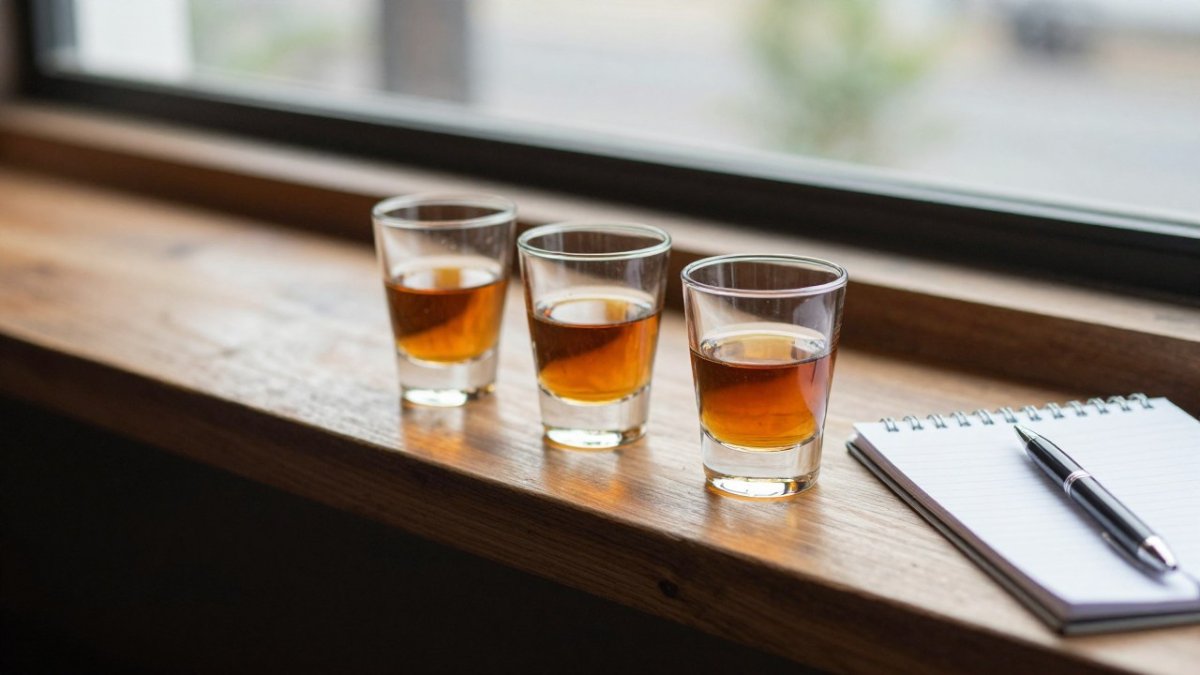
The goal of this comparison is not to declare a winner but to separate two sources of sweetness, one built during fermentation and aging, one added after distillation, using the same four checkpoints for every glass. Pour two or three rums of similar age and proof into identical glasses at room temperature, taste them neat, and work through the steps in the same order each time.
| Step | What to check | Fermentation- and oak-derived sweetness tends to show | Post-distillation sweetening tends to show |
|---|---|---|---|
| 1. Aroma | Fruit, floral, spice, vanilla | Layered and changing as the glass opens; fruit and spice sit alongside the sweet note | Sweetness sits on top of the aroma and stays flat; little development over time |
| 2. Palate | Body, texture, sweetness | Sweetness integrated with body; texture from age and proof, not syrup | Noticeably thicker or oilier mouthfeel; sweetness coats the tongue |
| 3. Mid-palate | Complexity and movement | Flavors shift and reveal new notes; sweetness recedes as spice or oak comes forward | Sweetness dominates and masks other flavors; little movement |
| 4. Finish | Length, dryness, warmth | Dries out; oak tannin and warmth return at the end | Sweetness lingers past the aroma; finish stays soft and flat |
| 5. Comparison | Which is sweeter, and why | Differences track age, proof, and base ingredient | Differences track dosage rather than production |
A few practical notes make the comparison more useful. Taste in the same order each time and rinse with water between glasses so the palate resets. Note the proof of each bottle, because higher-proof spirits carry aroma differently and can read as sweeter or hotter depending on dilution. If you can, taste the same rum at two ages from the same producer; that isolates the barrel’s contribution from everything else.
Watch out: sensory cues are indirect evidence, not proof. A rum that reads sweet and thick may simply be a high-ester, high-proof spirit, and a rum that reads dry may still carry a small dose of sugar. Use the comparison to build a hypothesis, then check it against any published dosage or technical information the producer offers.
Keep your notes. Over several comparisons, the pattern that separates fermentation-driven sweetness from added sweetness becomes easier to recognize, and the notes give you something concrete to compare against the next bottle you consider.
Choosing a Rum Once You Know What to Look For
Once you understand the difference between fermentation-derived flavor and added sweetness, choosing a bottle becomes more straightforward. For mixing, Tiburon Rum’s 92-proof White Tip is offered as a rum for mixing. For sipping, Tiburon Rum’s bourbon-barrel-matured rum offers a smooth finish.
Pricing depends on the bottle, the size and where you buy, so check Tiburon Rum’s website for current prices and availability. Matching the rum to how you plan to drink it, whether neat or in a cocktail, is the most reliable way to choose well.
Tiburon Rum makes its molasses-based spirit in a family-owned Belizean distillery, and every bottle is part of that work. Explore the range on the Tiburon Rum website and find the bottle that fits how you like to drink.
Frequently Asked Questions
Which type of rum is the sweetest?
Sweetness in rum depends more on the style and production choices than on a single category. Molasses-based rums, aged rums matured in oak, and rums with a longer fermentation often taste sweeter because of fermentation esters, caramel notes and wood-derived vanilla. Whether a rum is actually sweetened after distillation is a separate question. Check the label and the producer’s technical information to see whether any sugar was added, rather than relying on taste alone.
How can you tell if rum has added sugar?
Start with the label and the producer’s website, which may state whether the rum is unsweetened or contains added sugar. Some regulators require disclosure of sweeteners, so the label can be a reliable starting point. Taste also helps: a sugar addition often shows up as a thick, syrupy mouthfeel with sweetness that arrives early and fades quickly, while fermentation and oak sweetness tend to build with fruit, vanilla and caramel notes. For a definitive answer, look for a lab-tested sugar figure from the producer.
Can fermentation make rum taste sweet without leaving sugar in it?
Yes. Yeast converts fermentable sugar into alcohol and also produces esters and other flavor compounds that can read as fruity or sweet. Distillation removes most of the sugar, so a rum can taste sweet while containing little or no residual sugar. This is why perceived sweetness and measured sugar content are not the same thing.
Does aging in bourbon barrels make rum taste sweeter?
Aging in oak barrels, including barrels previously used for bourbon, can add vanilla, caramel and toasted wood notes that taste sweet. The effect comes from compounds extracted from the wood during maturation, not from added sugar. Tiburon Rum’s molasses-based rum is matured in bourbon barrels and has a smooth finish with tropical vanilla undertones, but for current product details and availability, visit the Tiburon Rum website.
