
Last Updated: November 7, 2026
Quick Summary
The best tequila decanters for preservation seal tight, block light, and match your bottle’s volume. Choose a lead-free glass or ceramic vessel with a gasketed stopper, fill it to the shoulder, and store it away from light and heat.
- Test a seal by inverting a water-filled decanter over a sink for ten seconds and watching the joint.
- A gasketed stopper is the safer default because the gasket can be inspected and replaced.
- Opaque ceramic blocks light entirely, while clear glass blocks none.
- A standard 750 ml bottle fills a 750 to 800 ml decanter almost to the shoulder.
- Keep the decanter at least three-quarters full and finish a bottle within a few months of opening.
Table of Contents
- What Actually Preserves Tequila in a Decanter
- How to Spot a Genuinely Airtight Tequila Decanter
- Glass vs. Crystal vs. Ceramic: Material Trade-Offs
- Does Tequila Go Bad in a Decanter?
- Tequila Storage After Opening: Fill Level, Light, and Time
- Capacity, Stopper Fit, and Pouring Convenience
- Matching a Decanter to Your FIN Tequila Bottle
- Frequently Asked Questions
What Actually Preserves Tequila in a Decanter
The best tequila decanters for preservation are the ones that seal tight, block light, and fit your bottle’s volume, not the ones that photograph best on a bar cart.
A tequila decanter is a glass, crystal, or ceramic vessel with a resealable stopper, used to hold and serve tequila after the original bottle is opened. The vessel itself does not improve the spirit.
Seal Quality Beats Decanter Shape
Here is the part most buying guides skip: shape is cosmetic, and the seal is functional. A wide-bellied crystal showpiece with a loose stopper will let more air in than a plain glass bottle with a tight gasket.
Two seal types do most of the work:
- Ground glass stoppers seat well when the joint is machined precisely, but they wear and can stick over time.
- Gasketed stoppers (silicone or cork with a synthetic seal) hold a tighter, more forgiving closure, especially on a decanter you open weekly.
A decanter that wobbles, rocks, or lets the stopper drop in without resistance is not airtight, no matter what the box says.
How to Spot a Genuinely Airtight Tequila Decanter
The useful question is what makes a stopper tight, and how you verify it before you commit a bottle of tequila to the vessel. You can test a decanter’s seal in under a minute, but first it helps to know what you are testing.
Read the Stopper Before You Read the Box
A stopper seals through one of three mechanisms, and each behaves differently over months of weekly use:
- Ground glass joints. Two precisely machined glass surfaces mate to form a near-airtight seal with no gasket. They work well when the joint is cut accurately, but they are unforgiving: a chip, grit, or a slightly out-of-round neck creates a leak path, and ground joints can stick if left seated for long periods.
- Cork stoppers. Natural or composite cork compresses into the neck and seals by friction. Cork breathes slightly, which is fine for short-term serving but less protective for long storage, and cork can dry and shrink if the decanter sits empty.
- Gasketed stoppers. A silicone, EPDM, or synthetic rubber ring sits between the stopper and the neck and compresses when seated. This is the most forgiving design for a decanter you open weekly, because the elastomer conforms to minor irregularities and the gasket can be inspected and replaced.
For preservation, a gasketed stopper is the safer default. The gasket is the wear part, and a decanter whose gasket can be swapped out will outlast one with a molded-in seal.
The One-Minute Leak Check
Fill the decanter with water, insert the stopper firmly, and invert it over a sink for ten seconds. Watch the joint, not the body. Any seepage, even a slow bead, means the seal is not airtight. Then set it upright, press the stopper down, and try to lift the decanter by the stopper alone. If the stopper holds the weight of the vessel, the fit is sound; if it slips out, the neck and stopper are mismatched.
Three more checks matter in the store:
- Run a fingertip around the stopper’s sealing surface. Any grit or chip means a leak path.
- Look for a visible gasket ring. Silicone and EPDM seals are easy to inspect and easy to replace; a molded seal is neither.
- Ask whether replacement stoppers or gaskets are sold. A decanter you cannot reseal is a one-season purchase.
Watch out: a decorative stopper that looks airtight but has no gasket is the single most common return we hear about from home bar owners. It seals on day one and leaks by month three.
Fit, Wear, and Replacement
A stopper that drops in without resistance is not sealing; it is resting. The correct fit gives firm resistance in the last quarter-inch of travel and seats with a slight compression of the gasket. Over time, silicone gaskets take a set and lose compression, so plan to replace them periodically, a spare gasket is cheap insurance compared with a bottle of oxidized blanco.
Glass vs. Crystal vs. Ceramic: Material Trade-Offs
Glass is the safest default for preservation. It is non-porous, does not react with alcohol, and lets you see the fill level at a glance.
Crystal, meaning glass with added minerals for brilliance, looks better under light but offers no preservation advantage. The U.S. Food and Drug Administration guidance on lead in food-contact glassware is a reasonable starting point for understanding why that label matters.
Why a Ceramic Tequila Decanter Blocks Light
A ceramic tequila decanter is the best choice if your bar sits near a window or under bright display lighting. Opaque walls block the ultraviolet and visible light that degrade a spirit’s color and aroma compounds over months of storage. The trade-off is that you cannot see how much is left without lifting it, and glazed interiors vary in quality.
| Material | Light Protection | Seal Potential | Best For |
|---|---|---|---|
| Clear glass | None | Excellent with gasket | Everyday pouring, visible fill level |
| Crystal | None | Good to excellent | Display and gifting |
| Ceramic | Full | Good with cork or gasket | Bars near windows, long storage |
| Colored glass | Partial | Excellent with gasket | A middle ground for display |
Does Tequila Go Bad in a Decanter?
Tequila does go bad in a decanter, but slowly, and the cause is oxygen rather than the vessel. Once a bottle is opened, the spirit begins to oxidize.
Signs your tequila is past its best:
- The aroma turns flat or faintly dusty.
- The first sip feels thin where it used to feel round.
- A blanco that was clear shows a dull, slightly darker cast.
Before you decant anything, confirm the bottle is genuine. Counterfeit spirits are a real problem in the category, and our guide on how to verify authentic tequila walks through the checks that matter.
Tequila Storage After Opening: Fill Level, Light, and Time
Tequila storage after opening comes down to three variables: how full the vessel is, how much light reaches it, and how long it sits. Fill level is the one most people ignore. A decanter that is two-thirds full holds a large pocket of air above the liquid, and that air is what oxidizes the spirit. A fuller decanter ages more slowly.
A Tequila-Specific Transfer Procedure
Most guides describe decanting in the abstract. Here is the sequence that protects the spirit:
- Clean and dry the decanter. Wash with hot water and a drop of unscented dish soap, rinse thoroughly, and let it air-dry completely upside down. Residual moisture dilutes the tequila and can carry odors from the soap or from storage.
- Check the stopper and gasket. Inspect the gasket for cracks or compression set before you fill. A gasket that has taken a set will not seal, and you will not notice until the aroma fades.
- Pour slowly and minimize headspace. Fill to the shoulder of the decanter, leaving only the small volume the stopper displaces. A 750 ml bottle poured into a 750 to 800 ml decanter lands almost at the shoulder, which is exactly the target.
- Seat the stopper fully. Press it down until it resists. A stopper resting on top of the neck is not sealing.
- Label the opening date. Write the date on a small tag under the base or on a piece of tape on the underside. You will not remember, and the date is what tells you when to finish the bottle.
- Store away from light and heat. Keep the decanter out of direct sun and away from the stove, radiator, or any surface that cycles warm. Heat accelerates the damage light starts.
Fill Level and Time: The Trade-Off Nobody Explains
Air exposure is not constant, it grows as the decanter empties. A full decanter has little headspace and oxidizes slowly; a half-empty one has a large air pocket and oxidizes faster, even with a perfect seal.
For collectors holding a special bottle, the original bottle with its cork is often the better vessel. Decant for serving, then pour the remainder back into the original bottle, reseal it, and store it upright in the dark.
Light and Heat in Practice
Opaque ceramic blocks light entirely; colored glass blocks some; clear glass blocks none. If your bar sits near a window or under bright display lighting, that difference matters over months, not days. Heat is the second lever: a decanter stored beside a stove or on a sunny sill will change faster than one stored in a closed cabinet, regardless of seal quality.
Capacity, Stopper Fit, and Pouring Convenience
Capacity is where buyers most often get it wrong. A decanter that holds far more than your bottle leaves excess headspace and speeds oxidation. Match the capacity to the bottle you actually pour.
Pouring matters too. A narrow neck gives control and reduces spillage; a wide mouth pours fast and sloppy. Check the weight in your hand before you buy.
Matching a Decanter to Your FIN Tequila Bottle
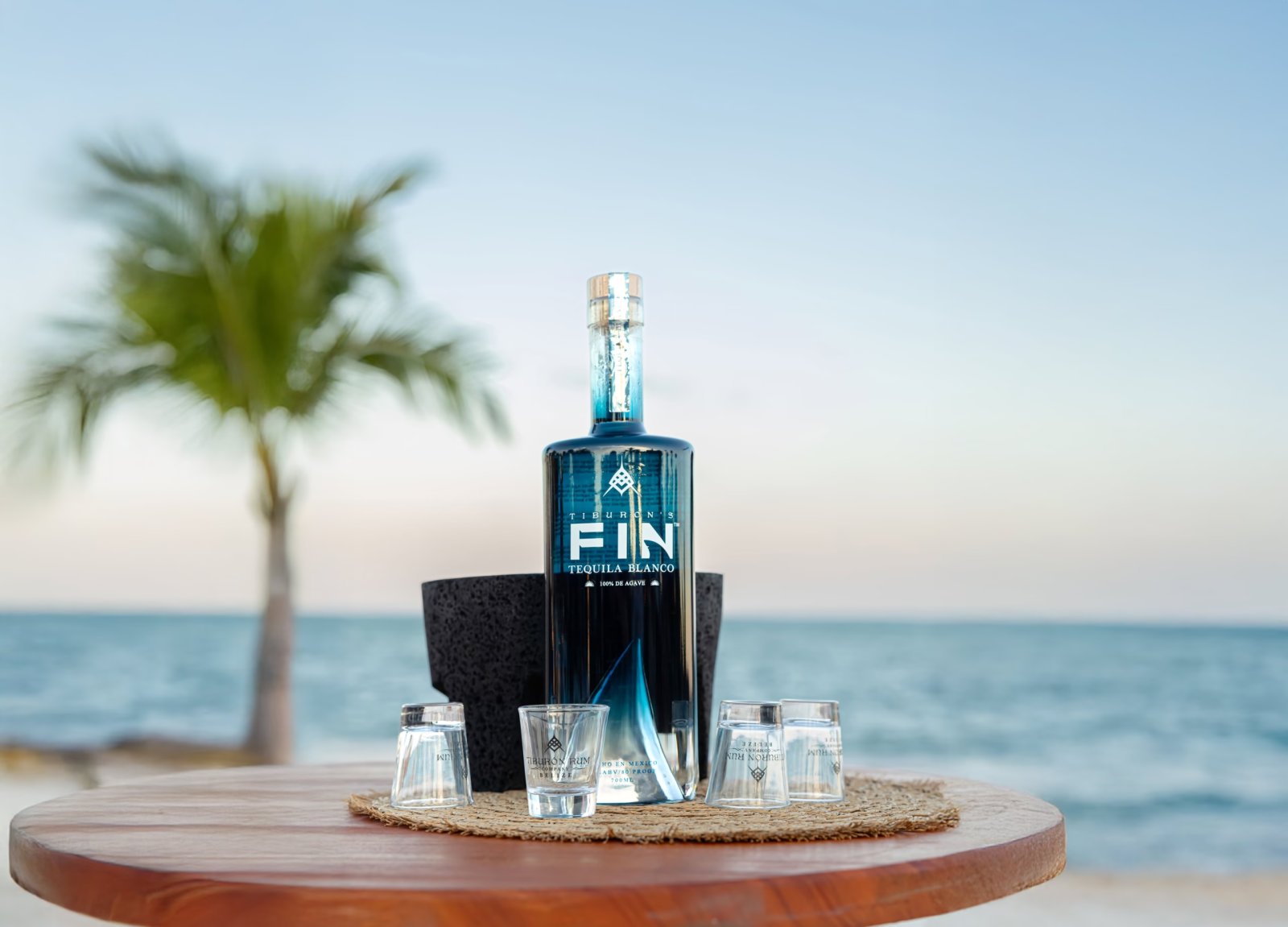
The right decanter should fit your bottle, your bar, and your habits. Browse the FIN tequila lineup to see the bottle shapes before you shop for a decanter, and if you are still choosing which bottle to pour, our ranking of premium tequila for sipping is a useful place to start.
A short checklist before you buy:
- Capacity matches your bottle, roughly 750 to 800 ml
- Stopper has a visible, replaceable gasket
- Material is lead-free, stated on the label
When you are ready to pair a decanter with a fresh bottle, you can buy FIN Tequila directly and skip the guesswork.
Choosing a decanter is really a decision about how much air and light you are willing to let near your tequila.
Frequently Asked Questions
Do tequila decanters preserve tequila?
Only if the seal is airtight. A decanter with a loose stopper lets oxygen in continuously, which flattens aroma and dulls agave flavor within weeks. A well-fitted ground glass stopper or gasketed cork slows that process considerably. Decanters are best treated as short-to-medium term vessels: pour what you will drink over a few months, keep the rest in its original bottle, and store the decanter away from light and heat.
Are airtight tequila decanters better for preservation?
Yes, and the seal matters more than the material or the design. An airtight tequila decanter limits the oxygen exchange that drives oxidation, so the tequila holds its aroma and finish longer. When shopping, check that the stopper seats firmly with no wobble, that the neck is ground rather than smooth, and that any gasket is food-grade silicone or natural cork. A decorative decanter with a loose lid will lose quality faster than a plain bottle with a tight cap.
Is a ceramic tequila decanter better than a glass one?
It depends on where you store it. A ceramic tequila decanter is fully opaque, so it blocks the light exposure that can discolor tequila and degrade its aroma over time. Glass and crystal show off the spirit but let light through, which is why clear decanters belong in a cabinet rather than on a sunny windowsill. Ceramic also suits a home bar display. The trade-off is that you cannot see the fill level, so measure pours rather than eyeballing them.
How should you store tequila after opening?
Keep the bottle or decanter sealed, upright, and away from light and heat. Tequila storage after opening is mostly about limiting air and temperature swings: a cool cabinet at room temperature works better than a countertop next to the stove. As the fill level drops, more oxygen sits above the liquid, so transfer the last few pours to a smaller container or finish them. Blanco is most vulnerable to flavor loss; aged expressions hold up slightly longer but still fade over months.
