
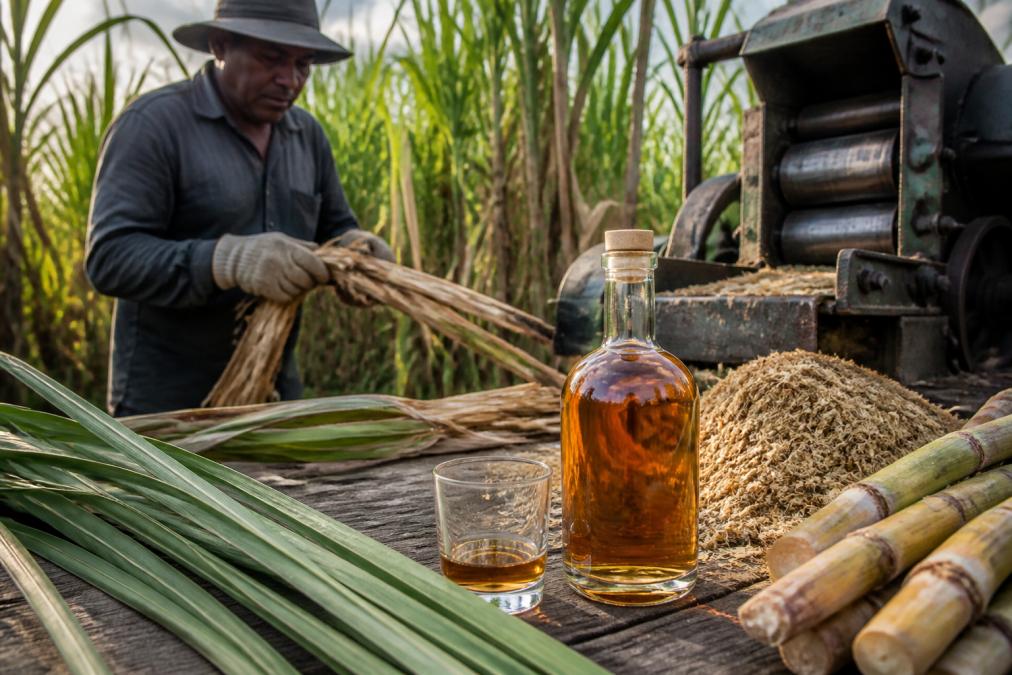
Table of Contents
- What Makes Eco-Friendly Rum Different From Conventional Rum
- Sustainable Rum Production Practices That Actually Matter
- Greenwashing vs. Genuine Certification: How to Tell the Difference
- What Are Additives in Rum and Why They Matter for Quality
- Benefits of Bourbon Barrel Aged Rum Beyond the Flavor
- Does Eco-Friendly Rum Actually Taste Better?
- The Real Cost of Choosing Sustainable Spirits
- Conclusion
Last Updated: August 29, 2026
What Makes Eco-Friendly Rum Different From Conventional Rum
Eco-friendly rum is produced through methods that actively reduce environmental harm across the entire supply chain, from sugarcane cultivation to the finished bottle. Rum sits at an interesting crossroads in the spirits industry: it’s made from sugarcane, one of the most water-intensive crops on earth, and the distillation process generates significant heat, waste, and emissions. The gap between genuinely sustainable rum and conventional rum can be substantial.
Below, we’ll break down exactly what separates the two, how to verify brand claims, and whether it affects what you taste.
Defining Sustainable Rum Production
Sustainable rum production minimizes negative environmental and social impacts throughout its lifecycle, from agricultural inputs to packaging and distribution.
The reality is messier than the definition. Sustainable production isn’t a single thing, it’s a cluster of decisions at every stage: which fertilizers go on the fields, how the distillery sources energy, where wastewater goes, and whether workers are paid fairly. A distillery can excel in one area and fail in another.
Environmental Impact of Sugarcane Cultivation and Distillation
Sugarcane cultivation carries a significant environmental footprint. Conventional farming relies heavily on synthetic fertilizers and pesticides that degrade soil and contaminate waterways. Pre-harvest burning of cane fields releases greenhouse gases and particulate matter.
Distillation compounds the problem. Fermentation and distillation are energy-intensive, and fossil fuel-fired stills contribute meaningfully to carbon emissions. Vinasse, the by-product of sugarcane processing, is highly acidic and toxic to aquatic life if discharged untreated. According to the USDA’s Agricultural Research Service on sugarcane sustainability, vinasse management is one of the most critical environmental challenges facing cane-based spirit producers.
Organic farming practices, cover cropping, and reduced-tillage methods can reduce the agricultural footprint substantially.
Sustainable Rum Production Practices That Actually Matter
Some sustainability changes are cosmetic. Others fundamentally alter a distillery’s environmental impact.
Renewable Energy, Biodigesters, and Waste Reduction
The single biggest lever a distillery can pull is energy source. Distillation requires sustained high heat, and fossil fuels generate a large share of a rum’s carbon footprint. Distilleries that switch to solar, wind, or biomass energy can cut operational emissions dramatically.
Biodigesters represent one of the most elegant solutions in the spirits industry. These systems convert organic waste, including vinasse and spent cane fiber, into biogas through anaerobic digestion. That biogas then powers the distillery, creating a circular economy loop where waste becomes fuel. According to EPA guidance on anaerobic digestion for agricultural waste, biodigester systems can reduce organic waste disposal costs while generating usable energy.
Water used in cooling and fermentation can be recaptured and reused. Spent grain and cane fiber can be composted or used as animal feed. Distilleries committed to environmental stewardship track these outputs and publish their numbers.
Water Management and Ethical Labor in the Supply Chain
Water management is critical but often overlooked. Sugarcane requires significant irrigation in many regions, and distillation consumes large volumes of water for cooling. Responsible water management includes closed-loop cooling systems, rainwater harvesting, and wastewater treatment before discharge.
Ethical labor practices form the social foundation of sustainability. Fair wages, safe working conditions, and community investment in sugarcane-growing regions are essential. Fair trade certification is one mechanism for verifying these practices.
| Practice | Environmental Impact | What to Look For |
|---|---|---|
| Renewable energy use | Reduces operational carbon emissions | Solar, wind, or biomass sourcing stated clearly |
| Biodigester systems | Converts waste into fuel, reduces discharge | Specific mention of vinasse treatment |
| Organic cane farming | Reduces chemical runoff and soil degradation | Certified organic or regenerative ag claims |
| Closed-loop water systems | Reduces freshwater consumption | Water use data or conservation certifications |
| Fair labor certification | Supports ethical sourcing | Fair trade or equivalent third-party verification |
| Eco-friendly packaging | Reduces downstream waste | Recycled glass, minimal packaging, lighter bottles |
Greenwashing vs. Genuine Certification: How to Tell the Difference
Greenwashing in the spirits industry is widespread. A brand can print "sustainably crafted" on a label without meeting any verified standard. They can plant trees, photograph the process, and call it conservation.
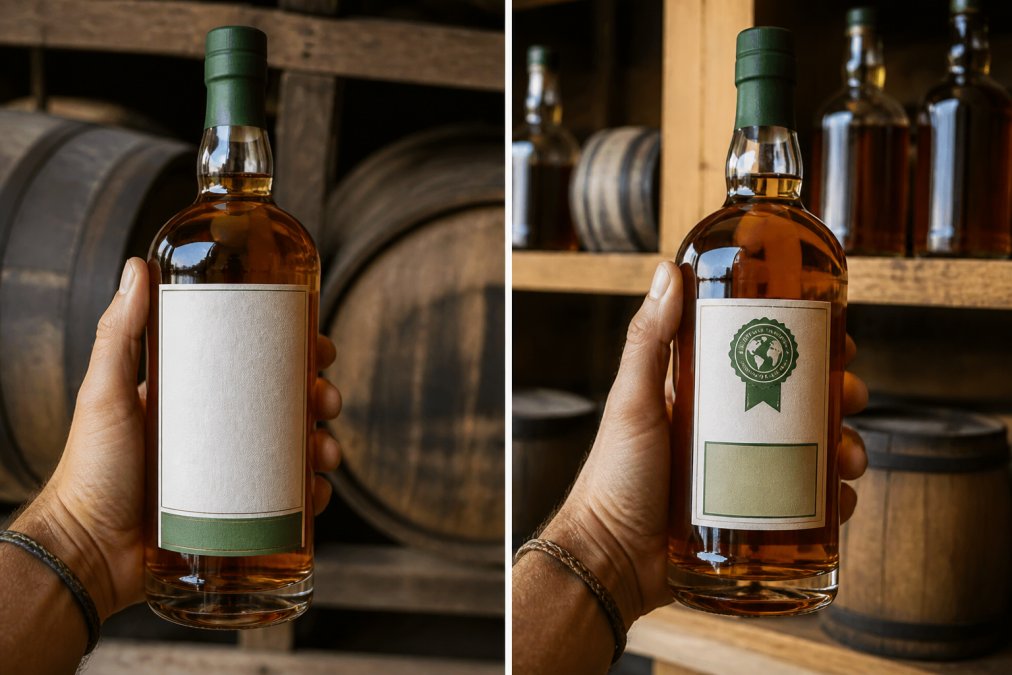
Genuine certification requires third-party verification with specific, auditable criteria. The most credible certifications include:
- USDA Certified Organic, verifies that sugarcane was grown without synthetic pesticides or fertilizers
- Fair Trade USA, verifies labor standards and fair wages
- Rainforest Alliance, audits farms for environmental and social criteria
- B Corp Certification, evaluates the entire business against social and environmental standards
Some small, family-owned distilleries operate sustainably without pursuing expensive certifications. In that case, transparency is the substitute. They should describe practices in specific, verifiable detail, not marketing language.
Ask any brand: "What third party has verified your sustainability claims, and where can I see the audit results?"
A brand using phrases like “eco-conscious,” “green,” or “natural” without citing a specific certification or audit is making an unverified claim. Treat these as marketing language until proven otherwise. The consequence: you pay a premium for a product with no meaningful sustainability advantage over conventional rum.
What Are Additives in Rum and Why They Matter for Quality
Additives in rum are substances added after distillation to modify flavor, color, or texture. They’re far more common in commercial rum than most consumers realize.
The most common additive is sugar, often as caramel or dosage. Some producers add glycerol for mouthfeel, artificial coloring for consistent amber hue, or flavor compounds to simulate vanilla and oak notes. These additions aren’t required to be disclosed on labels under current TTB regulations. health claims in spirits.
This matters for eco-friendly rum specifically. A rum marketed as premium or sustainable that relies on post-distillation additives is using industrial shortcuts to simulate quality. Authentic flavor development through barrel aging and careful fermentation requires no additives.
Ask whether a rum is "additive-free" or look for producers who disclose their production methods in full. Transparency here signals overall integrity.
Benefits of Bourbon Barrel Aged Rum Beyond the Flavor
Bourbon barrel aging is where eco-friendly rum production and quality converge.
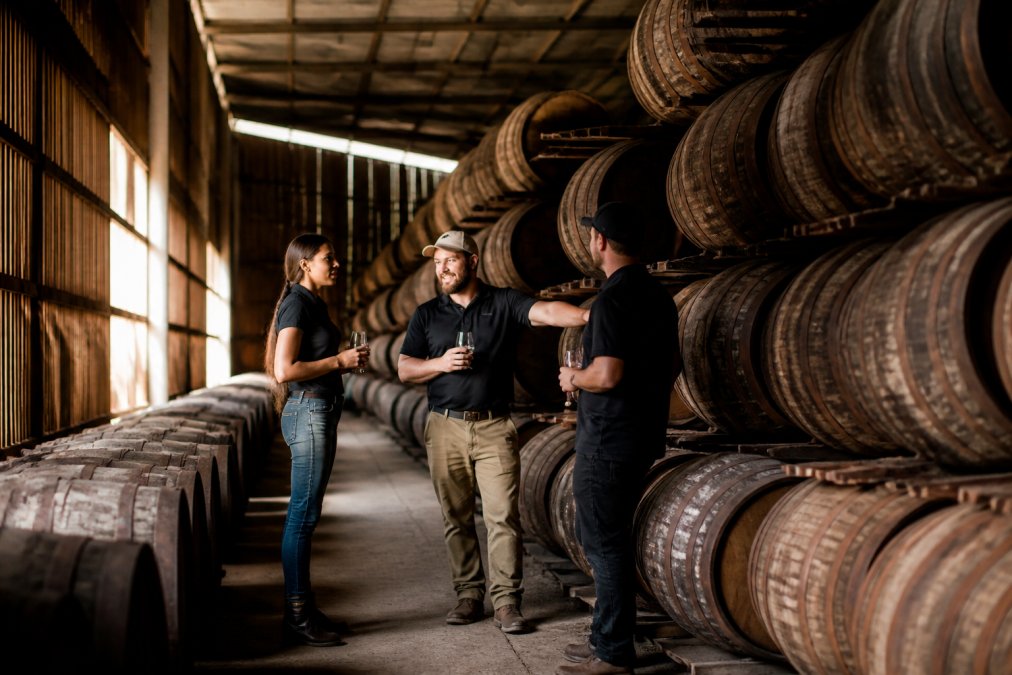
Aging in previously used bourbon barrels is itself a form of resource efficiency. The barrels are already made and would otherwise be discarded. Repurposing them extends their useful life and avoids the environmental cost of producing new oak casks.
The charred interior imparts vanilla, caramel, and spice notes while filtering out harsh congeners. In warm tropical climates, the angel’s share accelerates maturation. A rum aged in the Caribbean for two years can develop characteristics comparable to a spirit aged considerably longer in cooler climates.
Second maturation, where rum is moved to another barrel, compounds these effects, adding complexity and softening the spirit further.
When evaluating barrel-aged rum, ask whether the distillery sources barrels locally. Locally sourced barrels reduce the carbon footprint of aging. This detail is rarely advertised but worth asking about.
Does Eco-Friendly Rum Actually Taste Better?
The honest answer is: sometimes, and for specific reasons.
Eco-friendly rum doesn’t taste better simply because it’s sustainable. What sustainable practices correlate with are production choices that do affect taste. Organic sugarcane produces cleaner fermentation. Slower, careful distillation preserves aromatic compounds. Barrel aging without shortcuts produces genuine complexity. These practices reduce environmental impact and improve the final product.
Lifecycle Assessment: From Sugarcane Field to Your Glass
A lifecycle assessment (LCA) evaluates the total environmental impact of a product from raw material extraction through disposal. For rum, a full LCA covers sugarcane farming, water and energy use in fermentation and distillation, packaging, transportation, and end-of-life disposal.
According to the National Renewable Energy Laboratory’s lifecycle assessment methodology resources, LCAs provide the most complete picture of a product’s true environmental footprint.
Producers who invest in full lifecycle thinking tend to invest in quality at every stage. The correlation between sustainability and taste isn’t guaranteed, but it’s real.
Sustainable Mixology: Putting Eco-Friendly Rum to Work in Cocktails
Sustainable mixology builds cocktails with ingredients and spirits that minimize waste and environmental impact while maximizing flavor.
Eco-friendly rum fits naturally into this approach. A high-proof, well-made rum like Tiburon Rum’s White Tip (92 proof) holds up in complex cocktails without getting lost, using less product to achieve the same flavor impact.
Sustainable mixology principles include using whole citrus and composting rinds, choosing syrups from minimally processed local sweeteners, batching cocktails to reduce waste, and selecting spirits with verified supply chain transparency.
A rum with genuine terroir, flavor characteristics reflecting its specific place and production methods, adds something to a cocktail that heavily processed spirits cannot.
The Real Cost of Choosing Sustainable Spirits
Sustainable production costs more. Organic sugarcane farming requires more labor and yields less per acre. Renewable energy infrastructure requires capital investment. Certifications require time and money. These costs show up in the bottle’s price.
The question isn’t whether sustainable rum costs more. It’s whether the premium is justified. A common mistake is evaluating sustainable spirits purely on price-per-ounce without accounting for verified production practices, additive-free quality, and direct contributions to conservation efforts in production regions.
For spirits enthusiasts who care about what’s in the glass and where it comes from, the premium for genuine sustainability is usually reasonable. The key word is "genuine." Paying more for greenwashing is just paying more.
Eco-friendly rum is worth the premium when sustainability claims are verified by third parties and production practices align with quality outcomes: no additives, genuine barrel aging, and transparent sourcing. When those conditions are met, the environmental and quality cases reinforce each other.
Is eco-friendly rum actually better? The answer is yes, but conditionally. Eco-friendly rum produced with verified sustainable practices, genuine barrel aging, and no post-distillation additives is better both for the environment and for what ends up in your glass.
Tiburon Rum is handcrafted in a family-owned Belizean distillery, aged in bourbon barrels, and built around a genuine commitment to the conservation of Belize’s marine ecosystems. The molasses-based recipe, warm-climate maturation, and second maturation process produce a smooth finish with tropical vanilla undertones that doesn’t need additives. For home mixologists, the 92-proof White Tip holds up in complex cocktails. For those who want spirits with a real story, the aged expression delivers.
Visit Tiburon Rum to get started with spirits that back their conservation story with craft.
Frequently Asked Questions
What defines a rum as eco-friendly or sustainable?
A rum earns the eco-friendly label when its production reduces environmental harm across the full supply chain: organic or responsibly farmed sugarcane, lower greenhouse gas emissions during distillation, renewable energy use, responsible water management, and ethical labor practices. Certifications from bodies like USDA Organic or Fair Trade provide third-party verification. Without those credentials, 'sustainable' is a marketing claim, not a confirmed standard. Look for transparency about sourcing and production methods before accepting the label at face value.
Does sustainable production impact the flavor profile of rum?
Sustainable practices often correlate with higher-quality raw materials and more careful production. Organic sugarcane farming avoids synthetic pesticides that can affect fermentation character. Slower, small-batch distillation common in eco-conscious distilleries tends to preserve more nuanced flavor compounds. Bourbon barrel aging adds vanilla and caramel notes regardless of sustainability practices, but a distillery committed to quality throughout the supply chain is more likely to prioritize flavor integrity alongside its environmental goals.
Are there certifications to look for when buying eco-friendly rum?
Yes. USDA Organic certification confirms the sugarcane or molasses was grown without synthetic pesticides or fertilizers. Fair Trade USA certification addresses ethical labor and community investment. B Corp certification evaluates the entire business against social and environmental performance standards. Carbon-neutral claims should be backed by a recognized offset standard or third-party lifecycle assessment, not just a brand statement. Any distillery making sustainability claims without referencing at least one of these frameworks deserves closer scrutiny.
Which rum has no additives?
Additive-free rums are those produced without added sugar, glycerin, artificial coloring, or flavor enhancers after distillation. Identifying them requires either direct transparency from the distillery or reliance on independent testing databases maintained by rum enthusiast communities. Rums labeled as 'pure' or 'traditional' are not automatically additive-free. The clearest signal is a distillery that publicly discloses its production process and invites scrutiny, rather than simply claiming purity. Checking the distillery's stated production method is the most reliable starting point.