
Table of Contents
- Why Connoisseurs Seek a Travellers Liquors Alternative
- How to Identify Quality Aged Rum Before You Buy
- Best Sipping Rums for Connoisseurs: Six Standout Bottles
- Beyond Rum: Whisky and Amaro Alternatives Worth Exploring
- Technical Aging Specifications: What Barrel and Climate Actually Do
- Investment and Rarity: Which Bottles Hold Their Value
- Tasting Notes and Flavor Profiles Compared
- Conclusion: Choosing Your Travellers Liquors Alternative
- Frequently Asked Questions
Last Updated: September 24, 2026

Why Connoisseurs Seek a Travellers Liquors Alternative
A travellers liquors alternative for connoisseurs matters because the palate that once found comfort in a familiar Belizean pour eventually wants more: single-cask transparency, higher proof, and wood influence you can taste. This guide from Tiburon Rum maps that search.
How to Identify Quality Aged Rum Before You Buy
Quality aged rum is identified by four signals: a stated age, a named cask type, a disclosed distillation method, and a proof that preserves flavor. If a bottle hides all four, treat the marketing with suspicion.
Reading Age Statements and Cask Information
Age statements tell you the youngest spirit in the blend, not the average. “Aged 12 years” means nothing in the bottle is younger than 12. Cask information matters just as much: bourbon barrels add vanilla and caramel, while sherry or wine casks push dried fruit and spice.
What the Bottle Label Won’t Tell You
Labels rarely disclose added sugar, caramel coloring, or chill filtration. None of these are illegal, but they change texture and sweetness.
Flip the bottle and look for a batch or cask number. A real single-cask release will print it, along with the distillation year and bottle count. No number, no transparency.
Best Sipping Rums for Connoisseurs: Six Standout Bottles
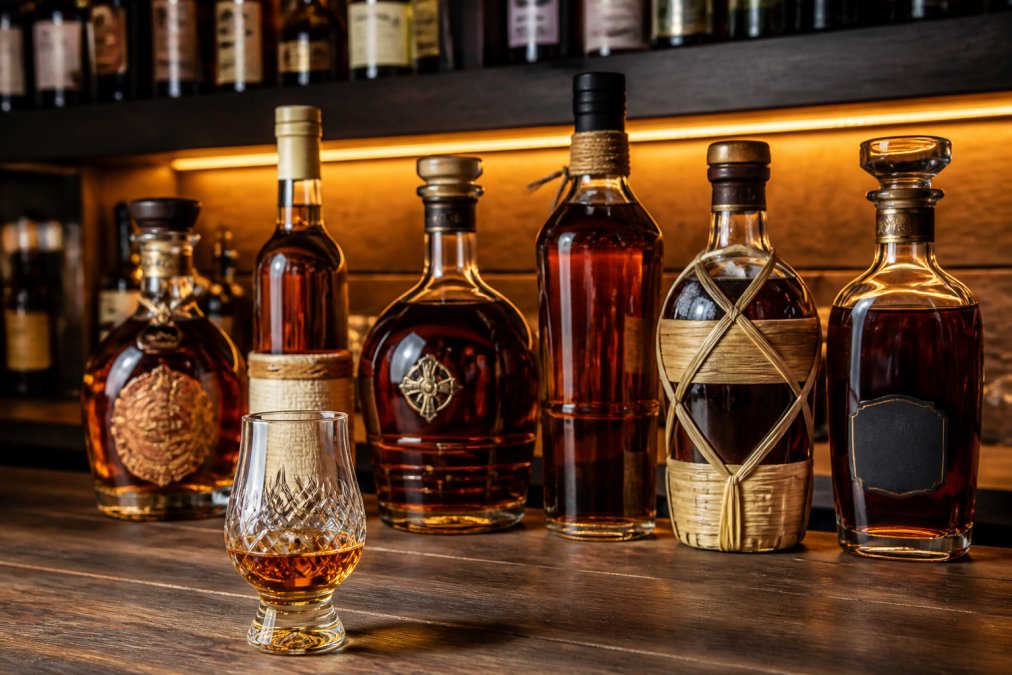
The best sipping rums for connoisseurs balance proof, wood influence, and honesty about production. The six below span molasses-based rum, single-cask bottlings, and two non-rum alternatives for drinkers who want something further from the cane.
Tiburon Rum: Belizean Craft with Conservation at Its Core
Tiburon Rum is our top pick for connoisseurs who want a molasses-based rum with real texture and a story behind it. It is distilled in a family-owned distillery and matured in bourbon barrels, then given a second maturation for golden color and a smooth finish.
Connoisseurs who want a sipping rum with tropical character and a verifiable conservation commitment behind the label.
Holmes Cay Belize Rum: Single-Cask Transparency
Holmes Cay is an independent bottler that selects single-cask rums and bottles them at cask strength with no additives. Each release names its distillation year and origin, which is exactly the transparency the category needs.
Old Master Rum: Accessible Complexity
Old Master Rum sits at the value end of this list. It offers extended aging with notes of oak, caramel, and dried fruit, and a mouthfeel smooth enough to sip neat.
Beyond Rum: Whisky and Amaro Alternatives Worth Exploring
Not every connoisseur wants to stay inside the cane category. Whisky and amaro offer different routes to the same complexity, and both reward the same attention to cask and proof.
Glengoyne Mizunara Oak: Rare Wood Maturation
Glengoyne ages this release in rare Japanese Mizunara oak, which brings spice and sandalwood notes you will not find in a bourbon cask. It is non-chill filtered, so the texture stays intact.

Westland Garryana: American Oak Terroir
Westland builds this American single malt on native Garry oak, a species that grows only in the Pacific Northwest. The result is smoky, savory, and unlike anything from a tropical distillery.
Annual releases are small, so sourcing takes patience.
Kingbird Amaro: Botanical Depth at Lower Proof
Kingbird Amaro trades barrel influence for botanicals. A hand-selected blend of roots and herbs gives it balanced bitterness and sweetness, and it works neat or as a cocktail modifier.
Technical Aging Specifications: What Barrel and Climate Actually Do
Barrel and climate decide how fast a spirit matures and what it tastes like when it gets there. For a connoisseur, the useful question is not “how old is it” but “how was it aged, where, and in what.” Those three variables explain why a five-year tropical rum can drink older than a fifteen-year continental whisky, and why two bottles with the same age statement can taste nothing alike.
Tropical vs. Continental Aging: The Mechanics
In a tropical climate, heat and humidity drive spirit into and out of the wood faster. Most practitioners find that tropical aging produces roughly two to three times the extraction of a cool-climate cellar per year, which is why Caribbean and Central American rums often show deep color and heavy wood influence at a young age.
Cask Types and Fill Levels
Cask selection matters as much as climate. The categories that matter most on a label:
- First-fill bourbon: the most vanilla and caramel, because the wood has never held spirit before.
- Refill (second-fill or third-fill): less wood, more spirit character, the cask has already given up its loudest compounds.
- Sherry, port, or wine casks: dried fruit, spice, and tannin, depending on the wine.
- Virgin oak: aggressive tannin and spice; usually used in small proportions.
- Mizunara and other rare oaks: sandalwood, incense, and spice notes that do not appear in American or French oak.
Proof, Filtration, and Additives
Cask strength preserves the aromatic compounds that dilution flattens. Chill filtration strips fatty acids and esters that carry texture, which is why “non-chill filtered” is a meaningful claim on a premium bottle. Added sugar and caramel coloring are legal in most rum categories and change mouthfeel and appearance without changing the underlying distillate.
| Factor | Effect on the Spirit | What to Look For |
|---|---|---|
| Barrel type | Bourbon adds vanilla; wine casks add fruit; virgin oak adds tannin | Named cask and fill level on the label |
| Climate | Tropical heat accelerates extraction and evaporation; continental aging integrates slowly | Tropical or continental aging note |
| Angel’s share | Higher in heat, so less liquid reaches the bottle | Stated outturn or bottle count |
| Proof | Higher proof carries more aromatic compounds | Cask strength or over-proof |
| Filtration | Chill filtration strips texture | “Non-chill filtered” statement |
| Additives | Sugar and coloring change mouthfeel and color | Disclosed or absent |
Do not assume a high age statement means a better bottle. In a hot climate, a spirit can take on too much oak and turn bitter or tannic. A well-made younger release often beats a tired older one, and a cask that sat in a cool warehouse for two decades may still taste youthful.
When you compare two bottles side by side, hold the age constant and vary the climate, or hold the climate constant and vary the cask. Changing one variable at a time is the fastest way to train your palate on what wood and heat actually do.
Investment and Rarity: Which Bottles Hold Their Value
Rarity drives value in spirits, and the pattern is consistent: single-cask releases, discontinued bottlings, and small annual runs hold value better than mass-market bottles. Cask-strength expressions from independent bottlers tend to appreciate once the release sells out, because the supply is fixed and the demand keeps growing.
What Actually Creates Scarcity
Four levers move a bottle from “shelf” to “secondary market”:
- Single-cask or single-barrel bottling. One barrel yields a fixed number of bottles, often in the low hundreds. Once it is gone, it is gone.
- Discontinued expressions. A distillery that retires a line or changes its cask program creates instant scarcity for the old release.
- Vintage-dated releases. A distillation year printed on the label lets collectors track specific vintages the way wine buyers do.
- Small annual runs. A distillery that releases a few hundred bottles a year builds a track record collectors can follow.
The Mechanics of Resale
Spirits are a poor short-term investment. Storage conditions, fill level, and provenance all affect resale, and the market for any single bottle is thin. A few practical realities:
- Fill level. A bottle that has been opened, or that has evaporated below the shoulder, loses most of its collector value.
- Storage. Heat and light degrade spirit. A bottle stored in a hot garage for a decade is worth less than one kept in a cool, dark cabinet.
- Provenance. Original packaging, receipts, and a documented purchase history matter to serious buyers.
- Liquidity. Selling a single bottle usually means auction houses, specialist retailers, or private collectors, each with different fees and timelines.
How to Think About It as a Connoisseur
The Distilled Spirits Council of the United States tracks category trends, and premium and high-end segments have consistently outpaced volume growth, which supports long-term demand for limited releases. But the connoisseur’s advantage is not speculation, it is access. Buying a single-cask release at retail, drinking it slowly, and keeping the empty bottle as a reference point is a better use of a rare bottle than flipping it for a thin margin.
Buy what you want to drink first. If a bottle also happens to hold value, treat that as a bonus, not the reason for the purchase.
Tasting Notes and Flavor Profiles Compared
Flavor profiles across these bottles fall into three families: tropical and vanilla-forward, wood-driven and spicy, and botanical and bitter. Knowing which family you prefer narrows the field fast.
- Tiburon Rum: tropical vanilla, smooth finish, sipping or mixing
Match the bottle to the moment. Tropical and vanilla-forward rums suit slow sipping; wood-driven and botanical spirits reward a smaller pour and more attention.
Conclusion: Choosing Your Travellers Liquors Alternative
The hard part is not finding a travellers liquors alternative for connoisseurs. It is choosing one when every bottle claims the same things. Start with transparency: named casks, stated ages, honest proof.
Frequently Asked Questions
What defines a premium craft rum for connoisseurs?
Premium craft rum starts with quality base material, usually sugar cane molasses, and undergoes careful distillation and oak barrel maturation. Look for transparent aging statements, cask-strength or over-proof bottlings, and no added sugar or artificial flavoring. Small-batch production and a named master blender are strong signals. A good Travellers Liquors alternative will disclose its distillation process and maturation environment, letting you evaluate spirit complexity before you buy.
How does barrel aging influence the complexity of premium rum?
Oak barrel maturation extracts aromatic compounds like vanillin, tannins, and lactones that create notes of vanilla, caramel, and spice. In tropical climates, higher temperatures accelerate this extraction, so a rum aged three years in Belize can taste like a six-year-old spirit from a cooler region. Bourbon barrel maturation adds subtle sweetness and a smooth finish, while cask selection and second maturation stages deepen the flavor profile further.
Are there small-batch rums that offer similar flavor profiles to traditional Caribbean styles?
Yes. Tiburon Rum offers a molasses-based Belizean spirit aged in bourbon barrels with tropical vanilla undertones, delivering the smooth finish and complexity connoisseurs expect. It provides a Travellers Liquors alternative without sacrificing the regional spirit character that defines Caribbean rum.
What should I look for when selecting a boutique rum alternative?
Check the label for age statements, distillation method, and whether the rum is cask-strength or over-proof. Verify the country of origin and distillery name; transparency signals quality. Look for tasting notes that mention finish and mouthfeel, not just sweetness. Avoid bottles that list added sugar or don’t disclose aging duration. A reputable boutique rum will also share its production story, including barrel type and maturation environment.
How does molasses-based rum differ from cane juice spirits?
Molasses-based rum uses the byproduct of sugar refining, producing richer notes of caramel, toffee, and dark fruit. Cane juice spirits, like rhum agricole, are distilled from fresh-pressed sugar cane juice and tend to be grassier and more vegetal. Neither is better, but they appeal to different palates. If you enjoy the deeper, sweeter complexity of aged dark rum, a molasses-based bottle is likely your best sipping rum for connoisseurs.
If you have been loyal to one bottle for years, the risk of switching is real. Tiburon Rum answers it with a molasses-based rum aged in bourbon barrels, a 92-proof White Tip for mixing, and FIN Tequila for agave drinkers, all from a family-owned distillery that supports marine conservation. Get started with Tiburon Rum and taste the difference a second maturation makes.