
Last Updated: November 9, 2026
Quick Summary
To reseal tequila properly, identify your closure type first, then clean and dry the neck before reseating the cap or cork firmly without overtightening. Test the seal by tipping the bottle over a sink, and add a Parafilm or silicone wrap backup layer for bottles stored longer than a few weeks.
- Resealing a bottle takes about two minutes and a few basic supplies.
- Wipe the rim and threads with a damp cloth, then dry completely before resealing.
- Reinsert a natural cork tapered end first with steady pressure, never twisting aggressively.
- Store bottles upright in a cool, dark spot, since lying them down speeds cork degradation.
- Use only food-safe materials like Parafilm, silicone stoppers, and silicone sealing tape.
Table of Contents
- Why Resealing Tequila Properly Matters More Than You Think
- How to Reseal Tequila Bottles Properly at Home: Step-by-Step
- Parafilm for Sealing Bottles: When It Works and When It Doesn’t
- What to Do When a Cork Breaks, Crumbles, or No Longer Fits
- Tequila Shelf Life After Opening: What to Expect
- How to Store Tequila After Opening to Protect Flavor
- Food-Safe Materials and What Not to Use
- Choosing the Right Resealing Method for Your Bottle
- Frequently Asked Questions
Why Resealing Tequila Properly Matters More Than You Think
Learning how to reseal tequila bottles properly is the difference between a bottle that stays vibrant for months and one that turns flat and dull within weeks.
Most people simply push the cork back in and call it done. That works for a day or two.
The fix is simpler than you think. Below, we walk through the exact steps, the right materials, and the mistakes that quietly ruin opened bottles.
How to Reseal Tequila Bottles Properly at Home: Step-by-Step
Resealing tequila at home takes about two minutes and a few basic supplies. The goal is a tight, airtight closure that keeps air out and flavor in. The procedure below is written for the three closure types you are most likely to encounter, because a screw cap and a natural cork do not fail in the same way and should not be resealed the same way.
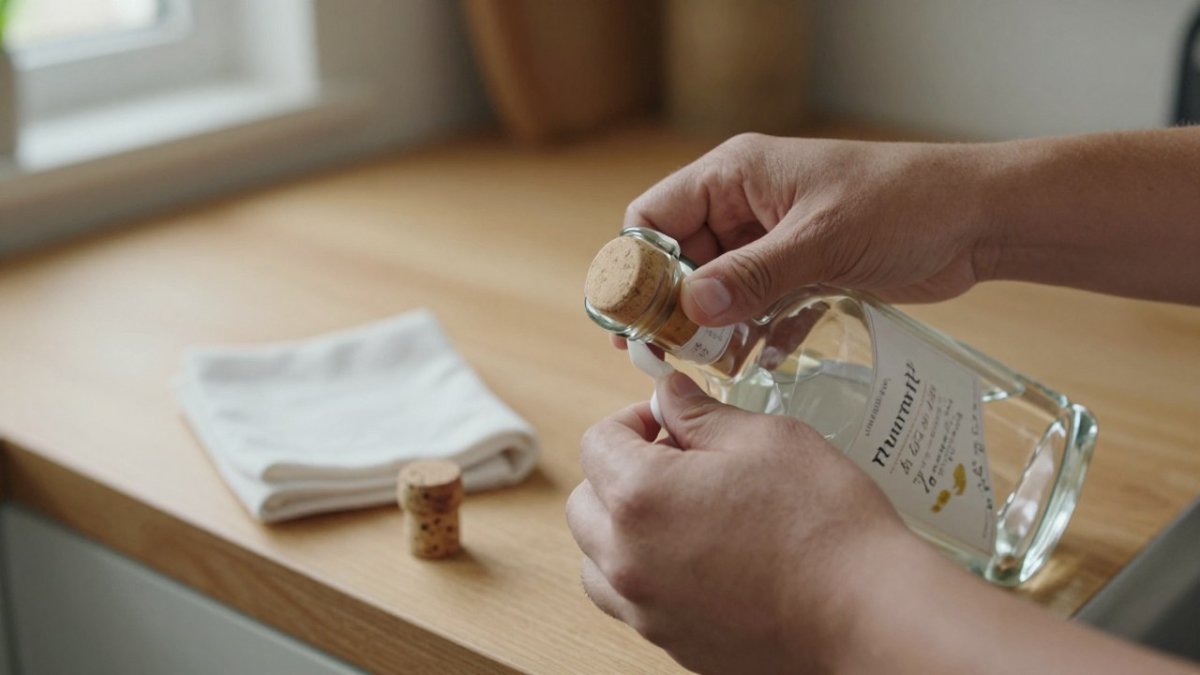
Step 1: Identify Your Closure Type Before You Touch Anything
Look at the bottle neck, not the label. The closure in front of you determines every step that follows.
- Screw cap: a metal or plastic cap with visible threads on the neck. Common on many blanco and reposado bottles.
- Natural cork: a tapered, compressible cork, often with a wooden or decorative top. Common on premium and aged expressions.
- Synthetic cork: a uniform, rubbery stopper that looks like cork but flexes and springs back. Common on mid-tier bottles.
If the closure is missing, broken, or no longer grips, skip to the troubleshooting section below rather than forcing a bad fit.
Step 2: Prepare the Neck and the Closure
A sticky neck keeps any closure from sealing tight. Wipe the rim and threads with a clean, damp cloth, then dry the area completely.
Inspect the closure itself. A natural cork that has dried out, cracked, or swollen unevenly will not reseal reliably. A screw cap with stripped or cross-threaded plastic will not hold. If either looks compromised, replace it.
Step 3: Reseal According to Closure Type
Screw cap. Wipe the threads, set the cap on straight, and turn until it sits flush.
Natural cork. Reinsert the same cork the same way it came out, tapered end first, with steady downward pressure. Do not twist aggressively, which can crumble the cork.
Synthetic cork. Press it in firmly until it seats.
Plastic or glass stopper. Press down firmly until it clicks or seats fully.
Step 4: Test the Seal
Seat your closure firmly, then test it. Tip the bottle gently on its side over a sink and watch for drips. No leaks means a good seal. For extra protection, wrap the neck with a flexible sealing film on top of the closure.
Watch out: a bottle that passes the tip test can still leak slowly over weeks, so check the neck for residue or weeping after the first few days of storage.
Step 5: Add a Backup Layer for Long-Term Storage
If the bottle will sit for more than a few weeks, add a backup layer over the closure. Stretch a flexible sealing film around the neck and cap, press the edges down, and it holds. This is not a substitute for a good closure, but it guards against air and evaporation between pours.
Parafilm for Sealing Bottles: When It Works and When It Doesn’t
Parafilm is a stretchy, waxy film that clings to glass and forms a tight barrier.
Where it falls short: Parafilm is not a replacement for a missing cork. It cannot fill a gap or hold a loose stopper in place.
A practical approach many sippers use is a two-layer seal: the original closure first, then a wrap of Parafilm or silicone tape around the neck.
What to Do When a Cork Breaks, Crumbles, or No Longer Fits
A crumbling cork is a common problem with older bottles, and it is the situation where improvised fixes do the most damage. Do not fish out the pieces and jam the remainder back in. Start fresh with a clean replacement.
Why Corks Fail
Natural cork is a compressible material that responds to moisture and temperature. A cork that dries out shrinks and loses its grip; a cork that stays wet against liquid swells and can crumble when pulled. Bottles stored on their side, or in a warm spot, tend to produce both problems. Synthetic corks fail differently: they rarely crumble, but they can deform or loosen after many open-and-close cycles.
Removing a Broken Cork Safely
- Remove every bit of the old cork with clean tweezers. Work under good light and check the neck from more than one angle.
- Wipe the neck and check for stray fragments. A fragment left in the neck can prevent any replacement from seating.
- If fragments have fallen into the liquid, do not try to drink around them. Strain the remaining tequila through a clean fine-mesh strainer into a clean glass or bottle before resealing.
- Discard the old cork. Do not reuse a cork that has cracked, crumbled, or lost its shape.
Choosing a Replacement That Actually Fits
A replacement stopper must fit the specific neck diameter of your bottle, and neck sizes vary by producer and bottle design. The practical approach is to measure the inner diameter of the neck, or to bring the bottle to a store that sells stoppers, rather than guessing from the bottle’s overall size.
- Food-grade silicone stoppers are flexible, tolerate repeated use, and are the most forgiving fit for slightly irregular necks.
- Synthetic replacement corks mimic the original closure and suit bottles you plan to reopen often.
- Tapered universal stoppers cover a range of neck sizes but fit some bottles loosely, so test before trusting them.
Watch out: never use a cork from a different bottle if it does not fit properly. A loose fit lets air in and defeats the whole purpose, and a too-tight cork can crack the neck.
When the Neck Itself Is Damaged
A chipped or cracked neck will not hold any closure reliably. In that case, the safest move is to transfer the remaining tequila to a clean, appropriately sized bottle with an intact neck and reseal that bottle instead. Label the new bottle with the tequila’s name and the date you opened the original.
Tequila Shelf Life After Opening: What to Expect
Opened tequila does not spoil like food, but it does change. Most bottles stay at their best for a few months after opening when sealed and stored well. Lighter, unaged tequilas tend to fade faster than aged expressions, which have more body to hold their character.
Signs your tequila is losing quality:
- The aroma feels flat or muted
- The flavor turns sharp or slightly bitter
- The finish feels thin instead of smooth
If you want to explore bottles worth sipping slowly and storing with care, our guide to premium tequila for sipping covers top picks for 2026.
How to Store Tequila After Opening to Protect Flavor
Good storage is half the battle. Even a perfect seal cannot protect a bottle left in the wrong spot. Here are the rules we follow.
Upright, Cool, and Dark: The Three Rules
Store every bottle upright. Lying a bottle on its side keeps liquid against the cork, which speeds up cork degradation and can cause leaks. Keep tequila away from direct sunlight and heat. A cool, dark cabinet works well. A wine fridge set to a steady, moderate temperature is even better for long-term storage.
- Upright, never on its side
- Away from windows and stoves
- Steady temperature, no swings
- Dark cupboard or wine fridge
How Much Is Left Matters
A bottle that is nearly empty has more air inside, and more air means faster oxidation. If you have just a little left, finish it or transfer it to a smaller bottle to reduce the air gap.
For readers resealing a bottle they want to keep long-term, our guide on how to verify authentic tequila helps you confirm your bottle is genuine before you store it.
Food-Safe Materials and What Not to Use
Only use materials meant for food contact. Parafilm, food-grade silicone stoppers, and silicone sealing tape are all safe choices. They are designed to touch consumables and will not leach into your tequila.
What not to use:
- Plastic wrap meant for storage, which does not seal tight
- Rubber bands or tape that leave residue
- Any stopper not labeled food-safe
- Household glue or sealants
The rule is simple: if it is not made to touch food or drink, keep it away from the bottle neck.
Choosing the Right Resealing Method for Your Bottle
Pick your method based on your closure type and how fast you plan to drink the bottle. Use this quick guide.
| Bottle Type | Best Method | Good For | Watch Out For |
|---|---|---|---|
| Screw cap | Original cap, tightened | Everyday bottles | Worn threads |
| Natural cork | Same cork, reinserted | Short-term storage | Swollen or dry cork |
| Synthetic cork | Original or replacement | Repeated opening | Loose fit over time |
| Broken or missing cork | Food-grade replacement stopper | Older bottles | Wrong-size stopper |
| Any bottle, extra care | Parafilm or silicone wrap over closure | Long-term storage | Using wrap alone |
If you are unsure, start with the original closure and add a Parafilm wrap. It is the safest default for most bottles.
Resealing a bottle well is a small habit with a big payoff: every pour tastes closer to the first.
Frequently Asked Questions
How long does tequila last after opening?
An opened bottle of tequila keeps its best flavor for roughly one to two months, though it stays safe to drink far longer. The alcohol content prevents spoilage, but oxidation slowly mutes the aroma and smoothness. Tequila shelf life after opening depends on how much is left: a nearly full bottle holds up better than one with a few ounces remaining. Resealing tightly and storing upright in a cool, dark spot slows the decline. Once the flavor turns flat or harsh, it is past its peak for sipping.
Can you use Parafilm to seal a tequila bottle?
Yes, Parafilm for sealing bottles works well as a secondary barrier. Stretch it around the bottle neck and cap, overlapping the seal onto the glass by at least an inch. It is food-safe, flexible, and creates a tight wrap that limits air exposure. Parafilm is not a substitute for a proper cork or cap, though. Use it on top of the original closure, or over a replacement stopper, rather than as the only seal.
What should you do if a tequila bottle’s cork or cap no longer fits?
A loose or damaged cork lets air in and can crumble into the tequila. Remove any broken pieces, strain the bottle if needed, and swap in a clean replacement stopper sized to the bottle neck. Synthetic corks and silicone stoppers are reliable options. If the original cap is a screw cap that no longer grips, a vacuum stopper or a tight wrap of Parafilm over the opening will hold it closed. Never force a crumbling cork back in.
Does tequila need to be refrigerated after opening?
Refrigeration is not required, but it helps slow oxidation and preserve flavor, especially in a bottle with little left. The trade-off is that cold tequila mutes aroma, so let a chilled pour sit for a few minutes before sipping. If you skip the fridge, store the bottle upright in a cool, dark cabinet away from the stove and direct sunlight. Heat and light degrade tequila faster than room temperature alone.
