
Last Updated: November 6, 2026
Quick Summary
To taste premium tequila properly, pour about one ounce neat at room temperature into a narrow tulip-shaped glass. Then work through color, short nosing passes, a small sip, the finish and written notes, in that order.
- Serve neat at room temperature or slightly cooler, and skip the ice.
- Use a tulip-shaped glass with a narrow top to concentrate the aromas.
- Nose in short passes rather than one long inhale, which can overwhelm the nose.
- Check the label for ‘100% de Agave’ before you open the bottle.
- Taste blanco first, then reposado, then añejo when running a flight.
Table of Contents
- Why Tasting Premium Tequila Is Different From Shots
- Choosing the Right Tequila Tasting Glass
- Preparing Your Tequila: Serving Temperature and Neat Pours
- Step-by-Step: Color, Nosing, Sipping and Finish
- Building Your Aroma and Flavor Vocabulary: Tequila Tasting Notes
- How to Identify 100% Agave Tequila Before You Taste
- Setting Up a Tequila Tasting Flight at Home
- Start Your Own Tasting Sessions With Tiburon Rum’s FIN Tequila
- Frequently Asked Questions
Why Tasting Premium Tequila Is Different From Shots
Most people take tequila as a shot, with salt and lime, and the burn does most of the work. Taste premium tequila as a different activity, one that rewards patience. You slow down, pour a small amount, and pay attention to what your senses pick up. A few simple habits can change the tasting experience more than the price of the bottle does.
The goal is to notice aroma, texture and flavor one step at a time. A shot skips all of that. A proper tasting builds it in order, so each stage shows you something the last one missed.
Choosing the Right Tequila Tasting Glass
The glass matters more than most people expect. A tulip-shaped glass with a narrow top concentrates aromas and lets you smell the spirit without getting a face full of alcohol.
A standard shot glass works in a pinch, but it wastes most of the aroma. A wide, open glass lets the alcohol vapor escape too fast. Pick something small with a slight curve inward at the rim.
Watch out: Do not use a glass that smells of soap or dish detergent. Even a faint residue will mask the tequila’s natural notes.
Preparing Your Tequila: Serving Temperature and Neat Pours
When you taste premium tequila, serve it neat, at room temperature or just slightly cooler. Chilling it hard numbs the palate and hides flavor, so skip the ice. Pour about one ounce into your glass. That is enough to explore without overwhelming your senses.
Let the pour sit for a minute or two before you start. As the spirit settles, the aromas open up and the alcohol sharpens less on the nose.
Step-by-Step: Color, Nosing, Sipping and Finish
Work through each stage in order, and give each one its own moment. A repeatable sequence is what separates a real tasting from a casual sip, because it forces you to notice one thing at a time instead of letting the alcohol dominate.
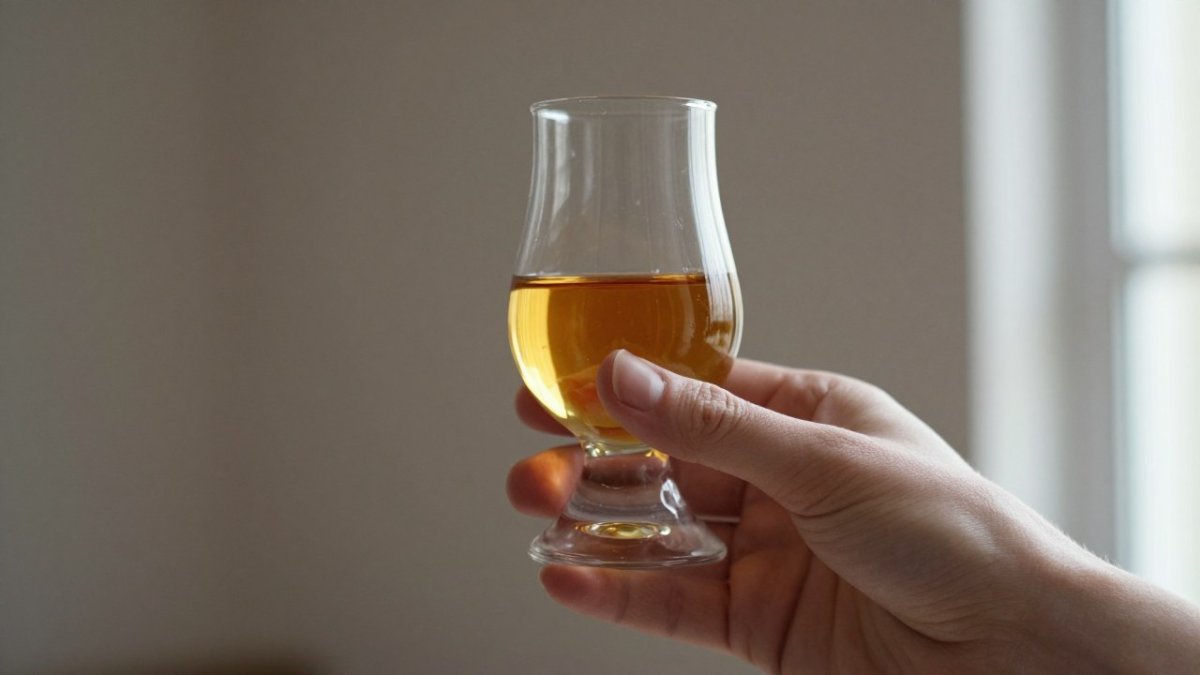
- Look at the color and clarity. Hold the glass against a white background or a window. Blanco tends to be clear, while reposado and añejo pick up amber tones from barrel aging. Note whether the liquid is bright or slightly hazy, and how deep the color runs.
- Swirl gently and watch the legs. Give the glass a slow turn and watch how the liquid clings to the inside. Slower-moving legs can hint at a richer body, though the cue is a hint rather than a verdict.
- Nose it in short passes. Bring the glass close, breathe in lightly, then pull back and try again. Short, repeated sniffs work better than one long inhale, which can overwhelm the nose. Start with the glass a few inches away and move closer only if the aroma stays soft.
- Take a small sip and coat the palate. Use only a few drops. Let the liquid move across your tongue and toward the back of your mouth before you swallow, so you catch texture as well as flavor.
- Note the finish. Pay attention to how long the taste lasts after you swallow and what it leaves behind. A long, clean finish is one of the marks of a well-made spirit.
- Write it down before the next pour. Record color, aroma, first impression, mid-palate, and finish while they are fresh. Your notes become more useful with repetition, and comparing them across bottles is where the real learning happens.
A common pattern is to rush the nose and the finish, which are the two stages that carry the most information. Give each stage at least a few seconds, and keep the whole sequence to a few minutes per pour so your senses stay sharp.
Watch out: Do not swallow quickly or chase the sip with water right away. The finish is where much of the character shows up, and rinsing too soon erases it.
Each stage of a proper tasting gets its own moment, so the sequence below summarises what to do and how long to spend on it.
| Step | What to do | Time or frequency |
|---|---|---|
| Look at color and clarity | Hold glass against white background or window | Before first sniff |
| Swirl and watch legs | Give the glass a slow turn | Once per pour |
| Nose in short passes | Breathe lightly, pull back, repeat | A few seconds |
| Small sip and coat palate | Use a few drops, move across tongue | One small sip |
| Note the finish | Track how long the taste lasts | After swallowing |
| Write notes before next pour | Record color, aroma, palate, finish | Before the next pour |
Building Your Aroma and Flavor Vocabulary: Tequila Tasting Notes
Most beginners struggle to name what they taste. Start with broad families and narrow down over time. There is no single correct answer, so treat the words below as handles rather than rules.
- Fruit: citrus, green apple, pear, tropical fruit
- Floral: citrus blossom, fresh cut grass, herbal notes
- Earthy and vegetal: cooked agave, roasted vegetables, pepper
- Sweet: vanilla, caramel, honey (more common in aged styles)
- Oak and spice: cinnamon, clove, toasted wood (common in reposado and añejo)
Tequila tasting notes often reflect production, and learning those patterns is the fastest way to describe what you perceive with confidence. Agave maturity, how the agave is cooked, fermentation, distillation, and aging each leave a signature.
- Agave maturity: Younger agave tends to read greener and more vegetal, while more mature plants can bring rounder, sweeter cooked-agave notes.
- Cooking: Oven cooking tends to produce deeper roasted and caramelized agave notes, while other cooking methods can keep the profile brighter and more herbal.
- Fermentation and distillation: These stages shape texture and the cleanliness of the aroma, which is why two bottles of the same style can feel different in the mouth.
- Aging: Blanco typically shows more raw agave character, while longer barrel aging adds vanilla, caramel, and wood. Reposado sits in the middle, añejo leans further toward barrel-derived notes, and extra añejo goes furthest.
A simple way to use this is to taste across styles in one sitting. Pour a blanco, a reposado, and an añejo side by side, then ask which notes come from the agave and which come from the barrel. That comparison teaches the vocabulary faster than any list, because you are tasting the difference rather than memorizing words. The same habit of separating what comes from the base spirit from what comes through aging can sharpen your palate for identifying high quality spirits beyond tequila.
Watch out: Do not treat a flavor you cannot name as a failure. Describing a note as “round” or “bright” is a valid start, and precision comes with repeated tastings.
How to Identify 100% Agave Tequila Before You Taste
Before you open a bottle, check the label for “100% de Agave.” This phrase means the spirit is made only from agave sugars. Bottles labeled simply “tequila” can contain added sugars and other ingredients, which change the flavor.
Look for the NOM number on the bottle, which identifies the producer. Buy from retailers you trust.
Setting Up a Tequila Tasting Flight at Home
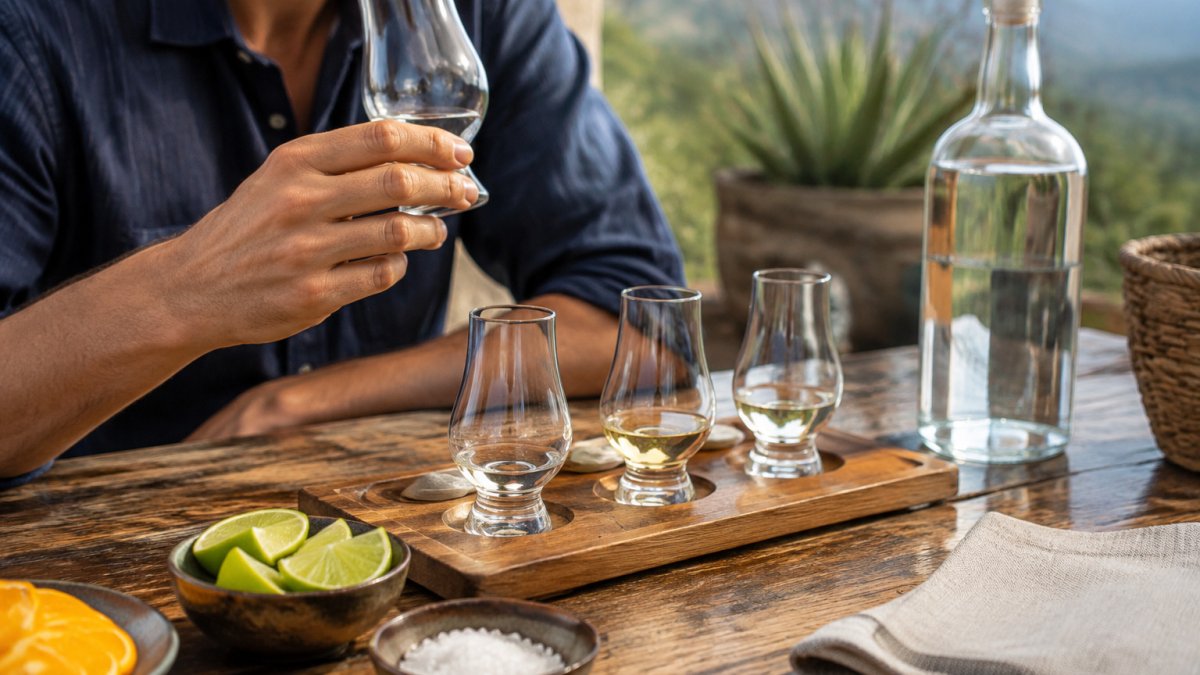
A tasting flight lets you compare styles side by side. Choose three or four tequilas from different categories, such as blanco, reposado and añejo. Pour small amounts into identical glasses and label them.
Taste from lightest to heaviest: blanco first, then reposado, then añejo. Drink a few bites of plain cracker or water between pours to reset your palate. Keep the session short so your senses stay sharp.
Start Your Own Tasting Sessions With Tiburon Rum’s FIN Tequila
If you want a clean, agave-forward spirit to practice on, Tiburon Rum’s FIN Tequila is made from 100% de Agave in Jalisco, Mexico. It suits the steps above: pour it neat, look at the color, nose it slowly, and take a small sip to see how the agave character comes through. Start your own tasting session with a single pour and see what you notice.
Frequently Asked Questions
How do you properly taste premium tequila?
Start by pouring a small amount neat into a tulip-shaped glass at room temperature. Observe the color and clarity, then swirl gently and nose the glass before taking a small sip. Let the tequila coat your palate, notice the flavors and the finish, and swallow slowly. Repeat with a second sip to confirm what you noticed, since first impressions often change as the spirit opens up.
What glass is best for tasting tequila?
A stemmed, tulip-shaped glass is a practical choice because it concentrates aromas near the rim while letting you swirl without spilling. A standard shot glass hides the nose and makes it harder to judge color. Wide-mouthed glasses release aromas quickly, which can be useful for a light blanco but may dissipate subtle notes in an aged expression.
How can you tell if tequila is 100% agave?
Check the label for the words 100% de Agave, which indicates the spirit was made only from agave sugars. Blends labeled Tequila without that phrase can contain up to 49% other sugars. Look for the NOM number on the bottle, which identifies the producer, and note the bottler’s address to confirm where the tequila was made. Consider how the product is marketed, but rely on the label and the producer information.
How do you set up a tequila tasting flight at home?
Choose three or four expressions that differ in one main way, such as blanco, reposado and añejo from the same producer. Pour equal small amounts in the same glass type, taste from the lightest to the most aged, and cleanse your palate with water and plain crackers between pours. Write short notes on aroma, flavor and finish for each so you can compare them side by side.
