
Last Updated: October 27, 2026
Quick Summary
You can spot fake tequila by checking the seal, cap, and label before you buy. Look for a broken or missing seal, glue residue, misaligned print, font inconsistencies, and a missing NOM number or agave claim. A fake bottle often skips the 100% de Agave claim entirely.
- Check that the cap spins freely but does not lift off and the seal is intact.
- The NOM number identifies a distillery, not a brand.
- Real labels have aligned color layers; fakes show halos or misalignment.
- Counterfeit alcohol can contain methanol, which is toxic even in small amounts.
- Real tequila leaves slow, even legs when you swirl the glass.
Table of Contents
- Why Fake Tequila Is a Real Risk
- Start With a Tequila Bottle Authenticity Check
- Read the Tequila Label and NOM Number
- Check the Agave Content: 100% Agave vs Mixto
- Common Signs of Counterfeit Alcohol
- How to Tell If Tequila Is Fake Using Appearance and Taste
- Where to Buy Tequila You Can Trust
- Frequently Asked Questions
Why Fake Tequila Is a Real Risk
Some bottles are refilled with other spirits. Others are fakes with copied labels.
At Tiburon Rum, we care about what’s inside the bottle, so this matters to us. Our FIN Tequila is made from 100% de Agave in Jalisco, Mexico, and we know how much work goes into a real bottle. Here’s how to spot fake tequila bottles before you spend money.
The stakes go beyond a bad drink. Counterfeit alcohol can contain unsafe substances.
Start With a Tequila Bottle Authenticity Check
A tequila bottle authenticity check can start with the seal and closure. If the seal is broken, missing, or looks off, put the bottle down.
Inspect the Seal and Closure
Look at the cap and the seal together. Check for gaps, wrinkles, or lifting edges.
Check these points:
- Cap spins freely but doesn’t lift off
- Seal is intact and unbroken
- No glue residue around the neck
- No scratches on the cap
Look for Tampering and Refill Marks
Look for a fill line, a loose cap, or liquid residue around the neck.
If the cap looks crooked, consider it a reason to inspect the bottle further.
Read the Tequila Label and NOM Number
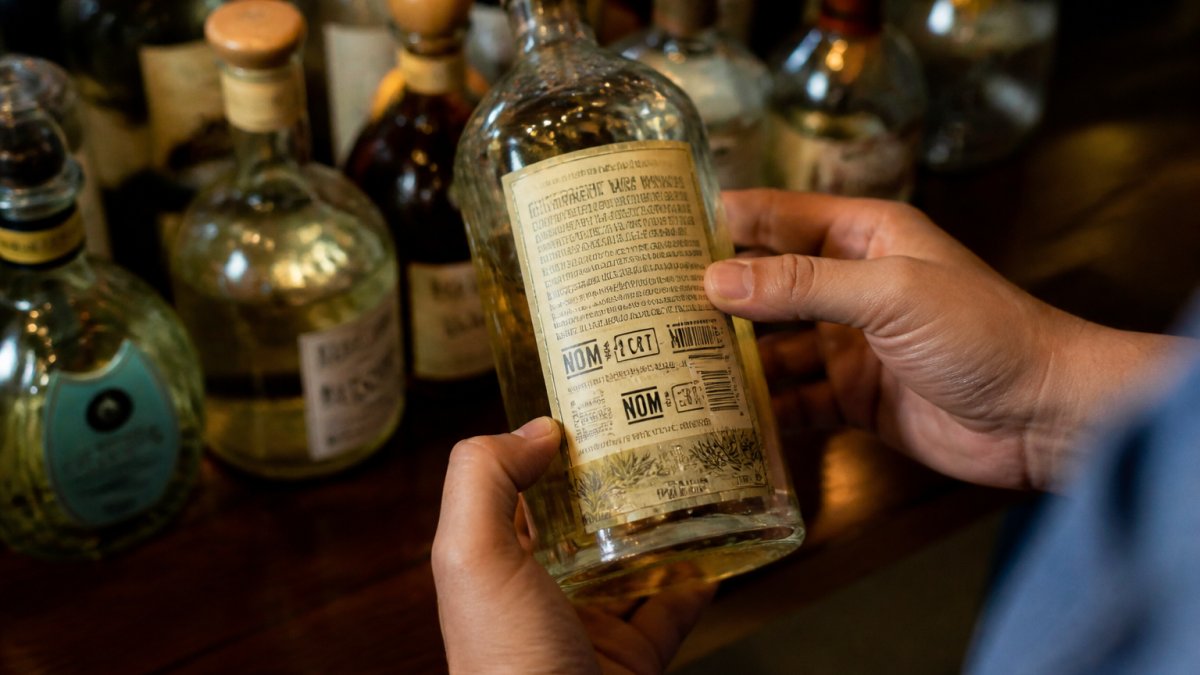
A label can offer clues when checking a bottle. A NOM number identifies a distillery.
What the NOM Number Actually Tells You
The NOM number identifies a distillery, not a brand.
A label may show:
- A NOM number
- An agave claim
Verify the NOM and CRT Information Step by Step
For a deeper walkthrough, see our guide on how to verify authentic tequila.
Check the Agave Content: 100% Agave vs Mixto
Look for these clues:
- “100% de Agave” or “100% Blue Agave” on the label
- No added sugar or syrup listed
- Clear agave taste, not a sweet or syrupy finish
A fake bottle often skips the agave claim entirely. If the label is vague, treat it as a red flag.
Common Signs of Counterfeit Alcohol
Counterfeit alcohol shows up in the packaging before it shows up in the glass. A fake bottle usually has at least one visible flaw, but the flaws are specific, and most shoppers do not know what to look for. This section separates packaging forensics from quality judgments, because a bottle can be authentic and still taste mediocre, or look perfect and still be a refill.
Packaging and Print Warning Signs
Check for:
- Registration errors. On a real label, the color layers align. On a fake, you may see a faint color halo or misalignment around logos and text.
- Font inconsistencies. Compare the brand name across the front, back, and neck label. Counterfeits often use a slightly different weight or spacing on one panel.
- Spelling and grammar. Brand names and legal text should be exact. A misspelled producer name or a missing accent mark is a strong signal.
- Label adhesion. Real labels are applied with even adhesive. Lifting corners, bubbles, or glue residue around the edges suggest a relabel.
- Neck and cap printing. The capsule or shrink band over the cap should be uniform, with no wrinkles, seams, or uneven shrinkage.
Seal, Cap, and Refill Checks
Look for:
- A cap that does not sit perfectly straight or flush
- Glue residue or a faint ring where a previous seal was removed
- Liquid residue or staining around the neck and shoulder
- A fill level noticeably higher than comparable bottles of the same brand
- A lot code that looks printed over the label rather than integrated with it
Health Risks and Safe Purchasing
Counterfeit alcohol can contain methanol, which is toxic and can cause serious harm even in small amounts (the CDC). The FDA has warned consumers about tainted alcohol, and the Alcohol and Tobacco Tax and Trade Bureau (TTB) tracks illegal sales and labeling violations. A bottle that skips licensed distribution is a gamble with your health, not just your wallet.
Practical safeguards:
Counterfeit detection and quality assessment are different questions. A bottle can pass every packaging check and still be a mediocre product, or look flawless and be a refill. Use packaging checks to confirm authenticity, then use sensory checks to judge quality.
Counterfeit bottles usually give themselves away through specific packaging flaws, so check these points before you buy.
| Warning sign | What to look for |
|---|---|
| Registration errors | Faint color halo or misalignment around logos and text |
| Font inconsistencies | Different weight or spacing on one panel |
| Spelling and grammar | Misspelled producer name or missing accent mark |
| Label adhesion | Lifting corners, bubbles, or glue residue at edges |
| Neck and cap printing | Wrinkles, seams, or uneven shrinkage on capsule |
| Cap alignment | Cap does not sit straight or flush |
| Seal residue | Glue residue or faint ring from removed seal |
| Fill level | Noticeably higher than comparable bottles of same brand |
How to Tell If Tequila Is Fake Using Appearance and Taste
Your senses can catch what the label hides. Appearance and taste give you a second layer of proof. Here’s how to tell if tequila is fake using both.
Color, Clarity, and Legs
Real tequila is clear or lightly golden, depending on the type. Blanco is clear. Reposado and añejo pick up color from barrel aging.
Swirl the glass and watch the legs. Real tequila leaves slow, even streaks. A fake may look cloudy or leave no legs at all.
Aroma and Flavor Clues
Smell the tequila before you sip. Real tequila smells of cooked agave, with notes of citrus or vanilla. A fake often smells sharp, chemical, or overly sweet.
On the tongue, real tequila is smooth with a warm finish. A fake may burn harshly or taste flat. If the flavor feels off, trust your gut.
Where to Buy Tequila You Can Trust
Our FIN Tequila is crafted from 100% de Agave in Jalisco, Mexico. For recommendations on bottles worth buying, see our guide to premium tequila for sipping.
Frequently Asked Questions
Can a tequila bottle have a valid-looking label and still be counterfeit?
Yes. Counterfeiters often copy NOM numbers, CRT logos, and label designs from real brands, so a convincing label alone does not prove authenticity. Look for consistency across the bottle: the NOM number on the label should match the number printed on the glass or closure, the seal should be intact, and the liquid should look and smell as expected. If anything is mismatched or the price seems far below normal retail, treat it as suspect and verify the producer’s details directly.
How do I check whether a bottle of alcohol is authentic?
Run a tequila bottle authenticity check in three passes. First, inspect the closure and seal for tampering or refill marks. Second, read the label and confirm the NOM number, agave statement, and producer details are clear and consistent. Third, examine the liquid for color, clarity, and legs, then smell and taste a small pour. Cross-check the NOM number against the CRT registry online. If any step fails, do not buy or drink the bottle, and report it to the retailer or local authorities.
Does fake tequila taste different from authentic tequila?
It often does, but not always. Authentic 100% agave tequila usually shows clean agave sweetness, balanced alcohol, and a smooth finish. Counterfeit or mixto products may taste harsh, chemically, or overly sweet, with a sticky texture and a lingering burn. Some fakes are diluted or mixed with cheaper spirits, so the flavor can seem thin or muddy. Taste is a useful clue, but pair it with label and packaging checks because a skilled counterfeit can mimic flavor reasonably well.
What should I do if I think a tequila bottle is counterfeit?
Stop drinking it and keep the bottle, label, and receipt as evidence. Do not return it to the shelf or resell it. Contact the retailer where you bought it and report the issue. You can also notify the brand’s producer using the contact details on the label, and file a complaint with your state alcohol control board or local consumer protection office. If you feel ill after drinking, seek medical help and mention the suspect bottle. Document photos of the label, NOM number, and seal to support your report.
Fake bottles are a real risk, but a few checks protect you. Look at the seal, read the NOM number, confirm the agave content, and trust your senses. At Tiburon Rum, we make FIN Tequila from 100% de Agave in Jalisco, with full traceability and a smooth, clean finish. Get started with Tiburon Rum and sip with confidence.
