
Last Updated: November 20, 2026
Quick Summary
A tequila decanter is a serving vessel, not a storage vessel, so pour only what you will serve and return the rest to the original bottle. If you do store tequila in a decanter, use lead-free crystal with a tight stopper and keep it in a dark, cool spot for no more than a few days to two weeks.
- Test the stopper by filling with water, turning it on its side over a sink, and counting to ten for seeps.
- Blanco at standard proof lasts 1-3 days in a decanter, while high-proof blanco holds 3-7 days.
- Any style in a sealed, cool decanter can stay up to two weeks, checking the seal weekly.
- Alcohol can pull lead from leaded crystal, so choose lead-free glass and treat unmarked vintage pieces as display-only.
- Fill the decanter to the shoulder, never past the stopper seat, to limit air and slow oxidation.
Table of Contents
- What a Decanter Does for Tequila (And What It Doesn’t)
- The Best Way to Store Tequila: Bottle First, Decanter Second
- How Long Alcohol Can Sit in a Decanter Before Quality Drops
- Why a Lead-Free Crystal Decanter Matters for Safety
- Seal, Stopper, and Fill Level: The Checks That Prevent Evaporation
- Step-by-Step: Transferring Tequila Into a Decanter Safely
- Already Stored Tequila in a Decanter? Do This Next
- Choosing a Decanter for FIN Tequila and Your Home Bar
- Frequently Asked Questions
What a Decanter Does for Tequila (And What It Doesn’t)
A tequila decanter is a serving vessel, not a storage vessel. It makes a bottle look good on the bar and makes pouring easier for guests. It does not protect tequila the way the original bottle does.
That distinction matters more than most drinkers realize. The bottle on the shelf and the bottle on the table serve two different jobs.
What a decanter does well:
- Presents the spirit attractively for a dinner or tasting
- Makes one-handed pouring easier
- Keeps the bottle off the table during service
What it does not do:
- Stop oxygen from reaching the liquid
- Match the seal of a screw cap or cork
- Protect against light the way dark glass does
Treat it as a serving tool and you will avoid most of the damage covered below.
The Best Way to Store Tequila: Bottle First, Decanter Second
The original bottle is generally a good place to store tequila, upright, in a cool dark cabinet, with the cap tight.
A decanter offers none of those protections by default. Many have loose stoppers, wide mouths, and clear glass that lets light through.
A common mistake is buying a beautiful decanter and moving the whole bottle into it on day one. That trades a working seal for a decorative one.
How Long Alcohol Can Sit in a Decanter Before Quality Drops
Three things happen once tequila leaves its bottle:
- Evaporation: alcohol escapes through a loose stopper
- Oxidation: oxygen changes the aroma and rounds off the agave notes
- Light exposure: clear glass lets light degrade the spirit over time
None of these ruin tequila overnight. But they add up. A blanco that tasted bright on Monday can taste dull by the following weekend.
A Practical Storage-Duration Guide by Tequila Style and Proof
Use this as a working guide for how long tequila can stay in a decanter:
| Tequila Style | Time in Decanter | What to Watch |
|---|---|---|
| Blanco, standard proof | 1-3 days | Loses fresh agave aroma first |
| Blanco, high proof | 3-7 days | Holds up longer, still fades |
| Reposado | 2-5 days | Oak notes can turn flat |
| Añejo | 3-7 days | Richer body masks early decline |
| Any style, sealed and cool | Up to 2 weeks | Check the seal weekly |
So does a tight closure and a dark cabinet.
Why a Lead-Free Crystal Decanter Matters for Safety
Lead-free crystal is a safer choice for a decanter you actually use.
This is the part most buying guides skip. A decanter is not just decor. It holds something you drink.
Lead crystal is made with lead oxide to give it weight and sparkle. That sparkle comes at a cost. The U.S. Food and Drug Administration guidance on lead in food-contact glassware notes that lead can migrate from crystal into food and drink, especially with repeated or long contact.
The mechanism matters for tequila specifically. Alcohol is a solvent, and it can pull lead from the glass surface. The longer the spirit sits and the more acidic or alcoholic it is, the more opportunity there is for migration. That is why a decanter used for a two-hour dinner pour is a different risk profile from one that holds tequila for two weeks.
How to tell leaded from lead-free crystal:
- Read the label. “Lead-free crystal,” “lead-free glass,” or “crystalline glass” indicates a lead-free formulation. Plain “crystal” or “full lead crystal” without a lead-free claim is a warning sign.
- Check the weight and ring. Leaded crystal is noticeably heavier for its size and rings longer and lower when flicked. Lead-free crystal is lighter and has a shorter, higher ping. This is a rough test, not a lab result.
- Look at the base. Many leaded pieces carry a “24% PbO” or similar lead-oxide marking. Absence of a marking does not prove safety, but a marking confirms lead content.
- Treat vintage and unmarked crystal as suspect. Estate-sale and inherited decanters should be display-only unless you can confirm the formulation.
What to check before you buy:
- Look for “lead-free crystal” or “lead-free glass” on the label
- Prefer clear, unmarked glass over heavily decorated interiors
- Skip vintage or unmarked crystal for daily use
- Rinse and dry before every use
If a decanter’s origin is unknown, use it for display only. Do not pour sipping tequila into it.
Seal, Stopper, and Fill Level: The Checks That Prevent Evaporation
A tight seal helps keep tequila in good condition in a decanter. Test it before you pour a drop.
The stopper test takes ten seconds:
- Fill the decanter with water to the normal pour line
- Seat the stopper firmly
- Turn it on its side over a sink for a count of ten
- Check for any seep at the joint
If water escapes, air gets in. That means evaporation and oxidation, both working against your tequila.
Fill level matters too. A decanter filled to the shoulder has less air inside than one filled halfway. Less air means slower oxidation. Never fill past the point where the stopper sits.
Watch out: a decorative stopper that looks snug can still leak. Cork, glass, and gasket stoppers all behave differently, and a loose fit is easy to miss until the level drops.
Step-by-Step: Transferring Tequila Into a Decanter Safely
Follow these steps:
- Inspect the decanter. Hold it to the light and look for cracks or chips at the rim. A chip at the stopper seat is the most common cause of a slow leak.
- Wash with warm water and mild soap. Skip harsh cleaners that leave a residue. Use a bottle brush to reach the shoulder and base, where residue collects.
- Rinse and air-dry fully. Dry the decanter completely before pouring.
- Test the stopper using the water method above.
- Check the bottle is authentic before you commit the pour. Our guide on how to verify authentic tequila walks through the checks.
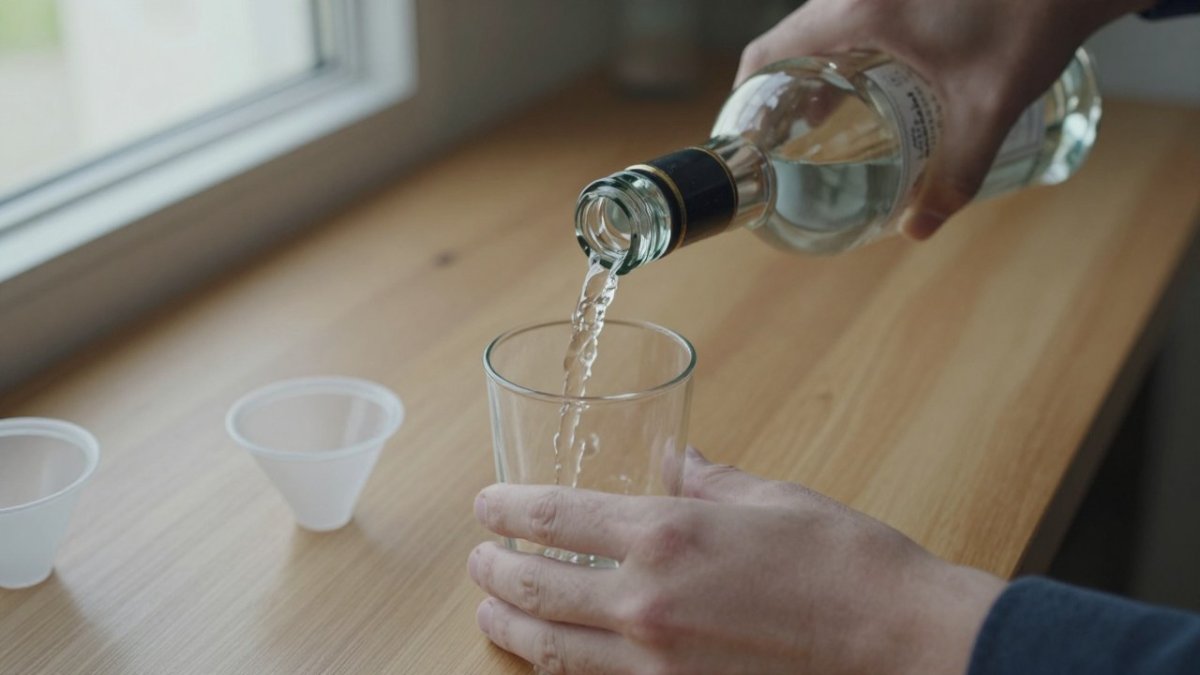
- Pour slowly using a funnel to avoid spills and to keep the neck clean. A funnel with a fine mesh screen catches any cork fragments from the original bottle.
- Label the decanter. Write the tequila style, proof, and the date you poured it on a small tag or a piece of tape on the base.
- Seat the stopper and store in a dark, cool spot away from the stove and windows.
If Tequila Is Already in a Decanter
If your tequila has been sitting in a decanter for a while, check it before you serve it. Work through these checks:
- Check the seal. Run a finger around the stopper joint and look for a wet ring or a dried residue line. Either means vapor has been escaping.
- Check the fill level. Compare it to the level you remember. A drop of more than a small amount over days points to evaporation through a poor seal.
- Smell and taste a small pour. A flat, dull nose where agave used to be, or a harsh, bitter finish, signals oxidation. A sour or vinegary note is different and is a reason to discard rather than serve.
- Look for contamination. Cloudiness, sediment that was not there before, or a film on the surface means transfer it out and do not serve it.
Already Stored Tequila in a Decanter? Do This Next
If your tequila has been sitting in a decanter for a while, taste it before you serve it to anyone. Then decide whether it stays.
Start with a small sip in a clean glass. Compare the aroma to what you remember. Look for these signs:
- A flat, dull nose where agave used to be
- A harsh or bitter edge on the finish
- A lower fill level than you left
If any of those show up, move the tequila back to a sealed bottle or use it in a mixed drink where the spirit is not the star. If it still tastes right, keep it in the decanter but plan to finish it soon.
From here on, pour only what you will serve. Refill the decanter from the original bottle each time rather than topping off old spirit with new.
Choosing a Decanter for FIN Tequila and Your Home Bar
Choose a decanter with a tight stopper, lead-free glass, and a size that matches how fast you pour. Looks come second.
If you are building out the bar, our roundup of premium tequila for sipping pairs well with a decanter you plan to use, not just display.
Storing tequila well comes down to one habit: pour for the moment, store for the long haul. Keep your FIN Tequila in its bottle, decant small amounts for serving, and check the seal every time. Tiburon Rum crafts FIN Tequila from 100% de Agave in Jalisco, and every bottle is built to be enjoyed at its best. Get started with Tiburon Rum and pour a tequila that tastes as good on the table as it does on the shelf.
Frequently Asked Questions
Is it okay to put tequila in a decanter?
Yes, for serving. A tequila decanter makes a good table piece. Keep the time it sits in the decanter short, and pour back into the original bottle if you will not finish it soon.
How long can alcohol sit in a decanter?
A decanter is not a permanent home for tequila. Keep the time short and pour back into the original bottle if you will not finish it soon.
Does a decanter change the taste of tequila?
Treat the decanter as a serving vessel and keep the original bottle as the storage vessel.
Can you store tequila in a lead-free crystal decanter?
A lead-free crystal decanter is the safer choice for a spirit you keep in it. Ask the seller to confirm the material, and if it is unknown, use the decanter for serving only.
