
Last Updated: November 21, 2026
Quick Summary
Build a parallel zero-proof flight with the same glasses, tasting cards, and attention as the main pours, treating it as a second menu rather than an afterthought. Nonalcoholic options are drinks with little or no alcohol, from spirit-style bottles to ready-made mocktails, and they let every guest join the tasting.
- Three pours is the sweet spot for a home party; four is plenty for a larger table.
- Group the flight by one variable at a time, such as spirit style, botanical profile, or bitterness.
- For ten guests and three pours each, plan roughly two bottles of each zero-proof option.
- Offer a sugar-free and a caffeine-free option in every flight so no guest is stuck with water.
- Keep zero-proof and full-strength bottles on separate trays with separate cards.
Table of Contents
- Why a Spirits Tasting Party Needs Nonalcoholic Options
- Nonalcoholic Tasting Party Ideas That Keep Every Guest Pouring
- Zero-Proof Spirits and Premade Drinks Worth Pouring
- Mocktail Recipes for a Party That Hold Their Own
- Nonalcoholic Spirit Tasting Notes: How to Read a Pour
- Nonalcoholic Drink Pairings for the Snack Table
- Serving Sizes, Quantities, and Alcohol-Content Transparency
- Plan Your Tasting Flight Around Tiburon Rum
- Frequently Asked Questions
Why a Spirits Tasting Party Needs Nonalcoholic Options
A spirits tasting party without nonalcoholic options leaves part of your guest list holding a glass of water while everyone else swirls and compares.
Nonalcoholic options are drinks with little or no alcohol, ranging from spirit-style bottles to ready-made mocktails.
Here’s what most guides get wrong. They treat the nonalcoholic pour as an afterthought, a single bottle of something sweet set at the end of the bar.
Nonalcoholic Tasting Party Ideas That Keep Every Guest Pouring
The strongest nonalcoholic tasting party ideas treat the zero-proof flight as a second menu, not a substitute, its own lineup, tasting notes, and moment in the evening.
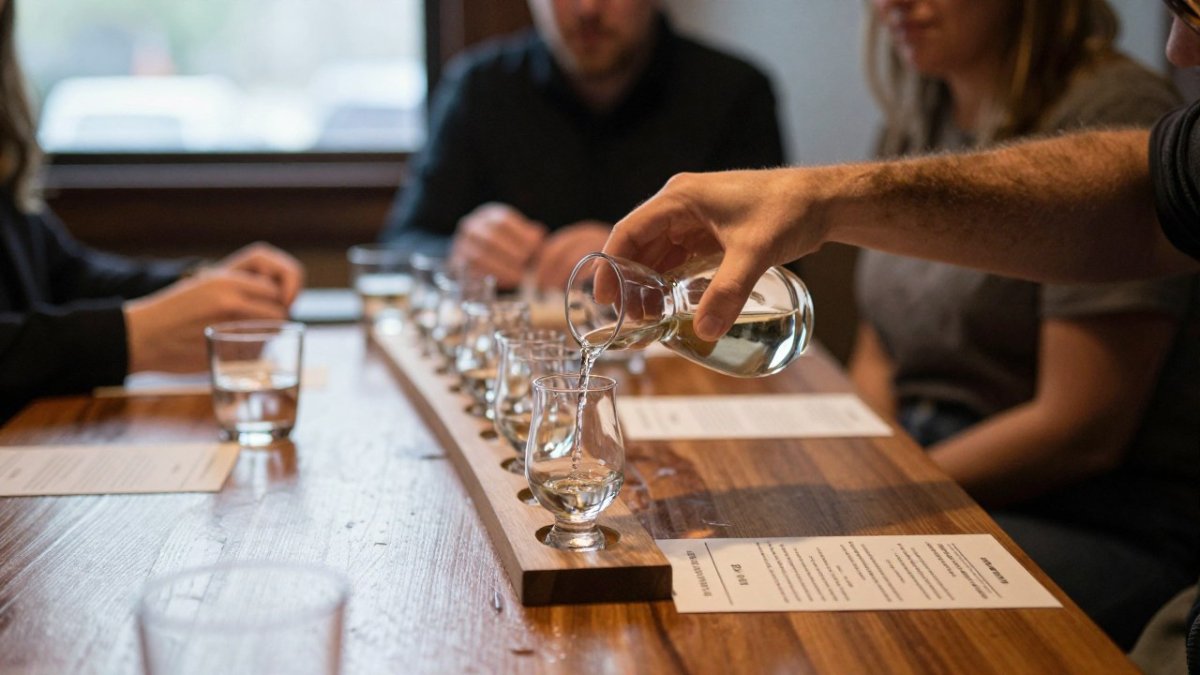
A few formats that work:
- Parallel flights: Pour the rum flight and the zero-proof flight side by side, in matching glassware, so guests can compare aroma and finish across both.
- Blind bracket: Number six glasses, three with alcohol and three without, and let the table guess. The nonalcoholic pours often surprise people.
- Build-your-own station: Set out two or three spirit alternatives, mixers, and garnishes, and let guests assemble their own pour.
Building a Balanced Tasting Flight
A balanced flight moves from light to bold, the same way a good rum lineup does: start with a delicate, citrus-forward pour, move to something herbal, then finish with a richer, oak-influenced option. If you’re stocking a home bar, our guide to the best rum for a home bar covers the bottles worth keeping on hand.
Group the flight by one variable at a time so the comparison stays honest. Sorting by spirit style (rum-style, whiskey-style, gin-style, aperitif) teaches guests how categories differ. Sorting by botanical profile (citrus-led, herbal, spice-forward) teaches them how ingredients shift the nose. Sorting by bitterness or sweetness shows how balance changes the finish.
The Run of Show for the Night
A tasting party runs best on a loose schedule. Welcome guests with a light aperitif-style pour, then seat them for the guided flight about thirty minutes in. Pour, talk through each glass for five to seven minutes, and clear before the next. End with a longer, relaxed pour and the snack table, keeping water and plain crackers at every seat to reset the palate.
A workable two-hour timeline looks like this:
- 0:00-0:20, Arrival pour. One light, low-commitment glass while guests settle, so the host is free to greet people.
- 0:20-0:30, Seat and orient. Hand out tasting cards and a printed flight order, and explain the four-step framework (aroma, palate, mouthfeel, finish) in one sentence so nobody feels tested.
- 0:30-1:15, Guided flight. Three pours at five to seven minutes each, with a short reset between glasses.
- 1:15-1:45, Open pour and snacks. Let guests revisit a favorite or build their own, this is when the best conversations happen.
A Scorecard That Makes Comparisons Fair
Comparing drinks consistently takes a little structure. A one-page scorecard fixes that: for each pour, guests rate aroma, flavor, mouthfeel, finish, and overall preference on a 1-5 scale, with a line for a one-word note and a box for “would drink again.” It slows tasters down so they actually evaluate, and gives the table a shared vocabulary when opinions differ.
Watch out: scorecards only work if every guest tastes the same flight in the same order. If half the table starts with the bold pour, their ratings won’t be comparable.
Inclusive Hosting Without the Interrogation
A tasting party works best when nobody has to explain why they’re not drinking. Build the zero-proof flight as a full peer to the main flight, not a corner station, and let guests choose their own glasses without commentary. Offer a sugar-free and a caffeine-free option in every flight so guests managing dietary restrictions aren’t stuck with water. Keep ingredient cards beside each bottle listing common allergens and whether the drink contains caffeine, added sugar, or trace alcohol.
Zero-Proof Spirits and Premade Drinks Worth Pouring
The best zero-proof bottles earn their place on a tasting table because they offer real flavor, not just an absence of alcohol. Here are the ones we’d put in a flight.
Spirit Alternatives and Zero-Proof Cocktails Compared
| Option | Style | Best For | Skip If |
|---|---|---|---|
| Ritual Zero Proof Rum Alternative | Rum-style spirit alternative | Rum-focused flights | Guests want a cocktail, not a spirit |
| Seedlip Grove 42 | Citrus-led spirit alternative | Opening pour | You want a bold finish |
| St. Oak | Whiskey-style, oak and spice | Bridge to dessert | Table prefers dry and herbal |
| Aplós | Ready-to-pour zero-proof | Low-prep hosting | You want to mix at the table |
| Ghia Le Spritz | Bitter aperitif style | Aperitif moment | Guests avoid bitter notes |
| St. Agrestis Phony Negroni | Negroni-style cocktail | Cocktail lovers | You need a spirit substitute |
| Recess Zero-Proof Craft Mocktails | Ready-made mocktails | Easy variety | You want a single strong pour |
| Cut Above | Cocktail-inspired range | Mixed preferences | You want one clear flavor story |
Ordering bottles for the party? Our shop page has the shipping details and the states we can reach.
Mocktail Recipes for a Party That Hold Their Own
A great party mocktail needs the same backbone as a cocktail: something bitter, something sweet, and a finish that lingers. Skip the sugary fruit punch. Build instead.
Try these three, each scaled for a single serving and easy to batch:
- Zero-Proof Paloma: grapefruit soda, a squeeze of lime, a pinch of salt, poured over ice in a salt-rimmed glass.
- Spirit-Free Mule: ginger beer, lime juice, and a zero-proof spirit alternative, served in a copper mug with a mint sprig.
- Elderflower and Tonic: elderflower syrup, tonic water, and a cucumber ribbon, over plenty of ice.
Batch any of these in a pitcher an hour before guests arrive. Add the fizzy component at the last minute so it stays bright. For more infusion ideas you can make ahead, here are some of our White Tip infusion recipes.
Nonalcoholic Spirit Tasting Notes: How to Read a Pour
Reading a nonalcoholic pour uses the same four-step framework as any spirit: aroma, palate, mouthfeel, and finish. Nose the glass first, then take a small sip and let it sit.
Zero-proof pours can lead with aroma and fade on the finish. Judge them on their own terms: is the opening inviting, is the middle balanced, does the finish leave you wanting another sip?
Understanding what small-batch production does to flavor helps here. Our piece on small batch rum vs mass produced explains why production method changes what you taste in the glass, and the same logic applies to zero-proof spirits.
Nonalcoholic Drink Pairings for the Snack Table
Pairings for a zero-proof flight follow the same rules as any tasting: match intensity to intensity. A light, citrus-led pour wants something salty and crisp. A richer, oak-influenced option wants something with a little fat and warmth.
- Citrus and herbal pours: salted nuts, olives, crisp crackers, and fresh vegetables with a light dip.
- Oak and spice pours: aged cheese, dark chocolate, and roasted nuts.
- Bitter aperitif styles: cured meats, sharp cheese, and anything with a little acid.
Keep the snack table simple. Three or four items is enough, and small plates let guests graze between pours without filling up.
Serving Sizes, Quantities, and Alcohol-Content Transparency
Plan on small pours, which keep the evening moving and let guests taste everything. For a two-hour party with ten guests and three pours each, you’ll want roughly two bottles of each zero-proof option, plus extra for the relaxed final pour.
A Simple Quantity Method
Build your shopping list from the pour, not the bottle. Multiply guests by pours per guest by pour size to get total ounces, then divide by the bottle size on the label. Ten guests times three pours times one ounce is 30 ounces; add a 30 percent buffer for the open-pour hour and spills, and you’re planning around 40 ounces per option.
Plan the nonalcoholic side of the bar the same way you plan the main flight:
- Water: about 8 ounces per guest per hour, plus a full glass at every seat for palate resets. For ten guests over two hours, that’s roughly 160 ounces, or about five 32-ounce pitchers.
- Mixers: for a build-your-own station, plan two to three ounces of mixer per drink and one mixer type per spirit style (tonic for citrus, ginger beer for spice, soda for herbal).
- Garnishes: two to three pieces per guest per pour, citrus wheels, cucumber ribbons, mint sprigs, so guests can refresh a glass without raiding the kitchen.
- Ice: about one pound per guest for a two-hour event, more if the evening runs long or the room is warm.
Alcohol-Content Transparency
Transparency matters as much as quantity. Nonalcoholic labeling varies, and some products labeled nonalcoholic may contain trace amounts of alcohol (Malt Beverage Labeling: Alcohol Content).
Label every bottle clearly, keep the nonalcoholic flight on a separate tray or a marked section of the table, and tell guests which is which before the first pour.
Watch out: mixing the zero-proof and full-strength bottles on the same unmarked tray is the fastest way to hand a guest the wrong drink.
Plan Your Tasting Flight Around Tiburon Rum
Building a tasting party that works for every guest takes a little planning, but the payoff is a table where nobody sits out.
Tiburon Rum is handcrafted in a family-owned distillery in Belize, molasses-based and aged in bourbon barrels, with a second maturation that gives our rum its golden color and smooth finish.
Ready to plan the flight? Visit our tasting rooms for a guided tasting, or get started with Tiburon Rum and build a table where every guest has a glass worth talking about.
Frequently Asked Questions
How many nonalcoholic drink options should I offer at a spirits tasting party?
Plan for at least three nonalcoholic options so guests avoiding alcohol have real variety: one spirit-style pour such as a zero-proof rum or Seedlip expression, one ready-to-drink mocktail, and one simple mixed drink you build on the spot. If your guest list is large or you know several people are skipping alcohol, add a fourth. Small tasting pours of 1 to 2 ounces each mean a few bottles go a long way, and you avoid running out mid-flight.
Are there nonalcoholic spirits that taste like alcohol?
Some get close in character rather than in alcohol heat. Zero-proof rum, whiskey, and gin alternatives are built to mimic the aromatics and mouthfeel of the real thing, using botanicals, oak, vanilla, and spice extracts. They will not have the burn of a 92-proof pour, so treat them as their own category. Taste them side by side with a real spirit like Tiburon Rum and note where the aroma and finish line up and where they diverge. That comparison is the point of a tasting, not a flaw.
How can I make a nonalcoholic tasting feel like a real spirits tasting?
Use the same glassware, the same 1 to 2 ounce pours, and the same order of service you would for full-proof spirits. Give each guest a tasting card with space for aroma, sweetness, bitterness, mouthfeel, and finish. Serve the zero-proof flight first, then the full-proof flight, and let guests compare notes across both. A printed flight list and a short guided walkthrough from the host do more for the experience than any single bottle.
What snacks pair well with nonalcoholic spirits and mocktails?
Match the pairing to the pour. Citrus-forward zero-proof spirits and gin-style options work with salty olives, marcona almonds, and sharp cheese. Whiskey-style alternatives with vanilla and oak notes pair with dark chocolate, caramel, and aged cheddar. Rum-style pours, including a molasses-based rum like Tiburon Rum with its tropical vanilla undertones, sit well with grilled pineapple, spiced nuts, and cured meats. Keep portions small so the snacks support the tasting rather than replace it.
