
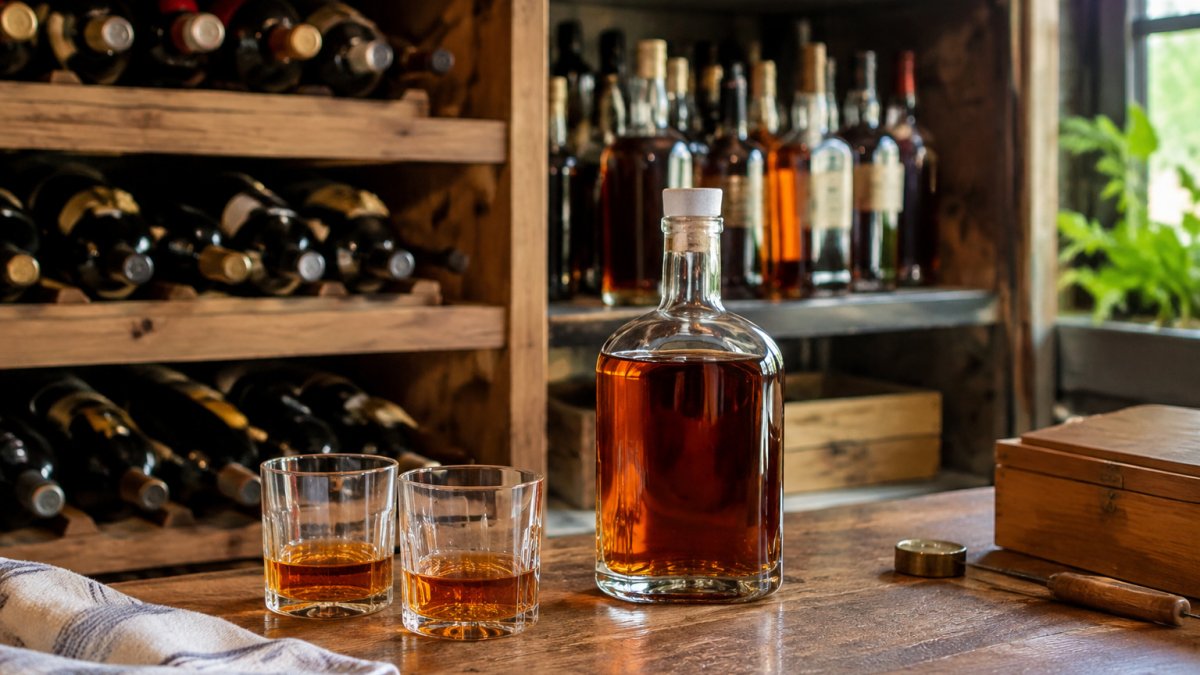
Last Updated: November 4, 2026
Quick Summary
To store premium aged spirits, keep bottles upright, cool, dark, and stable, since heat, light, and a dry cork strip the bottle of what you paid for. Stand bottles up to protect the cork, block sunlight and UV, and hold a steady temperature in the upper 60s to low 70s Fahrenheit.
- Store bottles standing upright, never on their side, because high-proof spirit slowly eats at a wet cork.
- A bottle left on a sunny windowsill can shift in flavor within weeks.
- A stable temperature in the upper 60s to low 70s Fahrenheit suits most aged spirits well.
- Inspect fill level, cork condition, and label integrity twice a year, using spring and fall as your rhythm.
- Decant the last few pours into a smaller bottle, since a nearly empty bottle can go flat in weeks.
Table of Contents
- Why Storage Decides What Your Premium Aged Spirits Taste Like
- The Four Rules: Upright, Cool, Dark, and Stable
- How to Store Premium Aged Spirits Long Term
- How to Store Opened Liquor Without Losing Flavor
- How Long Unopened Spirits Last and What Changes With Time
- How to Store Premium Aged Spirits in the Fridge
- Storage by Spirit and Proof, From Rum to Tequila
- Build Your Own Bottle Care Plan Before Your Next Pour
- Frequently Asked Questions
Why Storage Decides What Your Premium Aged Spirits Taste Like
Heat, light, and a dry cork can strip a fine bottle of everything you paid for. That same steady, dark environment matters when storing fine spirits, while wine calls for its own careful balance of temperature, light, and humidity.
Our molasses-based rum is aged in bourbon barrels, then finished for a smooth sip. That barrel time is done.
Here is the part most guides get wrong: a sealed bottle is not frozen in time. It still changes.
Below, we break down the four rules, then show you exactly how to store opened bottles, long-term bottles, and everything in between.
The Four Rules: Upright, Cool, Dark, and Stable
Four rules cover almost every bottle you own. Get these right and you prevent most of the damage that ruins a good pour.
- Upright: bottles stand, they do not lie down.
- Cool: aim for a steady room temperature, well away from heat.
- Dark: no direct sunlight, no bright lamps.
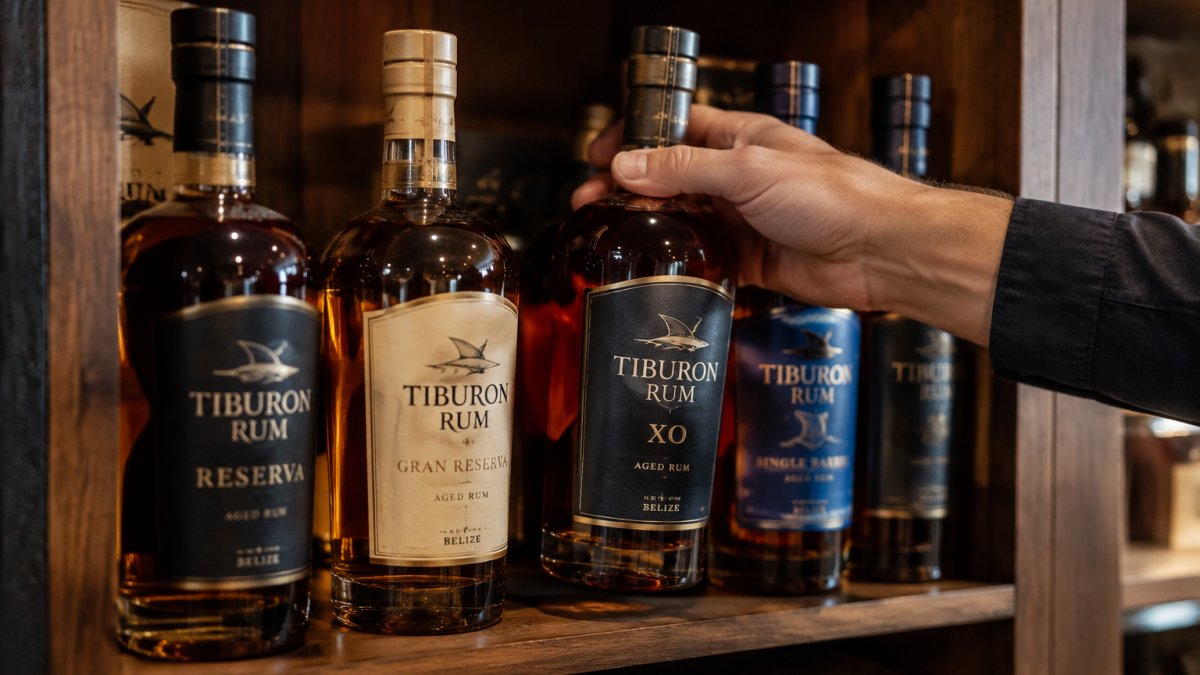
Keep Bottles Upright to Protect the Cork
Store bottles standing up, not on their side. This is the opposite of wine, and it trips people up.
High-proof spirit slowly eats at a cork that stays wet. Lying a bottle down keeps the cork soaked in alcohol for years.
Standing upright keeps the spirit off the cork. The cork stays firm and the seal stays tight. A tight seal is what keeps air out and flavor in.
Block Sunlight and UV Exposure
Direct sunlight is the fastest way to wreck a bottle. UV light breaks down the compounds that give aged spirits their color and aroma.
A bottle left on a sunny windowsill can shift in flavor within weeks.
Keep bottles in a cupboard, a closed cabinet, or a box. If you like showing off your collection, use a shelf away from windows.
Hold a Cool, Stable Temperature Away From Heat
Cool and steady beats cold. A stable temperature in the upper 60s to low 70s Fahrenheit suits most aged spirits well.
Heat speeds up reactions inside the bottle, and not in a good way.
Temperature swings are just as bad. They push liquid in and out of the cork, which loosens the seal over time.
Four rules cover almost every bottle you own, and each one guards against a specific kind of damage.
| Rule | What to do | What it prevents |
|---|---|---|
| Upright | Stand bottles up, never on their side | A wet cork softening and crumbling |
| Cool | Steady room temperature, away from heat | Heat speeding up reactions in the bottle |
| Dark | Cupboard, closed cabinet, or box | UV breaking down color and aroma |
| Stable | No temperature swings, shaking, or moving | Liquid pumping in and out of the cork |
How to Store Premium Aged Spirits Long Term
Long-term storage is about removing every variable you can. The goal is a spot where nothing changes for years, not months.
Here is a practical long-term plan, ordered by what matters most:
- Choose an interior closet or cabinet away from outside walls.
- Keep bottles upright and in their original boxes or tubes if you have them; the packaging blocks light and cushions the bottle.
- Avoid the garage, attic, basement, and any room that gets hot in summer or swings with the seasons.
- Skip the top of the fridge, the shelf above the oven, and any spot near a water heater or furnace.
- Inspect fill level, cork condition, and label integrity twice a year, spring and fall is an easy rhythm to remember.
Why Humidity and Cork Condition Matter More Than You Think
A natural cork needs a little ambient moisture to stay pliable. In a bone-dry room, forced-air heat in winter, a desert climate, a sealed display case, the cork can dry, shrink, and lose its grip on the bottle neck.
Moderate indoor humidity helps keep a natural cork pliable. If your space runs drier, keep bottles in their original tubes or a closed cabinet to buffer the cork.
Watch the fill level: if it has dropped on a bottle you have not opened, check the seal.
Temperature Stability Beats a Perfect Number
A steady indoor temperature serves aged spirits well. The swing matters more than the exact number. A bottle that cycles between 60 and 80 degrees every day pushes liquid in and out of the cork, and that pumping action loosens the seal over time.
A cheap thermometer in the storage space tells you more than guesswork. Check it on the hottest afternoon of summer and the coldest night of winter; that range is your real exposure.
Build a Simple Collection Log
For collectors, a written log turns storage from guesswork into a system. Record four things for every bottle:
- The bottle name and proof
- The date it entered storage
- The current fill level (a mark on the label or a photo works)
Revisit the log twice a year. A fill level that has not moved is a good sign; one that has dropped is your early warning that a cork is failing.
If you are curious how production scale shapes aging and flavor, our guide to small batch rum vs mass produced explains what happens inside the barrel before the bottle ever reaches your shelf.
How to Store Opened Liquor Without Losing Flavor
An opened bottle is a different problem. Once air is inside, oxidation starts, and oxidation is what flattens flavor over time.
You cannot stop it, but you can slow it down. Four habits do most of the work:
- Recork tight after every pour, all the way down.
- Store upright so the cork stays dry and firm.
- Keep it cool and dark, same as a sealed bottle.
Watch Headspace and Evaporation
Headspace is the air gap between the liquid and the cap.
As you pour down a bottle, that gap grows. A nearly empty bottle can go flat in a matter of weeks.
The fix is simple. Decant the last few pours into a smaller bottle that fits the liquid snugly.
Evaporation is the other signal to watch. If the fill level drops on a sealed bottle, the seal is failing.
How Long Unopened Spirits Last and What Changes With Time
Unopened spirits do not spoil the way food does. A well-stored sealed bottle can hold its quality for years, and often decades.
What changes is subtle. The liquid may soften slightly and the sharp edges round off. In a good bottle, that can be pleasant.
The cork is the real clock.
Watch for these signs that a bottle is past its best:
- A fill level that has visibly dropped
- A crumbly or loose cork
- A dull, dusty aroma instead of a clean one
Most well-kept bottles never reach that point. Store them right and the spirit holds.
How to Store Premium Aged Spirits in the Fridge
A fridge can hold an opened bottle for short-term storage.
The catch is the cork. A fridge is dry, and repeated chilling and warming can dry out a natural cork over time. Keep the bottle upright and capped tight.
Skip the freezer entirely. It adds nothing and risks cracking a bottle or pushing a cork loose.
Storage by Spirit and Proof, From Rum to Tequila
Different spirits have different weak points, but the four rules hold across all of them. What changes is how much the proof and the closure type matter, and whether the bottle is still doing anything in the glass.
First, the Misconception: Spirits Do Not Age in the Bottle
A premium aged spirit is finished aging the moment it leaves the cask.
What does happen in the bottle is slow chemical drift, oxidation, ester rearrangement, and light-driven breakdown. That drift can soften a spirit slightly, but it is not aging in any meaningful sense. A 12-year Scotch does not become a 20-year Scotch on your shelf. The practical takeaway: buy the bottle you want to drink, and store it to preserve what is already there.
Proof Changes How Fast a Cork Fails
Higher-proof spirits can be harder on a wet cork, so keep bottles upright.
-
Rum: keep it upright and dark. Our White Tip is 92 proof and is well suited to mixing.
-
Whiskey and bourbon: natural corks are common, so upright storage and steady humidity matter most. Cask-strength bottlings deserve the coolest, most stable spot you have.
-
Scotch: many bottles are chill-filtered, but the cork still rules. Keep it cool and out of light; peat-forward bottles are especially sensitive to light-driven aroma loss.
-
Tequila: whether blanco or aged, keep it cool and upright. If you enjoy sipping tequila, our guide to premium tequila for sipping covers what to look for in the bottle.
Closure Type Changes the Care Plan
- Natural cork: needs moderate humidity, upright storage, and a twice-yearly fill-level check.
One rule covers them all: high proof means the spirit attacks a wet cork faster, and light damages delicate aromas faster. Upright, cool, dark, and stable protects every category.
Build Your Own Bottle Care Plan Before Your Next Pour
A care plan is just a short set of habits matched to each bottle. Use this checklist to sort your collection by status and closure type.
- Sealed, natural cork: upright, cool, dark, check fill level twice a year.
- Sealed, screw cap: same rules, and the cap keeps a tighter seal for longer.
- Opened, more than half full: recork tight, keep cool, finish within a few months.
If you want to see how a well-kept bottle should taste, our tasting rooms in Placencia Village and San Pedro welcome visitors for a guided rum tasting, or a quick stop for a shirt and a bottle.
When your care plan is set, stock the bar with the bottles worth protecting. Our guide to the best rum for a home bar covers the essentials, and you can buy now for current prices and shipping details.
Frequently Asked Questions
Should premium spirits be stored upright?
Yes. Store premium aged spirits upright so the liquid never touches the cork. High-proof alcohol slowly breaks down cork over time, and a soaked cork can crumble into the bottle or let air in. Upright storage also keeps the closure clean and the seal intact. The one exception is a bottle you plan to pour within a few weeks, where orientation matters far less than keeping it cool and out of direct sunlight.
Does light or heat affect bottled spirits?
Both do. UV exposure from direct sunlight degrades the compounds that give aged spirits their color and aroma, and repeated heat cycles push evaporation and oxidation forward. Keep bottles in a cupboard or closed cabinet away from radiators, cookers, and sunny windowsills. A stable, cool spot in the low 70s Fahrenheit or below protects flavor better than any single fix.
How long do unopened spirits last?
An unopened bottle of distilled spirits does not spoil the way wine does, and a sealed bottle stored upright in a cool, dark place can hold its quality for years, often decades. The caveats are the closure and the conditions: a deteriorating cork or a bottle left in heat and light will change faster. If you plan to store premium aged spirits long term, check the seal periodically and keep the fill level steady.
How should you store an opened bottle of aged rum?
Recap it tightly, stand it upright, and keep it cool and dark. Oxidation and evaporation speed up as the headspace grows, so a bottle that is two-thirds empty changes faster than a full one. For a rum you sip slowly, consider decanting the remainder into a smaller bottle to reduce air exposure, and finish opened bottles within a few months to a year for the truest flavor.
Storing premium spirits well is not complicated, but it rewards attention. Keep bottles upright, cool, dark, and steady, and your collection will taste the way the distiller intended years from now.
At Tiburon Rum, we craft our rum in a family-owned Belizean distillery and mature it in bourbon barrels for a smooth finish with tropical vanilla notes. Every bottle also supports conservation work in Belize. Get started with Tiburon Rum and give your next pour the storage it deserves.
