
Table of Contents
- Why Color Is a Misleading Clue for Authentic Aged Rum
- Step 1: Read the Label for Rum Age Statement Regulations
- Step 2: How to Spot Added Sugar in Rum
- Step 3: Understand Solera Systems and Tropical Aging
- Step 4: Check for Additives and Artificial Coloring
- Step 5: Use a Hydrometer Test for Authenticity
- Choosing the Best Aged Rum for Home Bar Use
- Common Rum Marketing Myths to Ignore
- Frequently Asked Questions
Last Updated: September 7, 2026
The rum category is full of bottles that look older than they are. Dark liquid, a “reserva” label, and a story about Caribbean sun often convince buyers they’re holding something aged for a decade. The reality is frequently a young spirit darkened with caramel coloring and sweetened with added sugar. Authentic aged rum is a spirit whose flavor comes from time in wood, not from additives. Authentic aged rum is a spirit whose flavor comes from time in wood, not from additives. This guide shows you exactly how to verify what’s in your glass before you buy.
Below, we’ll walk through five practical steps: reading label regulations, spotting added sugar, understanding solera and tropical aging, checking for artificial coloring, and running a simple hydrometer test.
Why Color Is a Misleading Clue for Authentic Aged Rum
Color tells you almost nothing about how long a rum has aged. A distiller can achieve a deep amber hue in minutes with caramel coloring, while a genuinely aged rum might appear surprisingly pale depending on the barrel and climate. The official guidance on rum labeling from the TTB requires disclosure of added coloring on many spirit labels, but enforcement and consumer awareness remain inconsistent across imported bottles.
The real signals of age live in the flavor profile and the label’s legal language, not the liquid’s shade. Train your eye to ignore darkness entirely and look for the words that carry legal weight. Terms like “aged,” “reserva,” or “solera” without a number mean very little on their own.
Judging rum by color is the most common mistake buyers make. A bottle darkened with caramel coloring can look 15 years old while containing rum aged for just one year. The consequence is paying premium prices for what is essentially young spirit with additives.
Step 1: Read the Label for Rum Age Statement Regulations
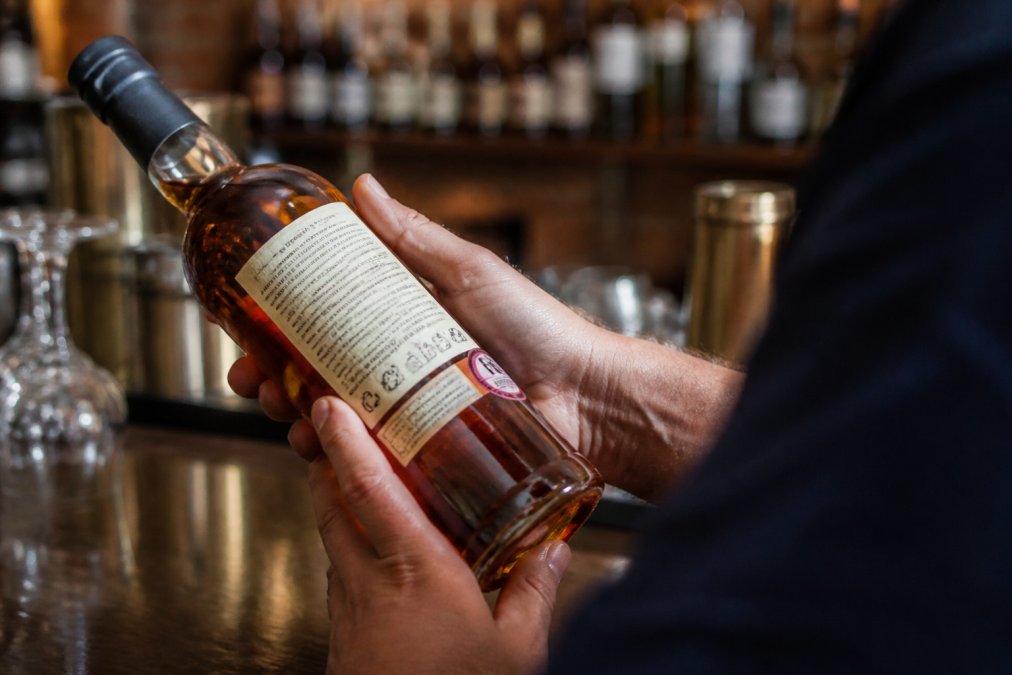
Rum age statement regulations vary by country, which makes label reading the first test of authenticity. In the United States, the Alcohol and Tobacco Tax and Trade Bureau standards for rum require that if an age is stated, it must reflect the youngest spirit in the blend. That means a bottle labeled “aged 5 years” cannot contain any rum younger than five years, regardless of how the blend is composed.
Look for three specific things on the label:
- An explicit age statement with a number, such as “aged 8 years”
- The distillation method, either pot still or column still
- Geographic indicators like “Barbados Rum” or “Jamaican Rum,” which carry legal definitions in their home countries
When a bottle says “reserva” or “solera” without a number, the producer is not making a legal claim about minimum age. Treat those terms as marketing language rather than verification.
Step 2: How to Spot Added Sugar in Rum
Added sugar is the most widespread adulteration in rum, and it’s completely legal in most markets. Many producers add sugar syrup after distillation to create a rounder, sweeter mouthfeel that masks the harshness of young spirits.
How to spot added sugar in rum starts with the bottle’s own disclosure. Producers who add sugar are increasingly required to state this on the label. If a label lists “sweetener” or “sugar” as an ingredient, the rum has been altered after distillation.
For a quick check at the store, compare the stated proof against the mouthfeel. A rum at 40% ABV that tastes noticeably sweet and syrupy likely contains added sugar, since pure aged spirit at that proof should taste dry and warming rather than dessert-like.
Step 3: Understand Solera Systems and Tropical Aging
A solera system is a fractional blending method where younger rum is added to a series of barrels containing progressively older spirit. When a producer draws from a solera, they take only a portion of the oldest barrels and refill them with younger rum. This means a solera-aged bottle contains a blend of many ages.
Tropical aging compounds the confusion. Rum maturing in the Caribbean interacts with wood much faster than spirit aging in cooler climates, driven by heat and humidity that accelerate both extraction and evaporation. The angel’s share in tropical cellars can reach several percent of volume each year, concentrating flavor rapidly.
A rum aged in the tropics for eight years will typically show deeper wood influence than the same period in Europe, so the age statement alone doesn’t tell you how much barrel character to expect.
Step 4: Check for Additives and Artificial Coloring
Beyond sugar, rum can contain artificial coloring and flavoring agents. Caramel coloring (often listed as E150a) is the most common additive, used to standardize appearance across batches and to simulate age. Some producers also add vanilla, coconut, or spice extracts to create a consistent flavor profile.
The challenge for a U.S. buyer is that the TTB does not require a producer to disclose the use of caramel coloring or other flavoring additives on the label. This means you cannot rely on the label alone to tell you if a rum is pure. Instead, you need to know the rules of the country where the rum was made.
Here is a practical cheat sheet of the world’s major rum-producing regions and their stance on additives:
| Region / Country | Additive Policy | What It Means for You |
|---|---|---|
| Jamaica | No additives allowed by law. | If a label says “Jamaican Rum,” it is legally pure. You can trust the geographic indicator. |
| Barbados | No additives allowed by law. | Similar to Jamaica, the GI protects the spirit. A “Barbados Rum” is additive-free by definition. |
| Martinique (AOC) | No additives allowed by law. | The Appellation d’Origine Contrôlée strictly prohibits any addition of sugar, color, or flavor. |
| United States | Additives permitted without disclosure. | A U.S. rum can contain caramel color and flavorings with no label requirement. Be wary of non-imported craft bottles. |
| Guyana | No additives allowed by law. | Rum from Guyana is protected under its geographic indication, ensuring it is pure. |
| Central America (e.g., Guatemala, Panama) | Additives permitted; no legal restriction on sugar or color. | Producers in these regions often rely on the “solera” method and may add sugar for consistency. Labels rarely disclose this. |
This table is your first line of defense. If you are holding a bottle from Jamaica or Barbados, you can stop worrying about additives entirely. If you are holding a bottle from a region with loose oversight, you must rely on the other verification steps in this guide.
A geographic indicator is only as strong as its enforcement. While Jamaica and Barbados have strict laws, not every bottle labeled with a regional style is legally bound to those rules if it is bottled elsewhere. Always check the “Bottled in” or “Produced in” line to ensure the rum was actually made in that country.
Step 5: Use a Hydrometer Test for Authenticity
A hydrometer test is the most reliable way to detect added sugar in rum at home. It is the same principle used by regulatory bodies to audit spirit authenticity, and it gives you a definitive answer where labels remain silent.
Why It Works
A hydrometer measures the density of a liquid. Pure rum at a given proof has a predictable density because it is a mixture of ethanol and water. When sugar is added, it increases the density without significantly changing the alcohol content. Therefore, a rum with added sugar will read as having a higher proof than it actually does.
The Precise Method
To get a reliable reading, you need to account for temperature, as density changes with heat:
- Calibrate for Temperature: Let the rum sit at room temperature (ideally 68°F / 20°C) for at least 30 minutes. If your hydrometer is calibrated for a different temperature, you will need to adjust the reading.
- Fill the Test Jar: Pour the rum into a tall, clear test jar (a graduated cylinder works best). Fill it enough so the hydrometer floats freely without touching the bottom or sides.
- Take the Reading: Gently spin the hydrometer to release any air bubbles clinging to it. Once it settles, read the number at the bottom of the meniscus (the curve of the liquid surface).
- Record the Apparent Proof: Note the reading. This is your “apparent” proof.
- Compare to the Label: Compare your reading to the proof stated on the bottle label.
Interpreting the Results
- No Sugar Added: If the hydrometer reads the same as the label (e.g., 80 proof for a 40% ABV rum), the rum is pure. The density matches exactly what is expected for that alcohol content.
- Sugar Present: If the hydrometer reads higher than the label, sugar is present. For example, a bottle labeled 80 proof that reads 86 proof on the hydrometer indicates a significant sugar addition.
Estimating Sugar Content
While a hydrometer cannot give you an exact gram-per-liter figure without a conversion chart, you can estimate the severity. As a general rule of thumb, a 1-proof difference (0.5% ABV) on a base spirit is roughly equivalent to about 5 to 7 grams of sugar per liter. A reading that is 5 proof points higher suggests a heavily sweetened rum.
For a more precise measurement, you can use a refractometer, which measures how light bends through the liquid. Sugar bends light more than alcohol, so a combined reading from a refractometer and a hydrometer can give you a very accurate sugar concentration. However, a simple hydrometer is sufficient to identify whether a rum is heavily dosed or pure.
The Limitations
This test is not perfect. It will not detect the presence of caramel coloring or other non-sugar flavoring agents, as these are typically added in such small quantities that they do not meaningfully change the density. Also, high-proof rums (e.g., 100+ proof) have a higher natural density, so you must be precise with your reading and temperature control.
Despite these limitations, the hydrometer test transforms the search for authentic aged rum from a matter of trust into a matter of empirical verification.
Choosing the Best Aged Rum for Home Bar Use
Once you’ve verified a rum is genuinely aged, the next question is what to stock. The best aged rum for home bar use balances enough age for sipping complexity, a proof that works in cocktails, and a flavor profile that doesn’t get lost when mixed.
For sipping, look for rums aged at least five years in tropical climates, as the warm maturation delivers vanilla, oak, and dried fruit notes from barrel influence and oxidation. For cocktails, a higher-proof aged rum holds its character against other ingredients without disappearing.
A well-rounded home bar includes both styles: one aged rum for neat drinking and one higher-proof expression for mixing. The aged rum brings depth to a simple pour, while a 92-proof white rum provides the structure needed for craft cocktails without getting lost in complex drinks.
Common Rum Marketing Myths to Ignore
Several persistent myths make it harder to identify authentic aged rum. The first is that darker rum is always older, which we’ve already debunked. The second is that “small batch” or “handcrafted” guarantees quality, when these terms carry no legal definition.
Another myth is that a solera-aged rum is the same as a vintage-dated rum. A solera blend contains many vintages and cannot be traced to a single year, while a vintage rum comes from one distillation period. Neither is superior, but they are different products.
Finally, ignore the assumption that higher price means higher age. Pricing reflects marketing, packaging, and distribution costs as much as maturation. The Beverage Testing Institute’s rum evaluation methodology shows that affordable rums regularly score as well as premium bottles in blind tastings. Use the steps in this guide rather than the price tag to judge what’s genuinely in the bottle.
Identifying authentic aged rum comes down to verification rather than assumption. Label language, additive disclosures, and simple tests like the hydrometer give you the tools to separate genuinely aged spirit from sweetened, colored imitations. Once you’ve confirmed what you’re buying, you can choose with confidence. At Tiburon Rum, we put this same care into every bottle, from our molasses-based rum matured in bourbon barrels to our 92-proof White Tip for mixing. Explore Tiburon Rum’s full collection and taste the difference that transparent, handcrafted production makes.
Frequently Asked Questions
What does the age statement on a rum bottle actually mean?
An age statement tells you the youngest rum in the blend spent at least that many years in a barrel. Under rum age statement regulations in most countries, this number reflects the minimum maturation period. However, unlike other spirits, there is no universal standard, so a 5-year-old rum from one distillery may taste different from another. Always check if the statement refers to tropical or continental aging, as warmer climates speed up the interaction between the rum and the wood.
Does the color of rum indicate how long it has been aged?
No. Color alone is a poor indicator of age or authenticity. Many producers add caramel coloring to create a dark appearance that suggests longer maturation. A young rum can look deep amber, while an authentically aged rum might be lighter. To identify authentic aged rum, rely on the age statement, the production methods, and whether the distillery discloses additives. When in doubt, look for bottles that state ‘no added color’ or ‘no additives’ on the label.
How can you tell if rum has added sugar or coloring?
The most reliable method is a hydrometer test, which measures the density of the liquid to estimate sugar content. For a quick check at home, you can try the ‘swirl test’: swirl the rum in a glass and observe the legs. Slow, thick legs can indicate higher sugar content, but this is not conclusive. The best approach is to research the brand. Many authentic producers openly state on their website or label that they do not add sugar, coloring, or artificial flavoring.
Why do some rums not have an age statement?
Some rums omit an age statement because they are blends of different aged stocks, and producers may choose not to disclose the youngest component. This is common with column still rums, which are often lighter and aged for shorter periods. In contrast, a solera system rum may carry no age statement because the system continuously blends older and younger rums, making a single age difficult to define. A missing age statement does not mean the rum is low quality, but it makes it harder to verify its authenticity.