
Last Updated: October 23, 2026
Quick Summary
To choose the right rum for cocktails, match the rum’s weight and flavor to the drink’s job: light, crisp white rum for citrus and mint drinks, and dark or aged rum for spirit-forward drinks. Check proof and base ingredient on the label, since those predict behavior in a cocktail better than color, age, or price.
- White rum suits Mojitos and Daiquiris; aged rum suits spirit-forward drinks like a Rum Old Fashioned.
- Age statements show the youngest rum in the blend, not the oldest or an average.
- Many clear rums are aged then charcoal-filtered, so clear doesn’t mean young.
- A 45-46% ABV rum holds structure longer than 40% ABV as ice melts.
- Reduce sweetener by a quarter to a third when swapping dry white rum for sweet aged rum.
Table of Contents
- Why Rum Style Decides How Your Cocktail Tastes
- Types of Rum for Cocktails: White, Gold, Dark, Aged, and Spiced
- How to Read a Rum Label Before You Buy
- Aged Rum vs White Rum: Which One Belongs in Your Glass
- Best Rum for Mojitos and Other Light, Fruity Drinks
- Best Rum for Daiquiris and Citrus-Forward Cocktails
- Matching Rum to the Cocktail: A Recipe-by-Recipe Chart
- Substitutions and Balance: Fixing a Cocktail That Tastes Off
- Frequently Asked Questions
Why Rum Style Decides How Your Cocktail Tastes
Choosing the right rum for cocktails starts with one rule: match the rum’s weight and flavor to the drink’s job.
Get that match wrong and the drink fights itself. Pour a heavy aged rum into a Mojito and the mint disappears.
At Tiburon Rum, we build every bottle around that idea. Our White Tip rum is 92 proof, made for mixing.
Below, we’ll show you exactly how to pick a bottle for any recipe. First, here’s what most guides get wrong: they treat all rum as one ingredient. It isn’t.
Types of Rum for Cocktails: White, Gold, Dark, Aged, and Spiced
The five main types of rum for cocktails differ by color, body, and aroma. Each one suits a different kind of drink.
- White rum: Clear, light, and crisp. Best for Mojitos, Daiquiris, and fruit-forward drinks.
- Gold rum: Amber and mildly sweet. Works in tiki drinks and punches.
- Dark rum: Deep color, bold molasses flavor. Good for floaters and rich cocktails.
- Aged rum: Rested in oak barrels. Smooth and complex, ideal for sipping or spirit-forward drinks.
- Spiced rum: Flavored with vanilla, cinnamon, or citrus. Best in simple mixed drinks.
If you’re stocking a home bar from scratch, a curated list of essential rum bottles saves you from guessing.
How Color, Body, and Aroma Point You to the Right Bottle
Color tells you little on its own. Many clear rums are aged, then filtered. Body and aroma tell the real story.
Smell the glass first. Bright citrus and grass point to a light mixer. Vanilla, caramel, and oak point to a sipper. A thin body signals a rum that will vanish in a strong drink.
Ask for a small taste before you buy a full bottle. A rum that smells sweet often tastes drier than expected once it hits citrus.
How to Read a Rum Label Before You Buy
A rum label tells you more than most buyers realize, and almost none of it is regulated the way whiskey or tequila labels are. That matters for cocktails, because two bottles that both say “aged rum” can behave completely differently once lime, sugar, and ice enter the glass. Check six things before you commit: origin, base ingredient, age statement, filtration, additives, and proof.
Origin and Base Ingredient
Rum is made from either molasses (a byproduct of sugar refining) or fresh sugarcane juice. Molasses-based rum tends to give deep, sweet, caramel-and-molasses notes. Sugarcane-juice rum, often called rhum agricole when it follows the French tradition, tends to be grassier, drier, and more vegetal.
Origin matters because production traditions differ. Spanish-heritage producers (Cuba, Puerto Rico, the Dominican Republic) typically favor lighter, column-distilled rums. English-heritage producers (Jamaica, Barbados, Guyana, Trinidad) often favor heavier, pot-still-influenced rums with more ester and funk. French-heritage producers lean into cane-juice freshness.
Age Statements: The Youngest Rum Wins
When a bottle says “8 years,” that number refers to the youngest rum in the blend, not the oldest, and not an average. A blend of 8-year and 20-year rums is legally an 8-year rum in most producing countries. This is why an “8-year” bottle can taste younger than expected, and why age alone is a weak predictor of quality.
Age also interacts with climate. Rum aged in the tropics loses more to evaporation (the “angel’s share”) per year than rum aged in cooler climates, so a tropical 5-year rum can show more oak and concentration than a European-aged 10-year rum.
Filtration: Why Clear Doesn’t Mean Young
Many clear rums are aged for months or years, then charcoal-filtered to strip color. Filtering also strips some barrel flavor, which is why filtered aged rums tend to taste cleaner and lighter than their age would suggest. If a clear bottle is priced like an aged rum, filtration is usually the reason. For mixing, filtered aged rum is a useful middle ground: more body than an unaged white, less oak than a dark.
Additives and Sweetness
Many rums, especially Spanish-heritage and spiced rums, are dosed with sugar, glycerin, or vanilla after distillation. Labeling rules vary, and in most markets the dose isn’t disclosed. A rum that tastes sweet on its own will push a cocktail sweeter, which means you may need to cut back on simple syrup or liqueur in the recipe. If a bottle tastes noticeably sweet, treat it as a flavored ingredient, not a neutral base spirit.
Proof: The Mixing Variable Most Buyers Ignore
Proof is the single most useful number on the label for cocktail work. A 40% ABV (80 proof) rum dilutes quickly once it hits shaking ice; a 45-46% ABV (90-92 proof) rum holds its structure longer and keeps a drink from tasting watery as the ice melts. Higher-proof rums also carry more aroma per ounce, which matters in three-ingredient drinks like the Daiquiri where the rum has nowhere to hide.
If you only check two things on a label, check proof and base ingredient. Those two numbers predict more about how a rum will behave in a cocktail than color, age, or price.
For a deeper look at how production methods change what’s in the glass, this guide on small batch versus mass produced rum breaks down the label claims worth trusting.
Aged Rum vs White Rum: Which One Belongs in Your Glass
The aged rum vs white rum choice comes down to one question: is the rum the star, or part of a team?
White rum is the team player. It brings clean alcohol and mild sweetness without covering the other ingredients. That’s why it anchors light, citrus-driven drinks.
Aged rum is the star. Barrel aging adds vanilla, caramel, and oak. It suits drinks where rum is the main flavor.
Our White Tip sits firmly in the mixing camp. At 92 proof, it holds its own against lime, mint, and pineapple without taking over.
Don’t swap aged rum into a Mojito to “make it fancier.” The oak and vanilla will bury the mint, and the drink turns muddy.
Best Rum for Mojitos and Other Light, Fruity Drinks
The best rum for mojitos is a crisp white rum with enough proof to cut through lime and sugar. Look for a clean, light-bodied bottle with mild sweetness.
Mojitos, Piña Coladas, and rum punches all reward a light rum. These drinks depend on freshness. A heavy rum flattens them.
For a shortlist of bottles that fit this role, see our picks for the best white rum for mixing.
Best Rum for Daiquiris and Citrus-Forward Cocktails
The best rum for daiquiris is a dry, clean white rum that lets lime and sugar do the talking. A Daiquiri has three ingredients, so the rum has nowhere to hide.
Skip anything with heavy vanilla or spice here. Those notes clash with fresh citrus.
A higher-proof white rum works well in this role. It keeps the drink from tasting watery as the ice melts.
Matching Rum to the Cocktail: A Recipe-by-Recipe Chart
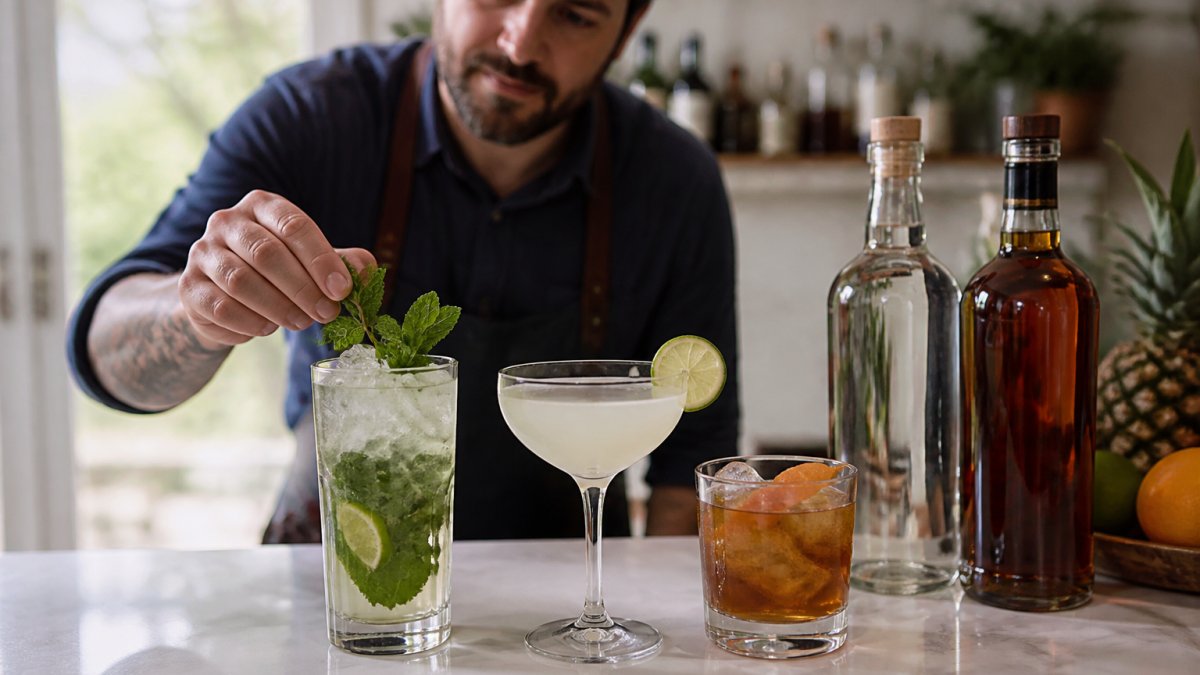
Use this chart to match rum styles to common cocktails. Readers who want to taste rum styles firsthand can plan a visit to the Tasting Rooms. It’s the fastest way to choose without second-guessing.
| Cocktail | Rum Style | Why It Works |
|---|---|---|
| Mojito | White rum | Light body lets mint and lime lead |
| Daiquiri | White rum | Dry and clean, no flavor clash |
| Piña Colada | White or gold rum | Blends with coconut and pineapple |
| Rum Old Fashioned | Aged rum | Oak and vanilla carry the drink |
| Dark ‘n’ Stormy | Dark rum | Bold molasses stands up to ginger |
| Rum Punch | Gold rum | Mild sweetness bridges fruit and spice |
Substitutions and Balance: Fixing a Cocktail That Tastes Off
Most guides tell you to “adjust to taste.” Readers troubleshooting a drink can try White Tip Infusion recipes to adjust flavor and balance. That’s not useful when you’ve already poured the drink. The better approach is to understand what a rum swap actually changes, then correct in the right direction. Every substitution moves four levers: sweetness, acidity, aroma, and dilution.
The Four Levers a Rum Swap Moves
Sweetness. Aged and spiced rums often carry residual sugar from barrel aging or post-distillation dosing.
Acidity. Heavier rums mute citrus.
Aroma. Pot-still and Jamaican rums carry high ester levels that read as “funk”, overripe banana, pineapple, nail polish. That funk is an asset in tiki drinks and a liability in a clean Daiquiri.
Dilution. Higher-proof rum tolerates more shaking and more ice without going watery.
A Practical Substitution Workflow
- Taste the original recipe first. Know what “right” tastes like before you change anything.
- Swap one variable at a time. Change the rum, keep everything else identical, and taste.
- Diagnose the direction. Sweeter than target? Cut syrup. Flatter than target? Add citrus. Harsher than target? Add a splash of water or a barspoon of syrup.
- Adjust in small increments. A quarter-ounce of citrus or a barspoon of syrup fixes more drinks than a new bottle will.
- Note what changed. If a swap worked, write down the ratio, that’s how you build a repeatable house recipe.
When Substitutions Don’t Work
Some swaps are structurally wrong, not just unbalanced. Putting a heavy aged rum into a Mojito buries the mint no matter how you adjust the sugar. Using a thin white rum in a rum Old Fashioned leaves the drink hollow because there’s no barrel character to carry the bitters. In those cases, the right move is a split base, half the called-for style, half the substitute, rather than forcing a full swap.
Don’t try to fix a bad rum swap with more sugar. Sweetness masks the problem for one sip and then makes the drink cloying. Diagnose whether the issue is sweetness, acidity, aroma, or dilution before you touch the syrup.
Frequently Asked Questions
What type of rum should I use in cocktails?
Match the rum to the drink’s weight. White or light rum suits crisp, citrus-forward recipes like the Daiquiri and Mojito because its mild flavor lets lime and mint lead. Gold and aged rum bring vanilla and oak notes that hold up in spirit-forward drinks such as a rum Old Fashioned. Spiced rum works in sweeter mixed drinks where its added flavor is welcome. Choosing rum for cocktails starts with asking how much flavor you want the rum to contribute.
When should you use aged rum instead of white rum?
Reach for aged rum when you want the spirit to be tasted, not just felt. Barrel aging adds color, body, and notes of vanilla, caramel, and oak, so aged rum fits sipping, tiki drinks, and stirred cocktails. White rum stays crisp and clean, which is why it wins in shaken drinks built on citrus and mint. A useful rule: if the recipe calls for shaking and lots of lime, start white. If it calls for stirring or a rich syrup, start aged.
Does rum proof matter when choosing a cocktail rum?
Yes, because proof affects how much the rum shows through the mixer. A higher-proof white rum, around 90 to 92 proof, keeps its character even after lime juice, syrup, and ice dilute the drink. Lower-proof bottles can taste thin in a shaken cocktail. For stirred or sipping drinks, higher proof also means a little water opens the spirit rather than washing it out. Check the ABV on the label and pick a bottle that matches the drink’s intensity.
Can you use white rum in any cocktail?
White rum works in most shaken, citrus-based drinks, but it fades in recipes that rely on aged spirit flavor. Swap it into a Daiquiri, Mojito, or Piña Colada and you get a clean, bright result. Put it in a rum Old Fashioned or a tiki drink built on dark rum and the drink loses depth. If a recipe calls for dark or aged rum, you can still use white rum as a base and add a small measure of aged rum for backbone.
