
Last Updated: November 2, 2026
Quick Summary
Proper cocktail shaker care means rinsing your shaker with warm water immediately after pouring, then washing it with mild detergent and a soft sponge before air-drying it upside down. Deep clean with baking soda paste or a vinegar and water soak when you notice film, odor, or sticky residue.
- Disassemble the tin, lid, cap, and strainer before every wash so water reaches the threads.
- Never use steel wool or abrasive cleaners, which scratch stainless steel permanently.
- Hand-washing is the safer default unless the manufacturer explicitly rates the shaker dishwasher safe.
- Never mix baking soda and vinegar in a sealed shaker because pressure can pop the lid.
- Replace the shaker if the interior is deeply pitted or rust returns after cleaning.
Table of Contents
- Why Stainless Steel Cocktail Shaker Care and Cleaning Matters
- The Daily Rinse and Wash Routine for Every Shaker Tin
- Is a Stainless Steel Cocktail Shaker Dishwasher Safe?
- Cocktail Shaker Deep Cleaning: Baking Soda, Vinegar, and Sticky Residue
- How to Remove Odors From a Cocktail Shaker
- Troubleshooting Stains, Water Spots, and Corrosion on Stainless Steel
- How to Dry and Store Bar Tools So They Stay Spotless
- Shake With a Shaker You Can Trust
- Frequently Asked Questions
Why Stainless Steel Cocktail Shaker Care and Cleaning Matters
A stainless steel cocktail shaker is one of the hardest-working tools on your bar. It takes ice, citrus, sugar, and spirits several times a week, and it never gets a day off. Proper stainless steel cocktail shaker care and cleaning keeps every drink tasting the way it should. The same habit of rinsing away citrus and sugar before they dry helps keep every bar tool ready for the next round, and cleaning stainless steel tumblers calls for that same care with their finishes.
A clean shaker is not about looks. It’s about flavor.
Three things go wrong when you neglect your shaker:
- Leftover residue turns sticky and traps dust and odors
- Lingering flavors from citrus or cream bleed into the next cocktail
- Mineral deposits and water spots dull the finish over time
None of these are hard to prevent. They just need a routine. Below, we’ll walk through the daily wash, the weekly deep clean, and the fixes for stains, smells, and cloudy steel. Seven rules, in order of importance.
The Daily Rinse and Wash Routine for Every Shaker Tin
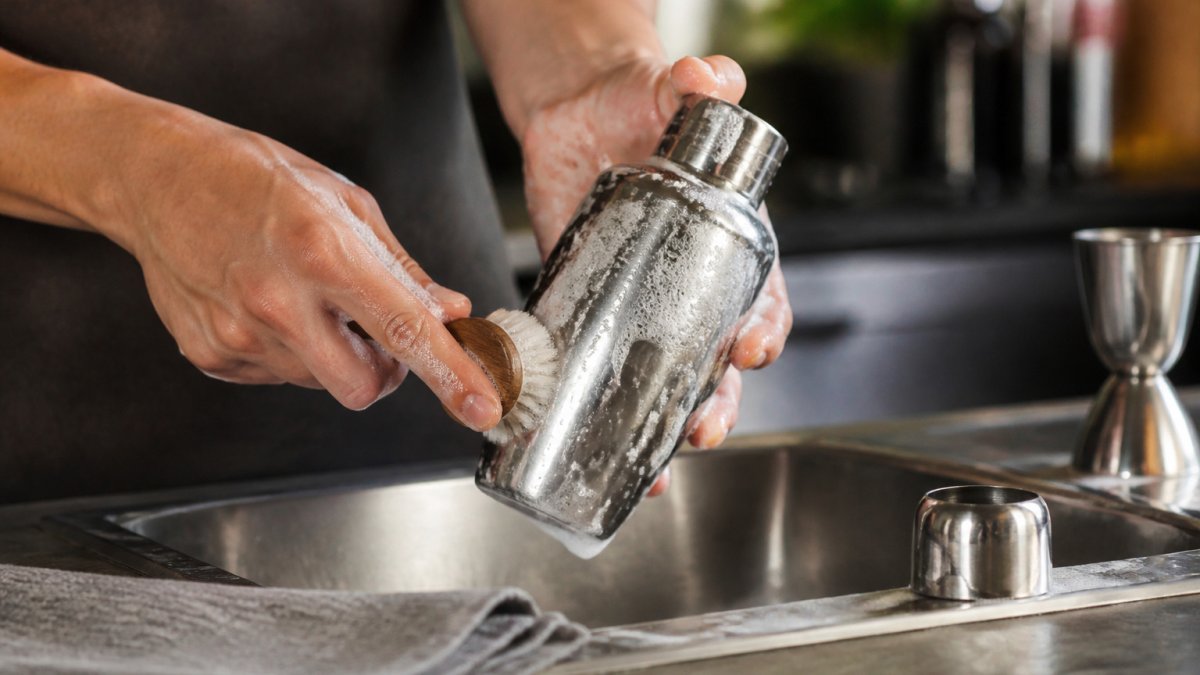
Rinse your shaker the moment you finish pouring. That single habit does more for your bar tools than any specialty cleaner. Warm water and a soft sponge handle almost everything if you get to it fast.
Here’s the routine we follow at home and behind the bar:
- Rinse immediately. Fill the tin with warm water and swirl out the leftover liquid before it dries.
- Disassemble the shaker before cleaning. Separate the tin, lid, cap, and strainer so water reaches every surface.
- Wash with warm water and mild detergent. A drop or two of unscented dish soap is plenty.
- Scrub with a soft sponge or soft brush. Never steel wool, which scratches the finish.
- Rinse again under hot water to flush out soap film.
- Air-dry upside down on a drying rack or clean cloth.
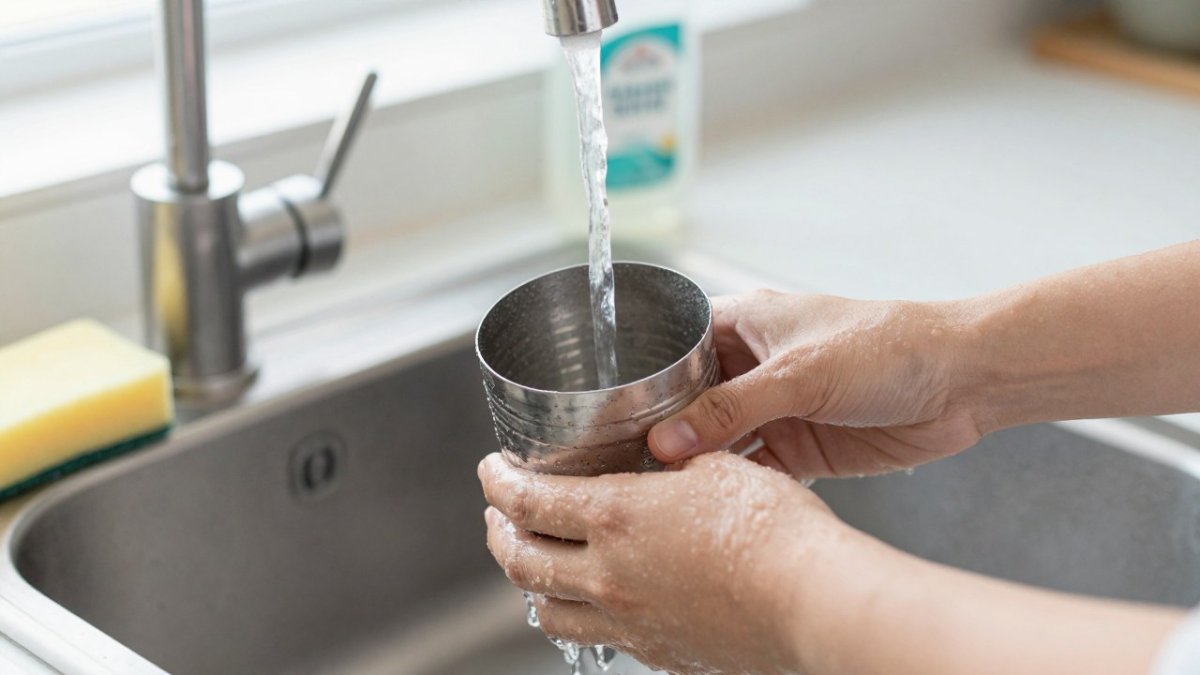
Disassemble the Shaker Before Cleaning
Take the shaker apart every time before cleaning. Separating the lid, cap, and strainer lets water reach the threads and strainer holes, where residue collects.
Warm Water, Mild Detergent, Soft Sponge
Hot water and harsh cleaners are not the answer here. Warm or hot water with a neutral, unscented detergent lifts oils and sugar without attacking the steel. A soft sponge or cleaning cloth does the rest. Skip abrasive cleaners and bleach entirely. They strip the surface and leave it prone to spotting.
Is a Stainless Steel Cocktail Shaker Dishwasher Safe?
Check the manufacturer’s guidance before putting any shaker in the dishwasher. Hand-washing is the safer default for shakers you plan to keep for years.
How to Check Whether Your Shaker Is Dishwasher-Safe
Work through these checks in order before the shaker goes in the rack:
- Find the manufacturer’s statement. Look on the base of the tin, the inside of the lid, the original packaging, or the product page. A “dishwasher safe” claim is a specific promise; silence is not permission.
- Identify the construction. Three-piece cobbler shakers with built-in strainers, Boston shakers (two tins, or a tin and a glass), hybrid shakers, and French/Parisian styles all have different weak points.
- Check for mixed materials. A rubber gasket, silicone seal, plastic cap, or coated exterior changes the answer. If any non-steel part is present and the maker hasn’t explicitly cleared it, hand-wash.
- Check the finish. Brushed and matte finishes tolerate dishwasher detergent better than polished or plated surfaces, which can dull or flake over repeated cycles.
- When in doubt, hand-wash. A minute at the sink beats replacing a shaker.
What the Dishwasher Actually Does to a Shaker
Dishwasher detergent can be harsh on shaker finishes, and high-heat drying cycles can affect thin tins and seals over time.
If Your Shaker Is Rated Dishwasher-Safe
If a shaker is rated dishwasher safe, follow the maker’s instructions. Repeated exposure to dishwasher cycles can shorten the life of seals and coatings, so hand-washing the lid and gasket is often the gentler choice.
Cocktail Shaker Deep Cleaning: Baking Soda, Vinegar, and Sticky Residue
Deep clean your cocktail shaker when you notice film, odor, or stubborn sticky residue. Baking soda and white vinegar are two common pantry options.
The baking soda paste method works on sticky residue and light stains:
- Mix three parts baking soda with one part warm water into a paste.
- Rub the paste over the inside of the tin with a soft cloth.
- Let it sit for a few minutes.
- Rinse with warm water and wash as usual.
The vinegar and water soak handles mineral deposits and cloudy interiors:
- Fill the tin with equal parts white vinegar and water.
- Let it soak for a short while, not overnight.
- Scrub gently with a soft brush.
- Rinse well and dry completely.
Never mix baking soda and vinegar in a sealed shaker. The fizz builds pressure and can pop the lid. Use them one at a time.
How to Remove Odors From a Cocktail Shaker
To remove odors from a cocktail shaker, start with a baking soda soak. Baking soda neutralizes smells instead of masking them, and it’s gentle on stainless steel.
Try this sequence:
- Wash first. Odors often sit on top of residue, so clean the shaker normally.
- Soak in a baking soda solution. Dissolve a spoonful in warm water, fill the tin, and let it sit.
- Air it out. Leave the shaker open and upside down so air moves through it.
- Repeat if needed for strong smells like cream liqueurs or muddled herbs.
A vinegar and water rinse works as a follow-up for lingering odors. If a smell survives both treatments, check the gasket and threads. Odor hides in those spots more than anywhere else.
Troubleshooting Stains, Water Spots, and Corrosion on Stainless Steel
Most shaker problems fall into one of five buckets, and each has a different cause and a different fix. The key is knowing which problems are cosmetic, which are removable, and which mean the steel itself is compromised.
| Problem | Likely Cause | Fix | When It’s Permanent |
|---|---|---|---|
| White water spots | Minerals left after air-drying | Wipe with vinegar and water, dry at once | Rarely permanent; reoccurs if you keep air-drying wet |
| Cloudy film | Soap residue or hard water | Rewash with mild detergent, rinse hot | If etching has occurred, the haze won’t lift |
| Sticky patches | Dried sugar or citrus | Baking soda paste, then wash | Not permanent, residue, not damage |
| Rust specks | Wet storage or surface scratches | Soft brush with baking soda paste, dry fully | If pitting is deep, the mark returns |
| Dull finish | Abrasive cleaner or steel wool | Switch to soft cloth and mild soap | Scratches are permanent; prevent, don’t repair |
Why Each Problem Happens
Water spots are mineral deposits, calcium and magnesium left behind when water evaporates. They sit on the surface, not in it, so a vinegar-and-water wipe removes them.
Cloudy film is usually soap residue or hard-water scale. A hot rinse and a rewash with mild detergent clears most of it.
Sticky patches are dried sugar and citrus oils. Baking soda paste lifts them because it’s mildly abrasive and alkaline enough to break down the residue without scratching.
Rust specks on stainless steel are often surface contamination rather than true corrosion. Steel wool fibers, a carbon-steel knife, or food debris left in a scratch can leave iron particles that rust on the surface.
A dull finish is the one problem you can’t undo. Abrasive cleaners and steel wool scratch stainless steel permanently. Once the surface is scratched, the only remedy is prevention going forward.
When to Stop Treating and Replace
If a spot won’t lift with baking soda or vinegar, don’t reach for a stronger chemical. Abrasive cleaners and bleach make pitting worse, and bleach can attack the protective passive layer on stainless steel. A soft brush and patience beat force every time. Replace the shaker if the interior is deeply pitted, if rust returns to the same spot after cleaning, or if a gasket has hardened or cracked, those are signs the steel or seal is compromised, not just dirty.
How to Dry and Store Bar Tools So They Stay Spotless
Dry your shaker completely before it goes anywhere near a shelf. Air-drying upside down on a rack or clean cloth is the simplest method. Towel-drying works too, as long as the cloth is clean and dry.
For storage:
- Keep it open. Store the tin and lid separately, or leave the cap off, so air circulates.
- Pick a dry spot. A closed cabinet with trapped moisture invites spots and odors.
- Avoid stacking wet tools. Water trapped between tins leaves marks.
- Wipe before guests arrive. A quick polish with a soft cloth removes surface dust and fingerprints.
The same rules apply to your jigger, strainer, and bar spoon. Clean, dry bar tools look sharp on the counter and stay ready to use.
Shake With a Shaker You Can Trust
A clean shaker is the quiet foundation of a good cocktail. Rinse it promptly, wash it gently, deep clean it when needed, and dry it fully.
Then comes the fun part: filling it. Put your clean shaker to work with our White Tip infusion recipes. If you’re stocking your bar, start with our essential bottles for a home bar. Our White Tip white rum is 92 proof and suited to mixing in shaken drinks.
Get started with Tiburon Rum and shake a better cocktail tonight.
Frequently Asked Questions
Can a stainless steel cocktail shaker go in the dishwasher?
Most manufacturers advise hand-washing, and that is the safer default. Hot dishwasher cycles, harsh detergents, and prolonged moisture can dull the finish, wear down the seal, and leave water spots inside the tin. If you do run it through, remove everything promptly and towel-dry the parts. Check the care card that came with your shaker first, because guidance varies by construction and finish.
How do you remove odors from a stainless steel cocktail shaker?
Start with a warm-water rinse right after each use so sticky residue and leftover liquid never sit. For lingering flavors from citrus, cream liqueurs, or spiced syrups, fill the tin with warm water and a spoonful of baking soda, let it soak for 15 to 20 minutes, then scrub with a soft brush and rinse well. A 1:1 mix of white vinegar and water works for stubborn cases. Air-dry fully with the lid off, since trapped moisture is what keeps odors hanging around.
How often should you deep-clean a cocktail shaker?
A quick rinse and wash after every session handles most of the work. A deeper clean with baking soda or a vinegar-and-water soak can help when residue builds up, such as after making creamy or sugary drinks. If you notice lingering flavors or a dull interior, deep-clean sooner rather than waiting.
How should you dry and store a stainless steel cocktail shaker?
Shake off excess water, then towel-dry each piece with a clean cloth and let the parts air-dry fully apart, upside down on a rack. Never nest a wet shaker closed, because trapped moisture causes water spots and musty odors. Store the tin and lid unsealed in a dry cabinet away from heat and steam. Keep the seal and gasket clean and dry too, and give the shaker a quick rinse before its next use if it has sat for weeks.
Ready to upgrade what goes inside the shaker? Tiburon Rum is handcrafted in a family-owned Belizean distillery, aged in bourbon barrels, and made for people who care where their spirits come from. Try White Tip in your next shaken drink, or explore FIN Tequila if agave is more your speed. Every bottle supports conservation work in Belize.
