
Last Updated: November 13, 2026
Quick Summary
To compare aged and unaged rum, taste both side by side at matching proof in identical glasses, since they start as the same clear spirit and the barrel alone creates the difference. Nose, sip, and time the finish on each, noting how oak adds vanilla, texture, and length.
- A first-fill ex-bourbon cask hands over the most flavor because it still holds residue from its previous tenant.
- Let both glasses rest five to ten minutes after pouring so the initial alcohol sting blows off.
- Add two or three drops of room-temperature water to each glass to reveal masked aromas.
- Rum does not age in the bottle; maturation stops once the spirit is bottled.
- An age statement tells you the youngest spirit in the blend, not the average.
Table of Contents
- Why Comparing Aged and Unaged Rum Starts With the Barrel
- How Aging Affects Rum Flavor, Texture, and Finish
- Color, Caramel Coloring, and Filtration: What the Bottle Won’t Tell You
- How to Taste Rum Side by Side and Actually Notice the Difference
- Does Rum Age in the Bottle?
- Unaged Rum for Cocktails: When the Clear Spirit Wins
- Reading Age Statements and Labels Before You Buy
- Choosing Your First Bottle to Compare
- Frequently Asked Questions
Why Comparing Aged and Unaged Rum Starts With the Barrel
To compare aged and unaged rum, you have to understand one thing: the barrel does most of the talking. Aged and unaged rum begin as the same clear spirit off the still.
That distinction matters more than the color on the label.
Below, we’ll walk through what the barrel actually changes, how to taste the difference yourself, and how to read a label without being fooled by marketing.
What Barrel Maturation Actually Does to a Clear Spirit
Barrel maturation is the process of storing distilled spirit in wooden casks so it slowly extracts color, aroma, and texture from the wood while interacting with oxygen. Fresh distillate goes in clear and sharp.
Three things happen at once. The wood releases compounds like vanillin and tannins. Oxygen seeps through the staves and softens the spirit. And the liquid slowly takes on the cask’s color.
A first-fill ex-bourbon cask hands over the most flavor because it still holds residue from its previous tenant. A refill cask gives less.
How Aging Affects Rum Flavor, Texture, and Finish
Aging changes rum flavor in predictable directions: fresh fruit and grass give way to vanilla, caramel, dried fruit, and warm spice.
An unaged rum tastes bright and direct. You get sugarcane, citrus peel, maybe a green herbal note. It hits fast and leaves clean.
An aged rum trades some of that brightness for depth. Oak adds vanilla and toast. Tannins add grip.
Here is the trade-off in plain terms:
| Characteristic | Unaged Rum | Aged Rum |
|---|---|---|
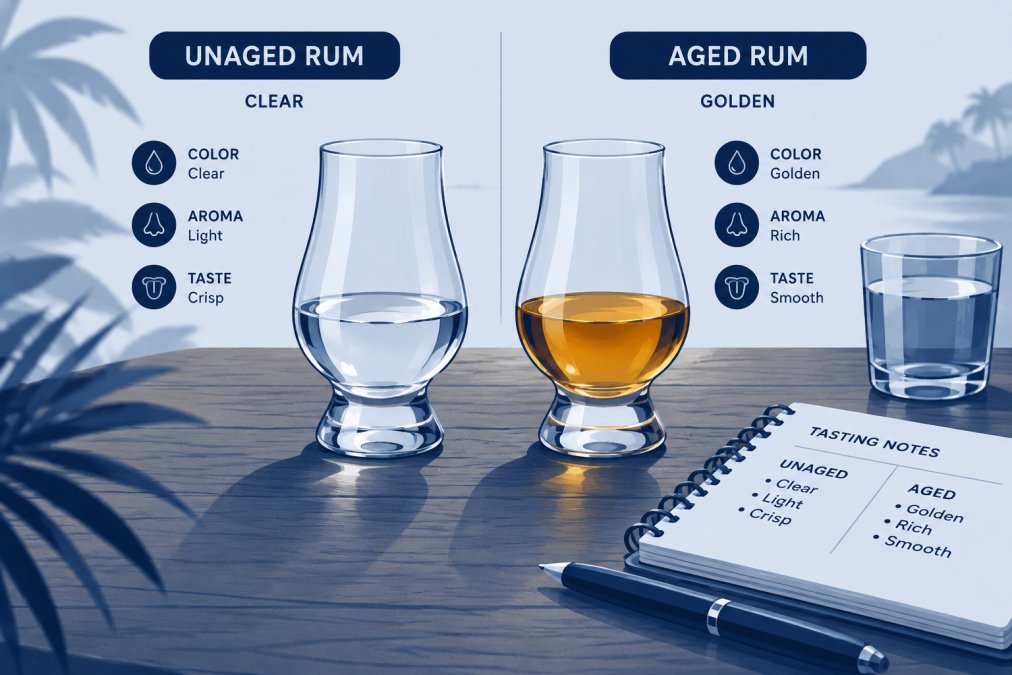
| Color | Clear | Golden to deep amber |
| Aroma | Fresh cane, citrus, grass | Vanilla, caramel, oak, spice |
| Texture | Light, crisp | Rounder, heavier mouthfeel |
| Finish | Short, clean | Longer, warming |
| Best use | Cocktails, highballs | Sipping, spirit-forward drinks |
Neither column is better. They solve different problems.
Climate, Cask History, and Why Time in Cask Isn’t the Whole Story
A warm, humid climate accelerates maturation. Spirit expands into the wood when it’s hot and contracts when it cools, pulling flavor in and out with each swing.
Cask history matters just as much. An ex-bourbon barrel brings vanilla and coconut. A cask that held fortified wine brings fruit and richness.
What most guides miss is that age is a number, not a guarantee. A well-made young rum in a good cask can outshine a tired old one.
Color, Caramel Coloring, and Filtration: What the Bottle Won’t Tell You
Color is the least reliable clue on the shelf. Caramel coloring is sometimes added to rum, so a deep amber pour may owe its hue to colorant rather than time in oak.
Filtration works in the other direction. Charcoal filtration strips color and some heavier compounds, producing a clear spirit that may still have spent time in wood.
So a clear bottle does not automatically mean unaged, and a dark one does not automatically mean old. The label’s other details tell you far more than the shade of the liquid.
How to Taste Rum Side by Side and Actually Notice the Difference
Set up a blind comparison and your palate will do the work. The goal is to hold everything constant except the barrel, so the only variable left is maturation.
Control the Conditions First
Four variables decide whether your comparison is fair:
- Proof: Match the two pours as closely as you can. A 92-proof unaged rum against an 80-proof aged rum will read as “hotter” for reasons that have nothing to do with oak. If proofs differ, note the gap and discount the burn accordingly.
- Glassware: Use two identical tulip-shaped or copita glasses. A narrow bowl concentrates esters and vanillin at the nose; a wide rocks glass lets them escape. Mixing glass shapes between the two pours invalidates the comparison.
- Volume: Pour the same measure into each glass, roughly half an ounce is enough to nose and taste without overwhelming you.
Run the Four-Stage Protocol
Work through the same four checkpoints on both glasses, in the same order, and write one or two words per checkpoint before moving on. Naming what you smell and taste forces you to commit, which is what makes the contrast legible.
- Nose, neat: Bring the glass to your chin first, then your nose. Note the first impression, fresh cane and citrus peel, or vanilla and toasted oak? Then nose again after a minute; aged spirits often open up as they breathe.
- Entry: Take a small sip and note where the flavor lands. Unaged rum tends to hit the front of the tongue with bright, direct sweetness; aged rum often spreads toward the mid-palate as tannins and wood sugars coat.
- Mid-palate and texture: Swirl the sip across your tongue. Is it thin and crisp, or round and coating? This is where barrel-derived tannins and glycerol-like body show up most clearly.
- Finish: Swallow and count seconds until the flavor fades. Unaged rum typically clears in a few seconds; a well-matured aged rum lingers noticeably longer with a warming, drying tail.
Use Dilution as a Diagnostic
Add two or three drops of room-temperature water to each glass and repeat the nose and entry. Water lowers the alcohol’s grip on volatile compounds, which often reveals aromas the proof was masking. On an unaged rum you may suddenly smell green grass or cane juice; on an aged rum, dried fruit and baking spice often step forward. If a pour falls apart with a few drops of water, that tells you something about its structure too.
Score, Don’t Just Sip
A simple five-point scale per checkpoint, nose, entry, texture, finish, overall, turns impressions into something you can compare across sessions. Keep the scores in a notebook with the bottle name, proof, and cask type.
Watch out: Tasting more than two or three spirits in one sitting dulls the palate and inflates scores on the later pours. Cap each session at two or three and cleanse with plain water or a neutral cracker between glasses.
If you want guided practice, our tasting rooms in Placencia Village and San Pedro let you compare pours side by side with staff who know the range.
Does Rum Age in the Bottle?
No. Rum does not age in the bottle. Once a spirit is bottled, maturation stops because the liquid no longer interacts with wood or meaningful oxygen.
A bottle dated years ago tastes essentially as it did the day it was filled, assuming it was stored upright and out of direct sunlight.
So the age statement reflects time in cask only. A “12-year” rum spent twelve years in wood before bottling, not twelve years sitting on a shelf.
Unaged Rum for Cocktails: When the Clear Spirit Wins
Unaged rum for cocktails is often the smarter choice.
Reach for unaged rum in a Daiquiri, a Mojito, or a classic rum highball. The bright cane character lifts the whole drink.
Our White Tip rum, at 92 proof, is an ideal mixing rum.
Save the aged expressions for a stirred drink or a neat pour where vanilla and oak can take center stage.
Reading Age Statements and Labels Before You Buy
An age statement tells you the youngest spirit in the blend, not the average. A bottle labeled “8 years” may contain older rum, but every drop is at least eight years old. That single rule explains most of the confusion on the shelf.
How Age Statements Are Actually Built
Most aged rums are blends of several casks and several vintages. When a producer prints a number, the convention in most markets is that the number reflects the minimum age of any component in the bottle. So an “8-year” rum might be a marriage of eight-year, twelve-year, and fifteen-year stock, but not a drop younger than eight.
A few label patterns follow from that:
- Single age statement: the youngest component, as above. Older stock can be present but is not disclosed.
- No age statement (NAS): common on blends where the producer wants flexibility to adjust the recipe year to year. Absence of a number is not evidence of youth; it is evidence that the producer chose not to commit to a minimum.
- Vintage or year-of-distillation labels: these point to when the spirit came off the still, not how long it spent in cask. A 2015 vintage bottled in 2023 is an eight-year rum by subtraction, but the label may not say so.
The Other Markers Worth Reading
- Cask type: ex-bourbon, refill, or wine cask. First-fill ex-bourbon hands over the most wood flavor; refill casks give less. This often matters more than the age number.
- Proof: higher proof generally carries more aromatic intensity, but it also means more alcohol heat to manage. Compare at similar proof when you can.
- Production claims: “small batch,” “single cask,” and “family distillery” describe scale and process, not quality. They are useful context, not guarantees.
A Practical Buying Sequence
Read the label in this order: age statement first, then cask type, then proof, then any filtration or coloring note.
Watch out: Do not assume a higher age number means a better bottle. Age is one input among several, and a long stay in a neutral refill cask can leave a spirit tired rather than complex.
For a deeper look at how production scale changes what’s in the glass, see our breakdown of small batch rum versus mass produced.
Choosing Your First Bottle to Compare
Start with two bottles at similar proof: one clear, one aged. Keep everything else close so the barrel is the only real variable.
If you want a curated starting point, our list of essential bottles for a home bar covers a range that works well for a side-by-side tasting. And if you’re specifically weighing whether to mix with clear spirit, our picks for the best white rum for mixing narrow that decision quickly.
Once you’ve chosen, you can order bottles online and have them shipped to most states.
Comparing aged and unaged rum comes down to tasting with intention, not trusting the label’s color. That is the approach we take at Tiburon Rum, where our molasses-based spirit matures in bourbon barrels in a warm climate, and our 92-proof White Tip stays built for mixing.
Frequently Asked Questions
Is aged rum better than unaged rum?
Neither is better, they do different jobs. Aging in oak adds vanilla, spice, tannins, and a rounder mouthfeel, which suits sipping. Unaged rum keeps the fresh, fruity character of the distillate and holds its own in cocktails where barrel notes would get lost. Judge a bottle by how you plan to drink it, not by how long it sat in wood.
Can unaged rum be used for sipping?
Yes, though it drinks differently. Unaged rum shows the raw distillate: fresh cane or molasses notes, fruit, and a sharper alcohol edge. Higher-proof unaged rum can be sipped neat if you add a few drops of water. It will not have the vanilla and tannin softness that barrel time provides, so expect a brighter, more direct experience.
Does rum continue to age in the bottle?
No. Once rum leaves the cask and is bottled, maturation stops because there is no wood left to interact with the spirit. The bottle protects what is already there, but the clock stops. A bottle opened and left half full for months will change slightly through oxidation, but that is not aging, and it will not improve the rum.
Which rum is better for cocktails: aged or unaged?
Match the rum to the drink. Unaged rum for cocktails works in daiquiris, mojitos, and anything citrus-forward, where its clean, fresh profile stays visible. Aged rum suits spirit-forward drinks like an old fashioned or a rum Manhattan, where vanilla and oak notes add depth. A golden aged rum also works in a rum and cola when you want more body.
