
Last Updated: November 11, 2026
Quick Summary
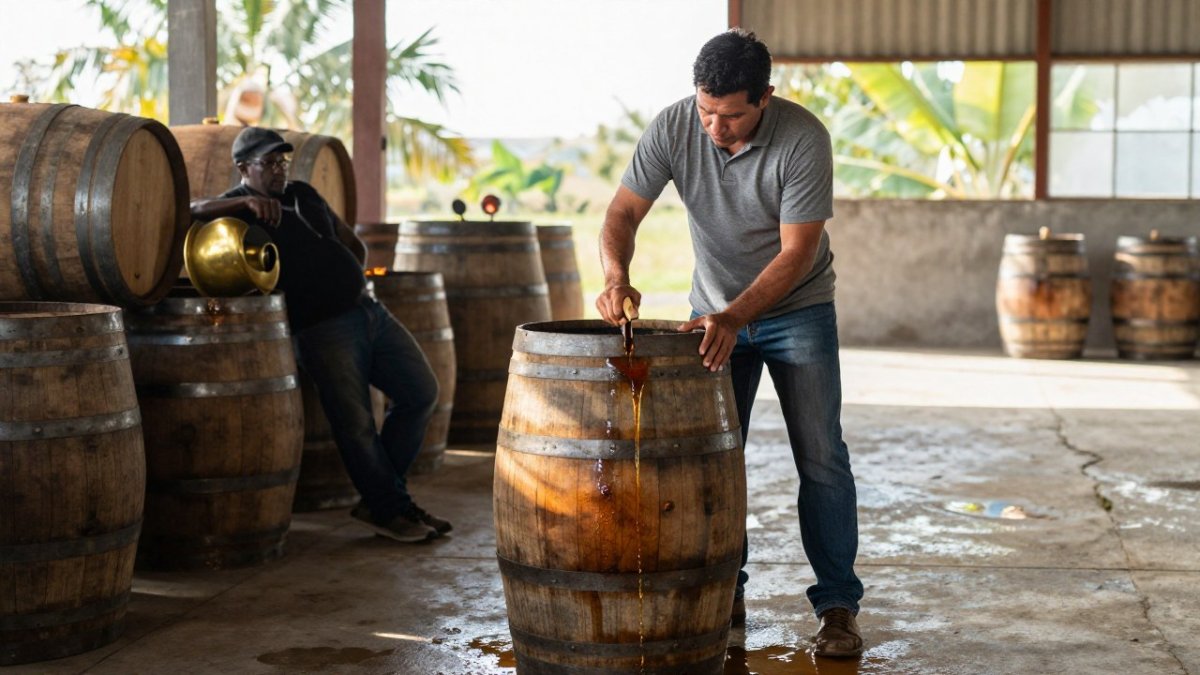
Rum aging is the controlled maturation of distilled spirit inside a wooden cask, where oak releases vanillin and tannins, admits oxygen, and removes harsh congeners through the char layer. In a tropical climate, steady heat speeds extraction and esterification, so rum aging produces vanilla, caramel, and dried fruit notes faster than in cool warehouses.
- Small casks expose more wood per gallon than large ones, so barrel size sets the pace of maturation.
- In humid tropical warehouses, proof tends to fall slightly as water evaporates more slowly than alcohol.
- A rum age statement tells you the youngest rum in the bottle, not the average age.
- Bourbon barrels leave vanillin, caramel, and light char notes in the rum during second maturation.
- The angel’s share is larger in warm climates, where evaporation removes more volume per year.
Table of Contents
- How Oak Casks Drive Rum Aging
- How Tropical Climate Affects Rum Aging
- How Long Should Rum Be Aged?
- Rum Age Statements Explained
- Bourbon Barrel Aged Rum Flavor
- The Angel’s Share and Barrel Size
- Choosing a Rum That Shows Its Aging
- Frequently Asked Questions
How Oak Casks Drive Rum Aging
Understanding Caribbean rum aging processes starts with the barrel itself. Rum aging is the controlled maturation of distilled spirit inside a wooden cask, where the wood and the surrounding climate slowly reshape flavor, color, and texture.
Fresh distillate is sharp and raw. Oak softens it. The wood releases vanillin and tannins, admits a measured amount of oxygen, and pulls out harsh congeners through the char layer. Spirit maturation is not a passive wait; it is a slow chemical negotiation between liquid, wood, and air.
The surface area to volume ratio matters here. A small cask exposes more wood per gallon than a large one, so barrel size sets the pace of the whole process.
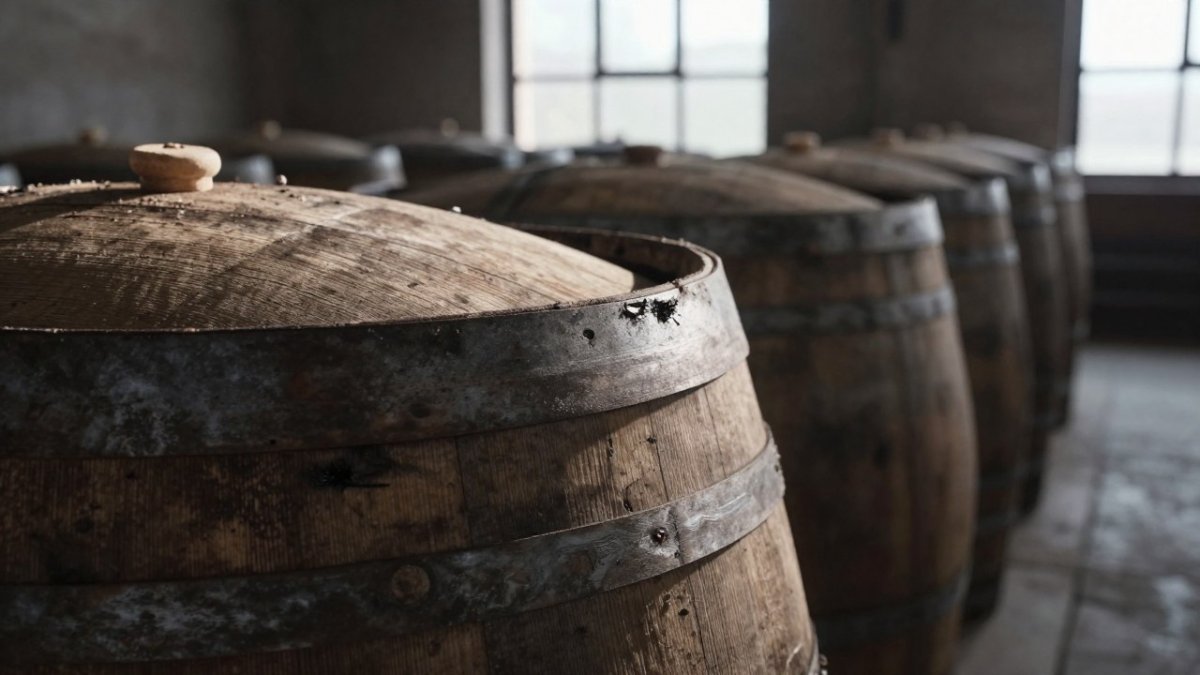
Curious how small-batch production choices change the final glass? Our comparison of small batch rum vs mass produced breaks down the key differences.
How Tropical Climate Affects Rum Aging
In a tropical climate, ambient temperature and humidity stay high year-round, so the spirit expands deeper into the wood and extracts flavor faster than it would in a cool continental warehouse.
Toasting and charring break those polymers down into smaller, soluble compounds: vanillin from lignin, furfural and maple-lactone notes from hemicellulose, and hydrolyzable tannins from the wood itself. Warm liquid diffuses into the stave more aggressively, dissolves those compounds faster, and carries them back into the cask when the temperature drops overnight. In a tropical warehouse the day-night swing may be modest, but the baseline temperature stays high enough that extraction never really pauses.
Esterification is the other half of the story. Fresh distillate carries volatile congeners, higher alcohols, fatty acids, and aldehydes, that read as sharp or solvent-like on the nose. Over time, organic acids in the spirit react with ethanol to form esters, the fruity and floral compounds that give aged rum its roundness. Heat speeds that reaction, and the slow ingress of oxygen through the stave and the bung drives oxidation of harsher aldehydes into softer acids.
Humidity matters as much as temperature, and it is where tropical and continental warehouses diverge most. In a humid tropical rickhouse, water evaporates more slowly than alcohol, so proof tends to fall slightly over time and the spirit gains texture rather than fire. In a dry, heated continental warehouse the opposite happens: alcohol leaves faster than water, proof climbs, and the wood character concentrates.
The trade-off is evaporation. Warm, humid air pulls spirit from the cask at a faster rate, so producers lose more volume but gain concentration.
Tropical aging versus continental aging also shifts the flavor profile. Warm-climate casks generally lean toward vanilla, caramel, and dried fruit, while cooler warehouses tend to preserve more spirit character and ester notes.
How Long Should Rum Be Aged?
There is no universal number, and any guide that gives you one is guessing. How long rum should be aged depends on barrel size, climate, char level, and the style the producer is chasing.
A common approach is to treat age as a tool rather than a badge. Small casks in a warm climate mature quickly, so a few years can be plenty. Larger casks in cooler conditions may need far longer to reach the same roundness. Many producers blend across ages to balance brightness with depth.
- Small cask, tropical climate: fast extraction, watch for over-oaking
- Large cask, tropical climate: slower, more even development
- Cool continental warehouse: longer timelines, brighter spirit character
The practical takeaway: judge the liquid, not the number on the label.
The right aging timeline depends on cask size and warehouse climate, so here is how each combination tends to play out.
| Setup | Aging pace | What to watch |
|---|---|---|
| Small cask, tropical climate | Fast extraction | Watch for over-oaking |
| Large cask, tropical climate | Slower, more even development | Longer wait for same roundness |
| Cool continental warehouse | Longer timelines | Brighter spirit character |
Rum Age Statements Explained
A rum age statement tells you the youngest rum in the bottle, not the average. That single rule clears up most confusion about labels.
Under labeling conventions used across the industry, if a bottle says “8 years,” every component inside is at least 8 years old. A blend of 15-year and 5-year rum must be labeled 5 years, even if the older spirit dominates the flavor. Some producers use a solera system, where rums of different ages are blended progressively and the label may describe the system rather than a single age.
Watch out: a high number on the front label does not always mean an older-tasting rum. Climate and cask size can make a younger tropical rum taste rounder than an older continental one.
Bourbon Barrel Aged Rum Flavor
Bourbon barrel aged rum flavor carries the fingerprint of the previous tenant. American oak that once held bourbon still holds vanillin, caramel, and a light char, and the rum draws those notes out during maturation.
The result is a warmer, sweeter profile than you get from virgin oak or ex-sherry casks. Expect vanilla on the nose, a rounded mid-palate, and a finish that carries a touch of toasted sugar. Char level matters here: a heavier char filters more harshness and adds a smoky edge, while a lighter char lets more raw wood tannin through.
Our own rum picks up tropical vanilla undertones from this second maturation in bourbon barrels.
The Angel’s Share and Barrel Size
The angel’s share is the portion of spirit that evaporates through the wood during maturation, and in a warm climate it is a real cost. Higher temperatures and humidity speed evaporation, so tropical warehouses lose more volume per year than cool ones. What most guides leave out is how tightly that loss is tied to barrel geometry and char.
Surface area to volume ratio is the governing number. More wood contact per gallon means faster extraction of vanillin and tannins, faster oxygen ingress, and faster evaporative loss.
Char level changes the same equation. A heavy char, the alligator-char level common in bourbon cooperage, creates a layer of activated carbon that adsorbs sulfur compounds and harsh congeners before they reach the spirit, and it opens the wood grain so liquid penetrates deeper. A light toast leaves more raw wood tannin available, which can read as drying or astringent if the cask is small or the climate is hot.
Cask management comes down to matching size and char to intent. Want a bright, fast-maturing spirit? Go small with a medium char. Want a long, slow build with less evaporation and more control? Go large with a lighter toast. Neither is better; they are different tools, and the producer’s job is to pick the one that fits the style they are chasing.
Choosing a Rum That Shows Its Aging
The clearest sign of good rum aging is balance. A well-aged rum should show wood influence without tasting like lumber, sweetness without cloying, and a finish that lingers without heat.
Look for color that reads golden to deep amber, a nose with vanilla and dried fruit rather than raw alcohol, and a palate where tannins and vanillin sit in proportion. Ask about cask type and climate if the bottle allows it; those two facts tell you more than the age number.
If you want to taste the difference in person, our tasting rooms in Placencia Village and San Pedro pour these spirits side by side. For building a collection at home, our guide to the best rum for a home bar recommends bottles that show their aging well.
Aging is where patience and craft meet, and it is the part of rum most drinkers never get to see up close. At Tiburon Rum, we mature our molasses-based spirit in bourbon barrels in a warm Belizean climate, then run a second maturation for golden color and a smooth finish. Our White Tip rum at 92 proof holds its character in a cocktail, and every bottle supports conservation work in Belize. Get started with Tiburon Rum and taste what tropical aging does to a glass.
Frequently Asked Questions
How long should rum be aged?
There is no single answer. In a warm climate, rum picks up color and flavor faster than in a cool one, so a spirit aged a few years in the tropics can taste older than its age statement suggests. Lightly aged rums stay bright and mixable, while longer aging builds vanilla, caramel, and oak. The right length depends on the style you want, not a fixed number.
How does a tropical climate affect rum aging?
Heat and humidity speed up the interaction between spirit and wood. Warm temperatures push the liquid deeper into the oak and drive faster evaporation, so tropical aging extracts more color and flavor per year. That is why a tropical-aged rum can carry the weight and depth of an older spirit while still drinking smoothly.
What flavors do bourbon barrels add to rum?
Bourbon barrels bring vanilla, caramel, toasted oak, and a touch of sweetness from the char layer. Because bourbon must be aged in new charred oak, the barrels arrive with plenty of extractable character left. A second maturation in these casks rounds out molasses-based rum and adds the warm vanilla undertones many sippers look for.
Does older rum always taste better?
No. Age adds complexity, but it also adds oak and evaporation losses. Past a certain point, wood can overwhelm the spirit’s character. A well-made younger rum can outperform a tired older one, so judge by flavor and balance rather than the number on the label.
How do you read a rum age statement?
An age statement usually reflects the youngest rum in the blend, not the oldest. Some labels list a single vintage, while others blend several ages. In the US, the rules for age claims vary, so treat the number as a starting point and let the flavor tell you the rest.
