
Last Updated: October 31, 2026
Quick Summary
Tropical aging speeds up the chemical exchange between rum and oak, because heat and humidity push spirit deeper into the staves and pull it back out in a constant cycle. This faster extraction and oxidation gives tropically aged rum rounder texture, sweeter oak notes and a softer finish at a younger age.
- Warm air raises pressure inside the barrel, pushing spirit into the staves; cooler nights pull it back out.
- In humid warehouses alcohol evaporates faster than water, so proof can drift downward over long maturation.
- Smaller casks have more surface area relative to volume, so they lose proportionally more spirit.
- Warmer conditions favor esterification, which is why tropically aged rums often show tropical-fruit and floral notes.
- For sipping, look for a tropically aged rum with a rounded, vanilla-forward profile and a smooth finish.
Table of Contents
- Why Tropical Aging Accelerates Rum Maturation
- How Climate Affects Rum Aging
- Tropical vs Continental Rum Aging: Two Paths to Maturity
- Rum Angel’s Share: The Hidden Cost of Speed
- Rum Aging Time in Tropical Climates: What the Label Doesn’t Say
- Flavor, Color, and Body: What Tropical Aging Does to the Spirit
- Choosing a Tropically Aged Rum for Your Bar
- Frequently Asked Questions
Why Tropical Aging Accelerates Rum Maturation
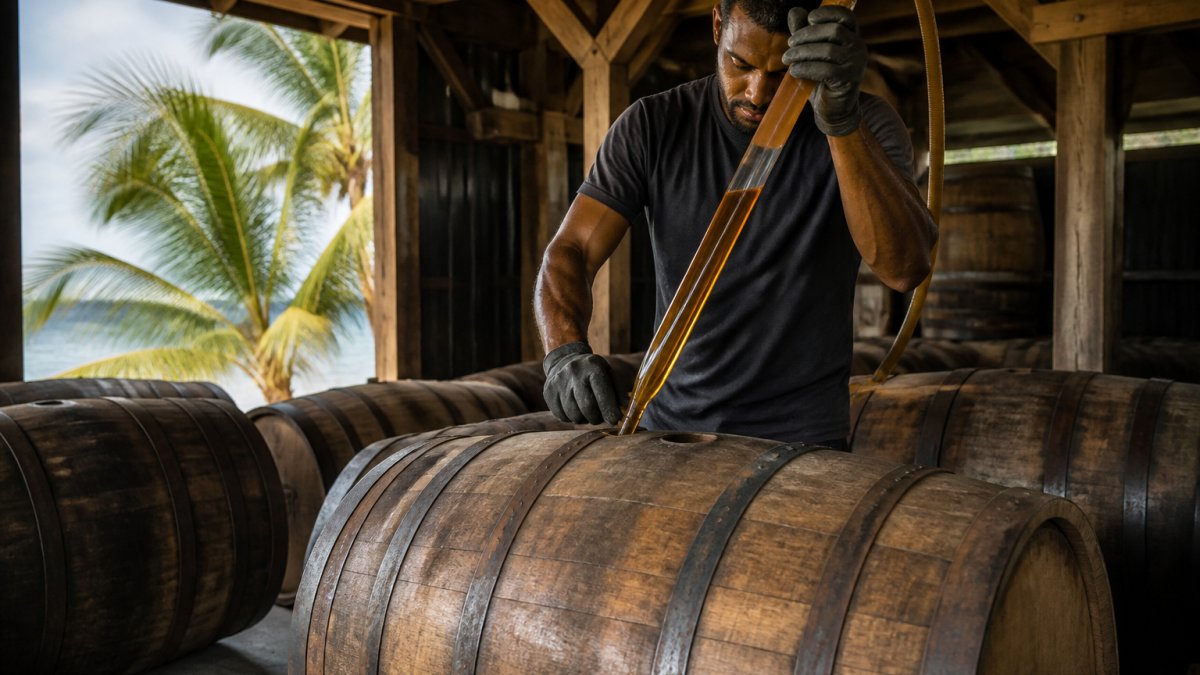
Heat and humidity speed up the chemical conversation between rum and oak. At Tiburon Rum, we mature our molasses-based rum in bourbon barrels in a warm Caribbean climate. The benefits of tropical aging for rum come down to kinetics: warmer liquid moves faster into and out of the wood.
Heat, Humidity, and the Oak Barrel
Warm air raises the pressure inside a barrel and pushes spirit deeper into the staves. Cooler nights pull it back out, carrying wood compounds with it. In a tropical warehouse that cycle repeats constantly, so extraction and oxidation both run at a higher rate. Humidity matters too: moist air slows the evaporation of water relative to alcohol, which shapes both the strength and the texture of what finally comes out of the cask.
How Climate Affects Rum Aging
Climate sets the pace of every reaction inside the barrel. Temperature drives how quickly oak tannins and vanillin dissolve into the spirit. Humidity decides which molecules leave through the wood. Barometric swings and seasonal shifts add turbulence that keeps the liquid moving.
That is the part most guides gloss over. They talk about “tropical” as a single condition, but climate is a spectrum, and the variables beyond raw temperature, including airflow, humidity, and warehouse construction, do real sensory work.
Tropical vs Continental Rum Aging: Two Paths to Maturity
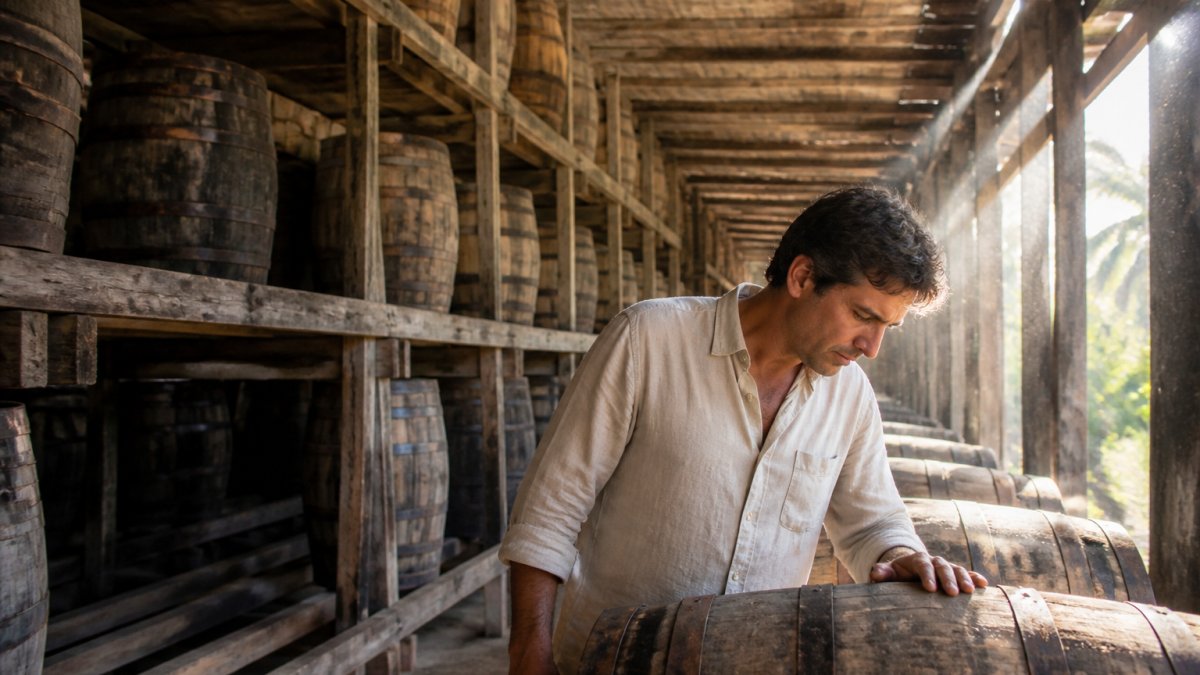
Tropical aging runs hot and fast. In a tropical warehouse, the spirit interacts with the oak aggressively, pulling color and flavor compounds quickly. In a temperate climate, the same distillate matures gradually, often developing a leaner, more spirit-forward profile over a longer stretch. Neither path is better in the abstract. They produce different spirits, and the comparison matters most when you are deciding what to buy.
For a deeper look at how production scale changes the equation, our breakdown of small batch rum vs mass produced covers the quality distinctions that show up before the barrel even matters.
| Factor | Tropical Aging | Continental Aging |
|---|---|---|
| Maturation pace | Fast, aggressive extraction | Slow, gradual development |
| Evaporation loss | High, especially alcohol | Lower overall |
| Color pickup | Rapid, deep amber | Slower, lighter |
| Flavor character | Vanilla, caramel, tropical fruit | Leaner, grain and grass notes |
| Typical age statement | Younger for same maturity | Older for comparable softness |
What the Glass Tells You
The glass reveals which path a rum took. Tropically aged spirits tend to show rounder texture, sweeter oak notes, and a softer finish at a younger age. Continental spirits often read drier and more angular early on. Once you can taste that difference, a tasting room becomes the fastest way to calibrate your palate, and you can visit our tasting rooms in Placencia Village or San Pedro to compare styles side by side.
Rum Angel’s Share: The Hidden Cost of Speed
The angel’s share is the portion of spirit that evaporates through the barrel during maturation, and in tropical climates it is the price of speed. Fast maturation is efficient in time, not in yield.
Why Tropical Losses Run Higher
Evaporation is driven by the vapor pressure of the liquid and the conditions around the cask. Higher temperatures raise vapor pressure inside the barrel, pushing more molecules through the staves. In a hot, humid warehouse, the balance shifts: alcohol evaporates faster than water, so proof can drift downward over long maturation, while in a dry warehouse water leaves faster and proof can climb. That distinction matters because it changes both the strength of the finished spirit and the volume a producer can sell.
Smaller casks have more surface area relative to volume, so they lose proportionally more. A producer maturing in a hot climate therefore starts with more spirit per bottle than the age statement implies.
The Yield and Cost Trade-Off
Every point of evaporation is spirit a producer cannot bottle. That loss shows up in the economics in several ways:
- More input per output. A cask that loses a larger share each year requires more distillate to fill the same number of bottles, which raises the effective cost per bottle.
Faster maturation is a trade in time for yield. A tropically aged rum can reach a given sensory profile in fewer years, but the producer pays for that speed in lost volume, which shapes pricing, scarcity, and how long a cask can reasonably stay in wood.
::: This environmental influence on the spirit mirrors the way agricultural conditions dictate the profile of other crops, making the process of understanding terroir essential for anyone tracing the path from raw material to finished glass.
Watch out: assuming a younger age statement means a lesser rum. The age statement reflects time in wood, not the volume that survived it.
Rum Aging Time in Tropical Climates: What the Label Doesn’t Say
Age statements measure time, not maturity. The label tells you how long the spirit sat in wood; it does not tell you the climate, the cask size, or the warehouse conditions. Those variables drive the sensory result, and they are almost never printed on the bottle.
That gap is why comparisons across climates get slippery. An age statement is a starting point for a conversation, not a verdict.
Flavor, Color, and Body: What Tropical Aging Does to the Spirit
The result is easier to understand when you separate the mechanisms at work. Four processes run at once inside the barrel, and each contributes something different to the glass.
Extraction: Color and Oak-Derived Flavor
Heat accelerates the movement of oak compounds into the spirit. Tannins and lignin-derived aromatics dissolve faster in warm liquid, which is why a tropically aged rum deepens in color and picks up vanilla, caramel, and dried-fruit notes earlier than a cool-climate equivalent. The rate of extraction depends on cask size, oak species, char level, and prior contents, so two tropically aged rums can diverge substantially even in the same warehouse.
Oxidation: Softening and Complexity
Oxygen entering through the wood and the barrel head reacts with the spirit over time. Oxidation softens harsh edges, rounds out the palate, and contributes to the development of the nutty and dried-fruit notes that mark a mature rum. In a warm warehouse the cycle of expansion and contraction pulls air in and pushes spirit out more frequently, so oxidation runs at a higher rate than in a cool climate.
Esterification: The Fruity Aromas
Organic acids and alcohols in the spirit combine to form esters, the compounds behind many fruity aromas. Warmer conditions favor this reaction, which is one reason tropically aged rums often show pronounced tropical-fruit and floral notes. The extent depends on the distillate’s acid profile, the spirit strength in the cask, and time, so ester development is a tendency rather than a guarantee.
Evaporation: Concentration and Texture
As spirit leaves the cask, the remaining liquid concentrates. The balance of alcohol and water loss shapes both strength and texture: a spirit that loses more alcohol can soften in feel, while one that loses more water can concentrate and gain body. This is why the same distillate can read rounder or leaner depending on warehouse humidity.
When tasting a tropically aged rum, try to separate what came from extraction (vanilla, caramel, oak spice), oxidation (nutty, dried fruit, softened edges), and esterification (fruity, floral). That breakdown is a faster way to calibrate your palate than comparing age statements alone.
There is a ceiling, though. Push extraction too far and you get over-oaking: drying tannins and a woody bite that smothers the distillate.
Choosing a Tropically Aged Rum for Your Bar
Start with what you plan to do with the bottle. For sipping, look for a tropically aged rum with a rounded, vanilla-forward profile and a smooth finish. For mixing, a higher-proof bottling holds its character against citrus and syrup. Our White Tip rum, at 92 proof, is designed for mixing.
If you are stocking a home bar and want a shortlist of bottles that fit the tropical-aging discussion, our guide to the best rum for home bar lays out the essentials. When you are ready to buy, you can shop Tiburon Rum directly. For anyone weighing how climate shapes the final glass, the American Chemical Society’s overview of barrel aging chemistry explains the compound exchange in more detail, and the U.S. Alcohol and Tobacco Tax and Trade Bureau’s distilled spirits labeling rules clarifies what an age statement legally means on a bottle.
At Tiburon Rum, we mature our molasses-based rum in bourbon barrels in a warm Caribbean climate, then give it a second maturation for golden color and a smooth finish. Our rum benefits from warm-climate maturation.
Frequently Asked Questions
How does a tropical climate affect rum aging?
Heat and humidity speed up the exchange between the spirit and the oak. Heat and humidity push the spirit into and out of the wood more often, which pulls color and oak compounds into the rum faster.
Why does rum age faster in a tropical climate?
The short answer is thermal cycling. Warmer air and higher humidity push the distillate deeper into the barrel staves, and the daily swing between day and night temperatures works the wood like a pump. More contact means more extraction of oak tannins and more oxidation, which builds complexity and smoothness sooner.
Does tropical aging make rum smoother?
It often does, but smoothness depends on how the distiller manages the barrel.
How does the angel’s share differ in tropical climates?
The rum angel’s share is the portion of each barrel that evaporates during maturation, and it is significantly larger in the tropics. High heat and humidity drive more vapor out of the cask each year, so a tropical distiller may lose a meaningful percentage of volume annually compared with a cool-climate producer.
The real challenge is not understanding tropical aging. It is finding a bottle where the climate, the cask, and the craft all line up. Tiburon Rum is handcrafted in a family-owned Belizean distillery, aged in bourbon barrels for that signature smooth finish with tropical vanilla undertones, and every bottle supports conservation of Belize’s marine environment. Get started with Tiburon Rum and taste what warm-climate maturation does for a spirit.
