
Table of Contents
- What Makes Authentic Tequila Authentic
- 100% de Agave Meaning: What the Label Actually Tells You
- How to Use the Tequila NOM Database to Verify a Bottle
- The Tequila Additives List: What Brands Don’t Always Disclose
- Visual and Sensory Evaluation Techniques
- Regional Provenance, Terroir, and Counterfeit Bottle Identification
- Step-by-Step Checklist to Verify Authentic Tequila Before You Buy
- Conclusion
Last Updated: August 27, 2026
What Makes Authentic Tequila Authentic
Authentic tequila is produced exclusively from blue weber agave, made within a government-designated production zone, and regulated under strict Mexican law. The foundation of authenticity is straightforward: true tequila must come from blue weber agave and originate from one of five approved Mexican states. The Consejo Regulador del Tequila, or CRT, is the regulatory body that certifies production and issues the NOM numbers that appear on every legitimate bottle.
Regulated Production Zones and Blue Weber Agave
Blue weber agave is the only agave species permitted in tequila production. It takes seven to twelve years to mature, concentrating natural sugars that define the spirit’s character. The five approved production states are Jalisco, Nayarit, Tamaulipas, Michoacán, and Guanajuato. Jalisco produces the overwhelming majority of tequila, with highlands yielding floral and fruity notes while lowlands produce earthy and herbal profiles. Regional provenance matters, and a bottle that cannot tell you where the agave was grown is already giving you less than you deserve.
Craft Production vs. Industrial Production Methods
The production method shapes everything about the final spirit. Traditional craft production uses stone or brick ovens to roast agave piñas, then a tahona or roller mill to extract juice. Industrial production relies on autoclaves for pressure-cooking and diffusers for cold extraction. The diffuser is controversial: it extracts sugars before cooking, which many argue strips the plant of its character and requires added acids and enzymes to complete fermentation. Knowing which method was used tells you a great deal about what is in your glass.
100% de Agave Meaning: What the Label Actually Tells You
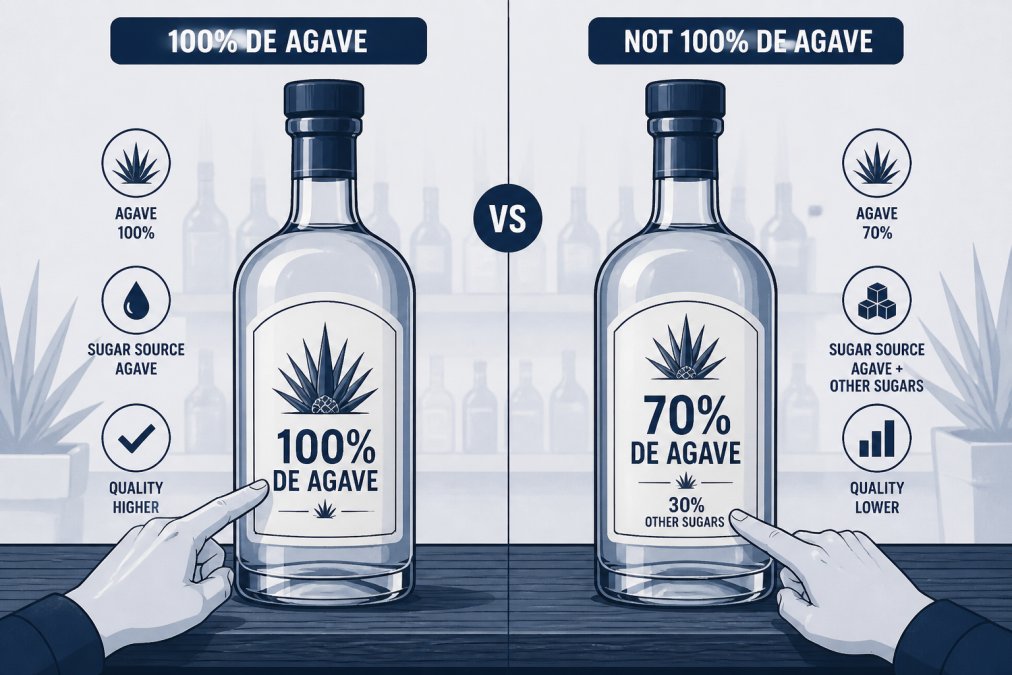
The phrase "100% de agave" on a tequila label means the spirit was produced entirely from blue weber agave sugars, with no supplemental sugars added during fermentation. This is the single most important phrase to find on any tequila bottle you intend to buy.
The Difference Between Mixto and 100% Agave Tequila
Mixto tequila must contain at least 51% agave-derived sugars, but the remaining 49% can come from cane sugar, corn syrup, or other sources. Mixto does not have to be labeled as such; the absence of "100% de agave" on the label is your signal. Mixto tequila is cheaper to produce, often harsher in character, and far more likely to cause regret. If the label does not say "100% de agave" or "100% agave," assume it is a mixto.
How to Read Every Line of a Tequila Label
A legitimate tequila label contains specific information required by the CRT and by the Alcohol and Tobacco Tax and Trade Bureau import labeling standards for bottles sold in the United States:
- "100% de Agave" or "100% Agave": Must appear explicitly.
- NOM number: A four-digit code identifying the distillery of production.
- Category: Blanco, reposado, añejo, or extra añejo, each with regulated maturation periods.
- CRT certification seal: A holographic seal indicating certification before export.
- Hecho en Mexico: Required on all genuine tequila.
- Alcohol content: Tequila must fall between 35% and 55% ABV.
- Lot or batch number: Allows traceability back to a specific production run.
Missing any of these elements is a red flag. A bottle that omits the NOM number or the CRT seal should not be in your cart.
A label that says “agave tequila” or “made with agave” without the explicit “100%” qualifier is not 100% agave tequila. This phrasing is used deliberately to create a false impression of quality.
How to Use the Tequila NOM Database to Verify a Bottle
The NOM number is the most reliable single tool for verifying authentic tequila. NOM stands for Norma Oficial Mexicana, and every licensed distillery receives a unique four-digit identifier. The NOM number appears on the label, typically near the bottom or on the back. Cross-reference it against the Consejo Regulador del Tequila official registry to confirm the distillery’s name, location, current authorization, and which brands are produced there.
Multiple brands often share a single NOM number, meaning they are produced at the same facility. This reveals when a premium-priced "craft" label comes from the same industrial plant as a budget brand. broader agave spirits.
Several third-party verification tools make NOM lookups faster through apps and websites that pull from CRT data. A bottle without a verifiable NOM number is not tequila.
When a NOM search returns a distillery name you do not recognize, search that distillery name separately. Many well-known brands are produced at large industrial facilities under contract, a fact that rarely appears in their marketing.
The Tequila Additives List: What Brands Don’t Always Disclose
Under current CRT regulations, tequila labeled "100% de agave" can still contain up to 1% of its total volume in additives, and brands are not required to disclose them on the label.
The Four Permitted Additives and How to Spot Them
The four additives permitted under the tequila additives list are:
- Caramel coloring: Used to darken aged expressions and make younger spirits appear more mature.
- Oak extract: Added to simulate barrel aging character without the time investment.
- Glycerin: A sweetener that creates a thick, oily mouthfeel and syrupy finish.
- Agave nectar: Added to boost sweetness and round out harsh edges.
The Tequila Matchmaker additive-free verified brand list maintains a list of brands that have voluntarily disclosed additive-free status. Sensory evaluation is your best real-time tool: glycerin produces coating sweetness that lingers, and oak extract creates slightly artificial woodiness. If a blanco tequila tastes sweeter than expected, additives are likely.
Visual and Sensory Evaluation Techniques
Your senses are a legitimate authentication tool. Learning to use them systematically will catch things a database cannot.
Color, Clarity, and Viscosity Checks
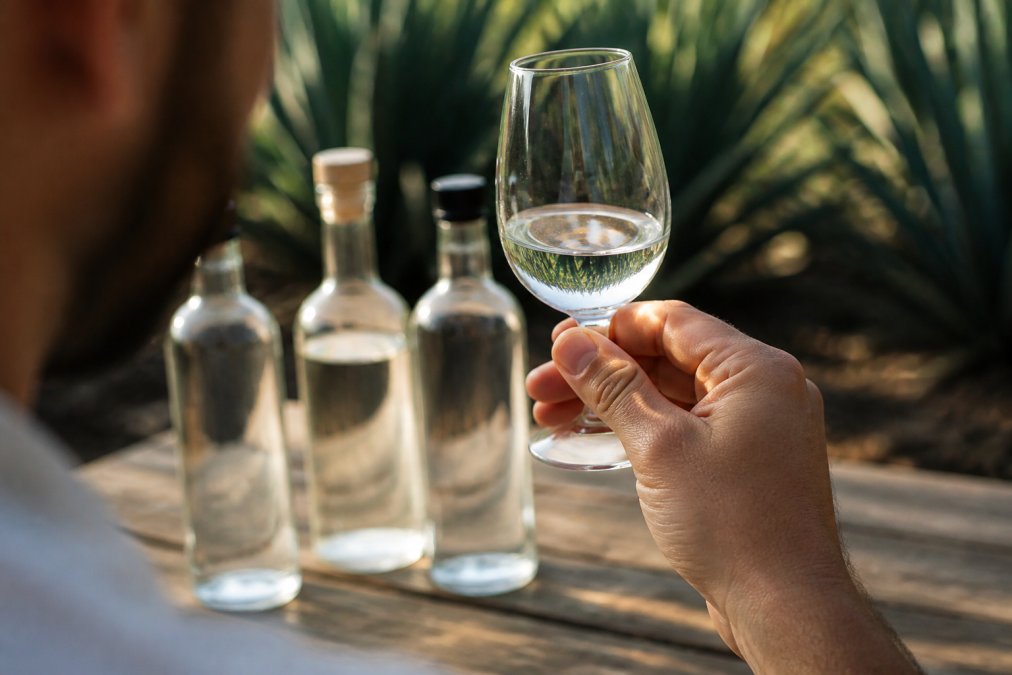
Blanco tequila should be crystal clear. Any cloudiness suggests poor filtration or contamination. Reposado ranges from pale straw to light gold. Añejo runs amber. Swirl the glass and watch the legs, the streaks of liquid running down the inside. Heavy, slow legs indicate higher sugar content or glycerin addition. Genuine aged tequila produces legs that move at moderate pace with reasonable thickness.
A blanco with any yellow tint has likely been treated with caramel coloring. A reposado darker than its stated aging period would justify has probably been enhanced.
Aroma and Taste Signals of Genuine Agave Spirits
Genuine agave spirits have a recognizable aromatic signature: cooked agave, which reads as vegetal, slightly sweet, and earthy. Blanco tequilas from highlands carry floral and citrus notes. Lowland expressions lean toward pepper, mineral, and olive brine. You should not smell vanilla, caramel, or heavy sweetness in an authentic blanco, those notes belong to aged expressions.
On the palate, authentic tequila has a clean, dry finish with natural heat that dissipates quickly. A syrupy, cloyingly sweet finish or oily coating signals glycerin or agave nectar addition.
Regional Provenance, Terroir, and Counterfeit Bottle Identification
Jalisco’s highlands produce agave with higher sugar concentration and distinctly floral, fruity character. The lowlands yield earthier, more mineral-driven spirits. These differences are consistent enough that a highland-labeled tequila with heavily earthy, vegetal profile warrants closer examination.
Counterfeit bottles exist, particularly in tourist markets. The most common form is a genuine bottle emptied, refilled with inferior spirit, and resealed. Check the capsule seal for tampering. Many premium producers use laser-etched bottles or serialized batch numbers verifiable through the distillery directly. A batch number cross-referenced against the distillery’s records is one of the strongest authenticity signals available.
Step-by-Step Checklist to Verify Authentic Tequila Before You Buy
Use this checklist before purchasing any bottle. It takes under three minutes and catches the vast majority of authenticity problems.
| Verification Step | What to Check | Red Flag |
|---|---|---|
| Label language | "100% de Agave" explicitly stated | Missing or says "made with agave" |
| NOM number | Four-digit code present on label | Absent or does not return a valid distillery |
| CRT seal | Holographic certification seal present | Missing or appears printed rather than holographic |
| Category statement | Blanco, reposado, añejo, or extra añejo | No category listed |
| Hecho en Mexico | Appears on the label | Absent |
| ABV range | Between 35% and 55% | Outside this range |
| Batch number | Present and traceable | Absent on premium expressions |
| Color check | Appropriate for category | Blanco with yellow tint; unusually dark reposado |
| Viscosity check | Moderate legs in the glass | Thick, slow, syrupy legs in a blanco |
| Aroma check | Cooked agave, earthy, herbal | Heavy vanilla or caramel in a blanco |
Step-by-step verification process:
- Find the NOM number on the label and search it in the CRT database or a verified third-party tool.
- Confirm "100% de Agave" appears explicitly.
- Check for the CRT holographic certification seal.
- Verify the category and confirm color is appropriate.
- If purchasing a premium bottle, cross-reference the batch number with the distillery’s records.
- Before opening, inspect the capsule seal for tampering.
- On first pour, evaluate legs, color, and aroma.
- On the palate, check for an appropriate dry finish; sweetness or oiliness in a blanco is a warning sign.
According to the Alcohol and Tobacco Tax and Trade Bureau’s imported spirits guidelines, all tequila legally sold in the United States must meet both Mexican NOM standards and TTB labeling requirements. Verification remains the buyer’s best protection.
Cross-reference any bottle over a moderate price point against independently maintained additive-free lists before committing to a premium purchase.
Frequently Asked Questions
How can you tell if tequila is real or fake?
Check the label for '100% de Agave' or '100% Agave', any bottle that omits this phrase is a mixto, meaning it contains non-agave sugars. Then look for a NOM number (Norma Oficial Mexicana) printed on the label and cross-reference it with the official tequila regulatory database to confirm the distillery is licensed. Physical inspection of the bottle's hologram seal, batch number, and cap can also reveal counterfeits.
What is the NOM number on a tequila bottle and why does it matter?
The NOM number is a four-digit code assigned to each licensed tequila distillery by Mexico's regulatory body, the Consejo Regulador del Tequila (CRT). It appears on every authentic tequila label and links directly to the distillery's certification records. Entering it into the tequila NOM database at the CRT's official site confirms whether the producer holds current certification, what styles they are approved to produce, and whether the brand matches the registered distillery.
How do I check if a tequila brand uses additives?
Tequila regulations permit up to 1% by volume of four additives: caramel coloring, oak extract, glycerin, and agave nectar. Producers are not required to disclose their use on labels. Independent additive-free certification programs publish verified lists of brands that have been tested and confirmed free of these substances. Checking those third-party lists before purchasing is currently the most reliable method, since label transparency requirements do not mandate additive disclosure.
What is the difference between Mixto tequila and 100% agave tequila?
Mixto tequila must contain at least 51% blue weber agave sugars, with the remaining 49% made up from other fermentable sugars such as cane sugar. It often tastes thinner and can cause harsher hangovers. Authentic 100% de agave tequila uses only agave sugars through the entire fermentation and distillation process, producing a more complex flavor profile that reflects the terroir of the growing region. The phrase '100% de Agave' or '100% Agave' must appear on the label for this classification to apply.
Knowing how to verify authentic tequila is half the work. The other half is sourcing from producers who take transparency seriously from the start. Tiburon Rum’s FIN Tequila is crafted from 100% de Agave in Jalisco, Mexico, the same verification standards outlined in this guide apply directly to every bottle. For discerning drinkers who want spirits backed by real provenance and genuine craft, explore the full FIN Tequila range and buy now at the Tiburon Rum website.
This article was written using GrandRanker