Best Barrel Char Level for Aging Rum Explained
Last Updated: November 19, 2026
Quick Summary
The best barrel char level for aging rum depends on the style you want. Light char suits bright, fruit-forward mixing rums, medium char balances most aged rums, and heavy char suits bold, full-bodied sipping rums. Run a small trial before committing a full batch.
- Light char leaves the thinnest carbon layer and the least roasted character.
- Medium char balances wood sugars with roasted flavors and suits most aged rums.
- Heavy char adds smoke, deep amber color and bold tannin, so it can overpower delicate spirits.
- Small barrels expose more wood per gallon, so shorten the schedule and taste more often.
- Stop aging when the oak becomes a frame rather than the main flavor.
Table of Contents
- What Barrel Char Level Means for Rum
- Light, Medium and Heavy Char Profiles Compared
- Comparison Table: Char Levels and Flavor Profiles
- Choosing a Rum Barrel Char Level by Rum Style
- Small Oak Barrel for Aging Rum: Size, Proof and Surface Area
- How Long to Age Rum in a Barrel and When to Stop Tasting
- Next Steps for Choosing Your Barrel and Rum Base
- Frequently Asked Questions
What Barrel Char Level Means for Rum
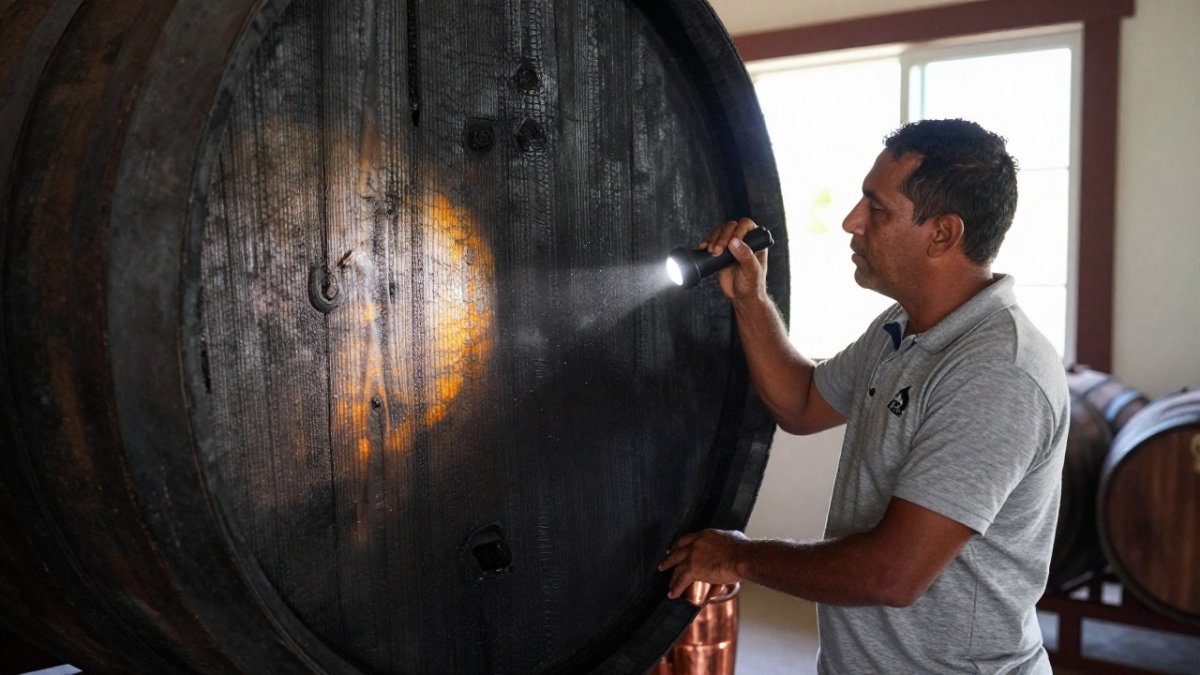
Barrel char level describes how deeply the inside of an oak barrel is burned before the rum goes in. Tiburon Rum ages its spirits in bourbon barrels. Choosing a char level is one of the few decisions that changes flavor before the spirit ever touches wood.
Toast versus char: what the difference actually is
Toasting heats the barrel staves gently, which softens the wood and draws out sugars. Charring burns the inner surface to create a layer of carbon. Toast adds subtle sweetness and light color. Char adds more bite, deeper color and smoky, roasted notes.
- Toast: gentle heat, mild sweetness, light color
- Char: open flame, carbon layer, smoke and caramel notes
Light, Medium and Heavy Char Profiles Compared
Light char gives the rum a delicate touch of oak. Medium char balances wood sugars with roasted flavors. Heavy char, sometimes called alligator char for its cracked look, pulls the most color and smoke into the spirit.
Light char suits rums meant to stay bright and fruity. Medium char works for most aged rums. Heavy char can overpower a delicate spirit, so it is usually better for bold, full-bodied profiles.
Comparison Table: Char Levels and Flavor Profiles
| Char Level | Main Flavors | Color Impact | Best For |
|---|---|---|---|
| Light | Light vanilla, soft oak | Pale gold | Fruity, mixing rums |
| Medium | Caramel, toasted wood | Golden amber | Balanced, all-purpose rums |
| Heavy | Smoke, roasted notes, bold tannin | Deep amber | Full-bodied, sipping rums |
Choosing a Rum Barrel Char Level by Rum Style
Rum behaves differently from bourbon, and the right char level depends on the style of rum being aged.
Use the style you want in the glass as the starting point.
Light, bright, and mixing rums
A light char leaves the thinnest carbon layer and the least roasted character, which suits lighter, fruit-forward rums.
Molasses-rich and full-bodied sipping rums
For a heavy molasses rum with dark caramel and dried fruit notes, a medium char can balance wood sugars against roasted flavor.
Funky, high-ester rums
A heavy char adds smoke, deep amber color, and bold tannin, so it can either complement or overwhelm a high-ester rum.
Cane-juice and agricole-style rums
Grassy, vegetal cane-juice rum can be fragile against oak, so lighter char levels are generally a better fit.
A practical starting matrix
| Rum style | Starting char | Why |
|---|---|---|
| Light, column-distilled, mixing | Light (#1) | Preserves fruit, low tannin |
| Molasses-rich sipping | Medium (#2) to medium-heavy (#3) | Balances caramel and roast |
| High-ester funky | Medium (#2), heavy only for long aging | Frames funk without burying it |
| Cane-juice / agricole-style | Light (#1) or toast-only | Protects grassy, vegetal notes |
These are starting points, not rules. Barrel size, prior use, oak species, and entry proof all shift the outcome, so running a small trial before committing a full batch is sensible.
Small Oak Barrel for Aging Rum: Size, Proof and Surface Area
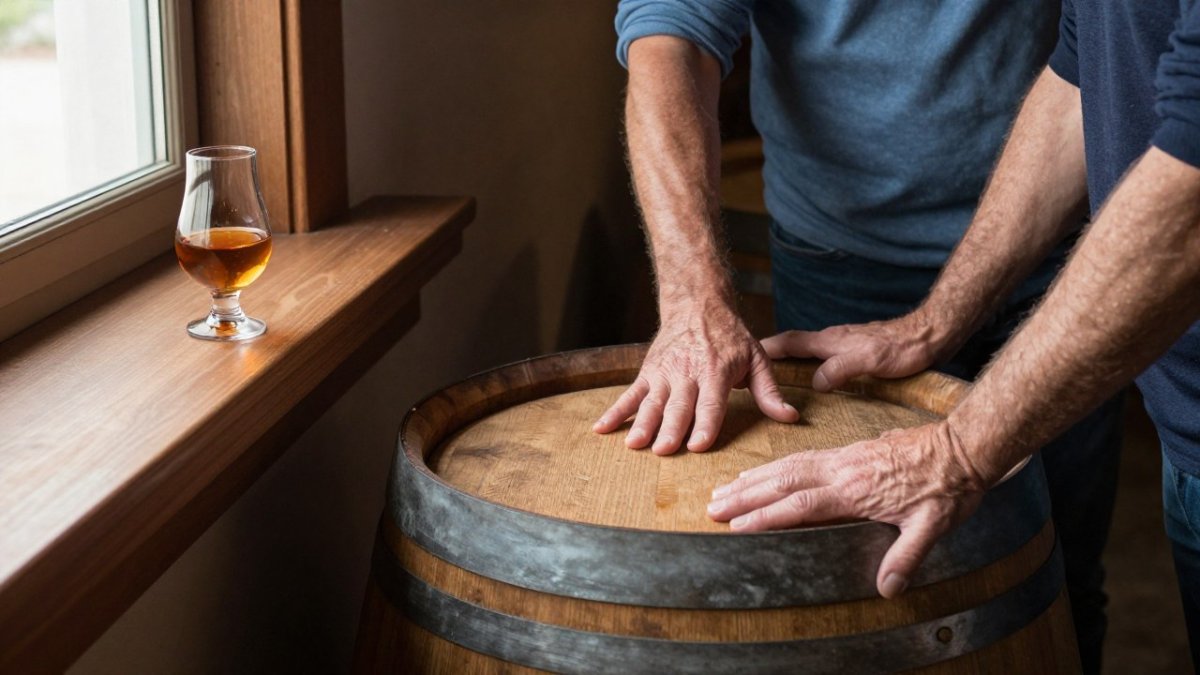
Small barrels give a spirit more contact with wood, so color and flavor can develop faster.
Hands resting on a small American oak barrel in a warm, dim cellar, with a tasting glass of amber rum on a wooden shelf nearby.
How Long to Age Rum in a Barrel and When to Stop Tasting
Aging time is not a number you can copy from a bottle label. It depends on several variables, so a tasting schedule and sensory checklist help you judge when to stop.
A sampling schedule that matches extraction speed
Extraction is generally fastest in the first weeks and slows over time, so sampling more often early in the aging process is a sensible practice.
Draw a small sample, keep it in a covered glass, and taste it neat at room temperature alongside a small pour of the unaged base rum, so you can judge how far the spirit has moved.
A sensory checklist for each tasting
Scoring each attribute on a simple scale and writing it down helps track changes across weeks:
- Color: pale gold, golden amber, deep amber, or mahogany. A jump of two color steps in two weeks signals fast extraction.
- Aroma: vanilla, caramel, toasted coconut, baking spice, smoke, char, dill, or sawdust. Sawdust and dill are early warnings of over-oaking.
- Palate sweetness: from dry to syrupy. Falling sweetness with rising astringency is a stop signal.
- Tannin and astringency: the drying, grippy feeling on the gums and inner cheeks. Rising grip means the wood is winning.
- Smoke and char: from none to ashy. Ashy, campfire, or burnt notes that dominate the mid-palate mean the char is too heavy for the spirit or the contact time is too long.
- Mouthfeel: thin, silky, oily, or drying. A rum that starts oily and turns drying is losing body to tannin.
- Finish: short, medium, or long, and whether the finish is sweet, smoky, or bitter. A bitter, lingering finish is a common over-oak symptom.
When to stop
Stop when the oak reads as a frame rather than the main flavor: the rum’s own fruit, cane, or molasses character should still be identifiable, the tannin should not leave your mouth dry after you swallow, and the smoke should sit in the background. If two consecutive tastings show rising astringency and falling sweetness, the barrel has passed its peak for that spirit.
If you overshoot
You cannot un-oak a rum, but you can blend. A common pattern is to blend an over-oaked small-barrel rum with a portion of the same unaged or lightly aged base rum to bring the oak back into balance. Record the blend ratio so the result is repeatable. For a full-size cask, overshooting is less common but harder to fix, which is another reason to sample on schedule rather than on memory.
Commercial versus home-scale aging
A full-size cask and a 2-gallon hobby barrel with the same char level are not the same experiment. The small barrel exposes far more wood per gallon, so the same char that takes a year to integrate in a 53-gallon cask may dominate a 2-gallon barrel in a month. Home-scale producers should shorten the schedule, taste more often, and lean toward lighter char when the goal is a delicate rum. Commercial producers working in full-size casks can afford heavier char and longer contact, but should still log every tasting so a char level can be evaluated against a known timeline.
Next Steps for Choosing Your Barrel and Rum Base
Pick a char level that matches the style you want, then run a small test before you commit a full batch. Start with medium char if you are unsure, and compare it against a lighter or heavier barrel over the same time period.
Begin with a base rum that suits your goal. Tiburon Rum offers a molasses-based rum aged in bourbon barrels, along with a 92-proof White Tip rum for mixing. Visit the Tiburon Rum website for current product details and availability.
Frequently Asked Questions
What char level is best for aging rum?
No single char level suits every rum. Lighter char tends to suit lighter, fruit-forward rums and shorter aging, because it adds less color and smoke. Medium char is a common middle ground that adds caramel and vanilla without overwhelming the base spirit. Heavier char can add more smoke and bitterness and usually calls for a stronger, more full-bodied distillate or longer control over tasting. Start with a medium char, taste at regular intervals, and adjust your next barrel based on what you find.
Does a heavier barrel char make rum taste smokier?
Generally, yes. A heavier char creates a thicker charcoal layer, and that layer produces more roasted, smoky and bitter compounds that migrate into the spirit. A lighter char gives more of the vanilla and caramel character, with less smoke. The effect also depends on the spirit’s proof, barrel size and aging time, so char level is one variable among several rather than the sole driver of smokiness.
What is the difference between barrel toast and char?
Toasting heats the inside of the barrel stave with a flame to soften the wood and bring out sugars and vanilla-like compounds, without burning the surface. Charring goes further and burns the inside surface, producing a black charcoal layer. Toast is gentler and emphasizes sweetness, while char adds more color, smoke and intensity. Many producers describe barrels by char level, but toast is a distinct process and the two terms should not be used interchangeably.
How long should rum age in a barrel?
Aging time depends on barrel size, proof, char level and the flavor you want. Smaller barrels extract faster because they have more wood surface relative to volume, so rum in a small barrel may reach a target profile sooner than in a larger cask. Taste regularly and record your results. Commercial producers track these variables closely, and a home aging project benefits from the same discipline: set a checkpoint schedule, sample at each one and stop when the flavor reaches your target.

More from the blog
7 Steps to Measure a Rum Distillery Carbon Footprint
Measure a rum distillery carbon footprint in 7 practical steps, from data collection to per-bottle emissions and verification. Get the full method.
Read the post
Nonalcoholic Options for a Spirits Tasting Party
Nonalcoholic options let every guest join a spirits tasting party. Compare zero-proof spirits, mocktails, and mixers, plus tasting notes and pairings.
Read the post
7 Tequila Decanter Storage Mistakes That Ruin the Pour
A tequila decanter can quietly ruin the pour. Learn the 7 storage mistakes that flatten flavor and how to store tequila the right way.
Read the post